SketchACin the studio
Arc by centre
Arc by centre draws a true arc in the sketch editor from a start point, a centre, and an end given by the direction of the pointer from the centre or by an angle you type. The arc runs anticlockwise from the start unless the typed angle is negative.
What it is
Arc by centre draws an arc on a circle you define by its centre and one point on it, the start. The arc runs from the start, anticlockwise about the centre, to the point of the circle in the direction of the pointer. Or you type the angle it covers, in degrees: positive anticlockwise, negative clockwise. The radius is always the distance from the centre to the start.
This is the arc to use when the centre is known, such as an arch whose centre sits on the springing line.
When to use it
- To draw an arch from its known centre and springing point.
- To draw an arc over an exact angle, such as a quarter circle.
The steps
Pick Arc by centre. In the sketch editor (see Select for the ways in), type
Aand thenCquickly, or click Arc by centre on the toolbar of the editor. The hint at the cursor says arc by centre: pick the start point.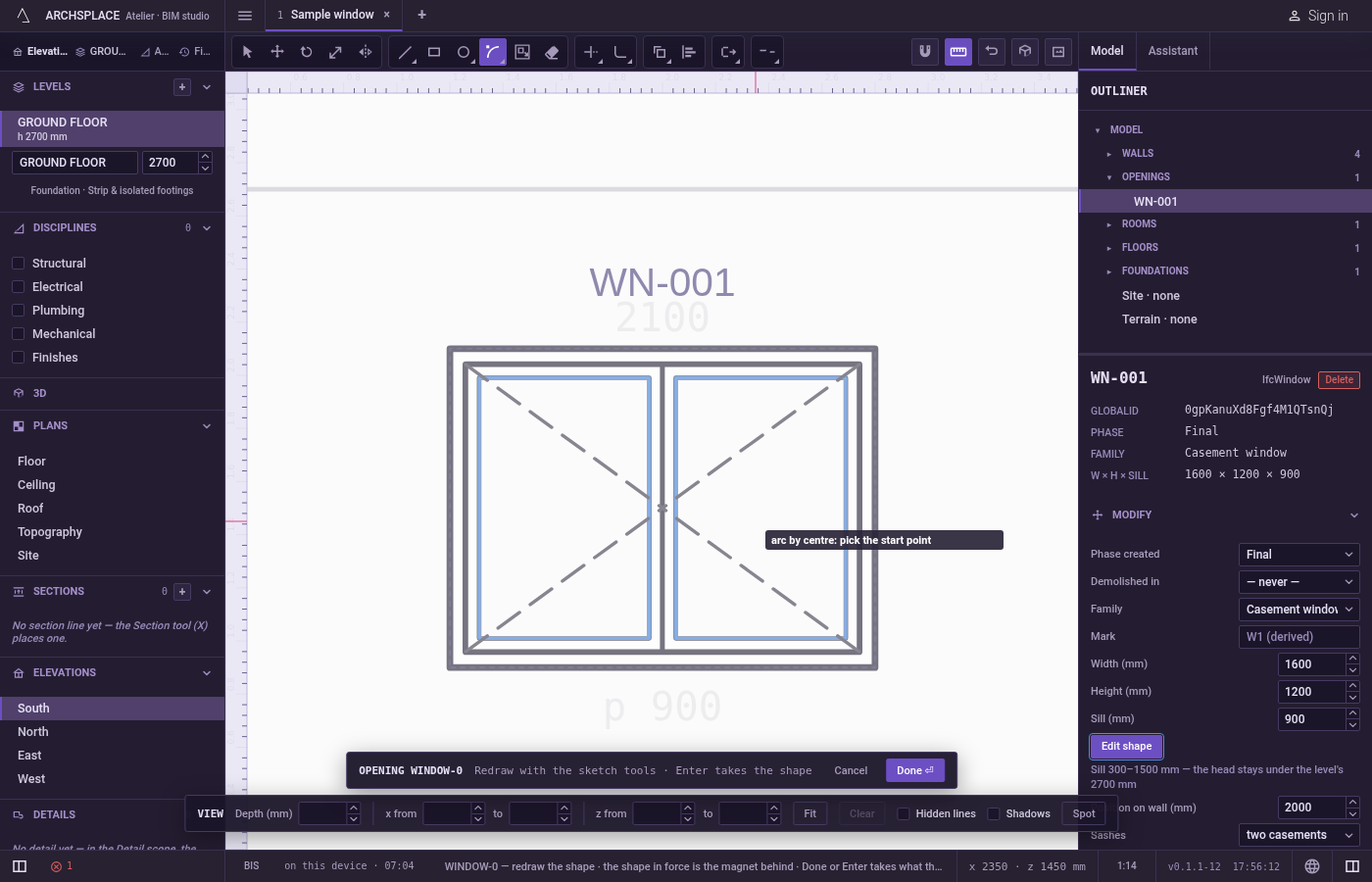
Click the start. It snaps to corners, midpoints, crossings, the dimmed shape in force and the lines of the view. You can also type it as
x;yfrom the origin of the editor, the centre of the opening at floor level or the origin of the plan.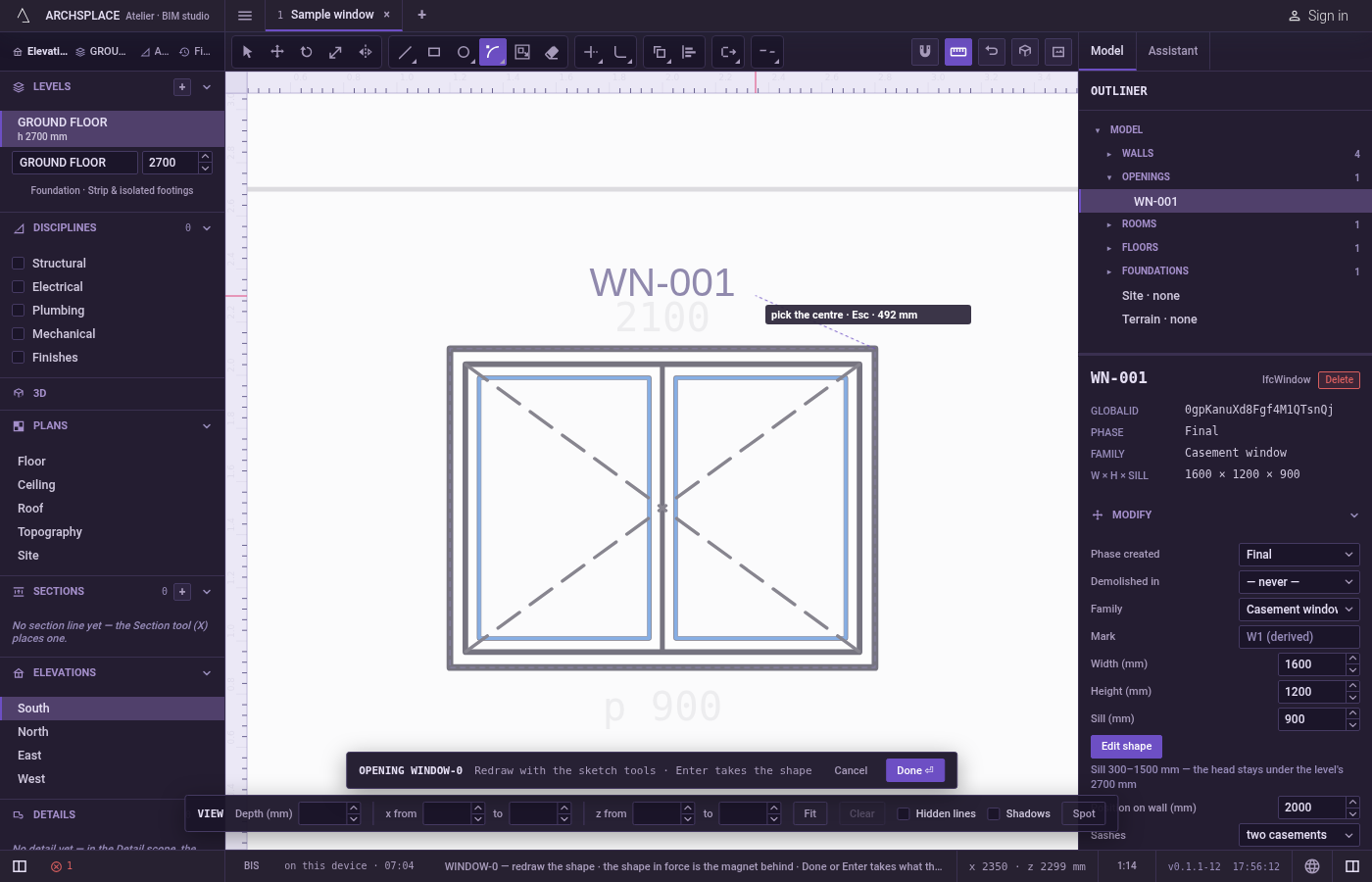
Click the centre. It snaps in the same way, and can be typed as a point too,
@dx;dymeasured from the start.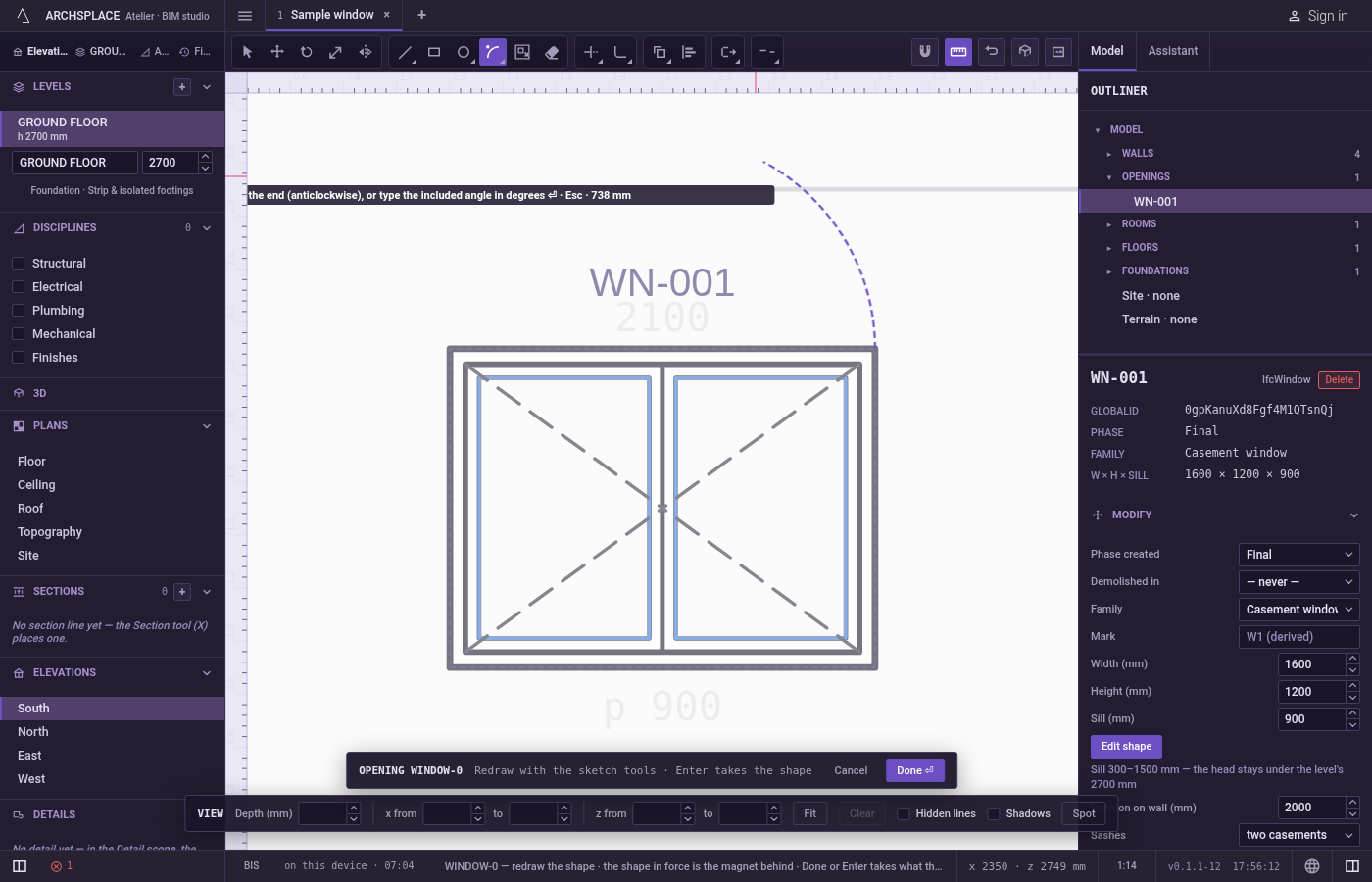
Point at the end, or type the angle. The arc follows the pointer, anticlockwise from the start. Click to draw it. Or type the angle it covers in degrees and press
Enter:90for a quarter circle anticlockwise,-90clockwise.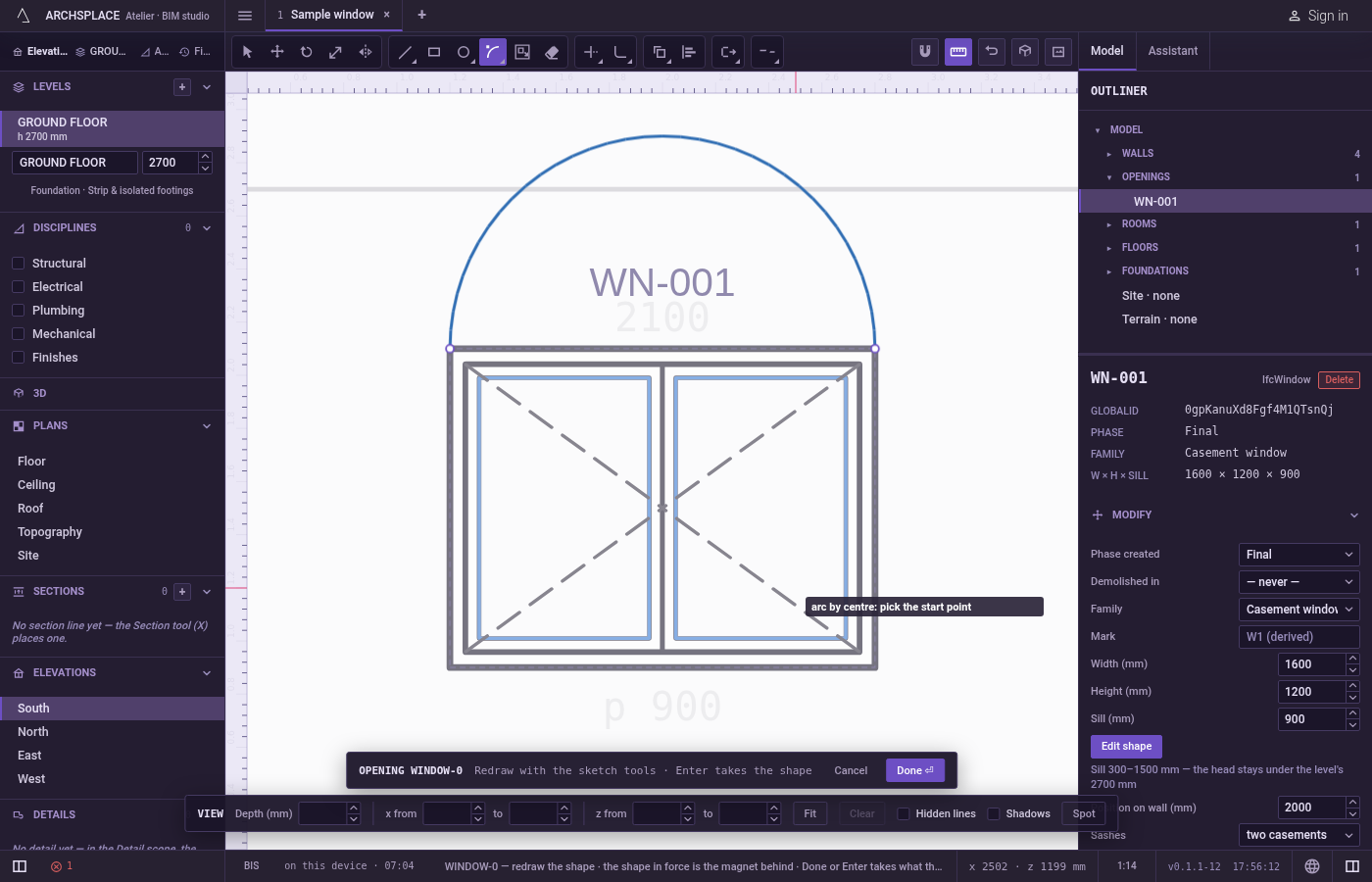
Carry on. The arc is drawn and left selected, and the tool waits for the next one.
Escapedrops the points given, then goes back to Select.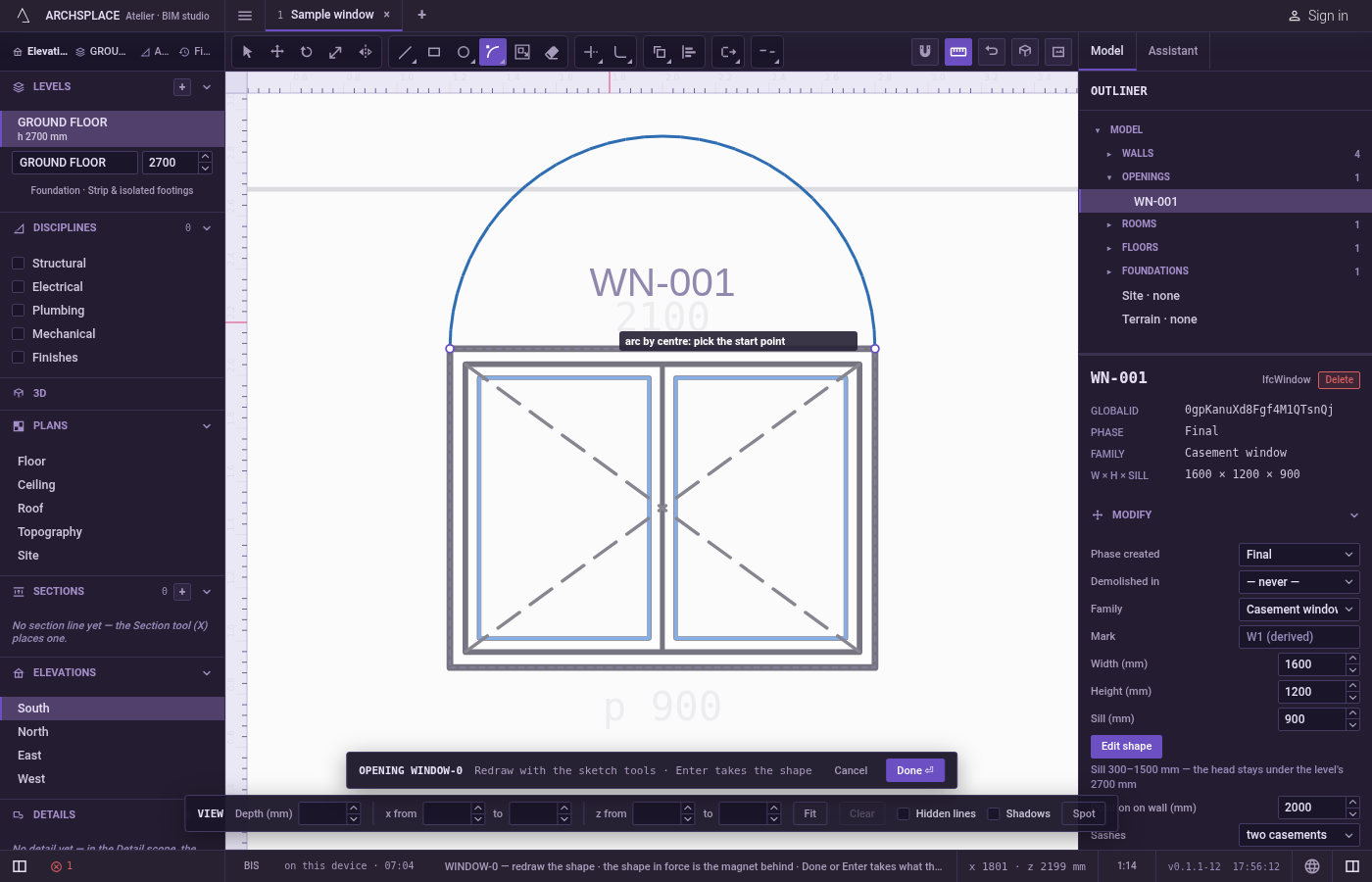
What it refuses
- A centre on the start. A circle with no radius makes no arc, and the hint says that point makes no shape.
- An angle of nothing or a full turn. An end in the direction of the start, an angle of
0, or360and more, is refused in the same way. Draw a full circle with Circle. - An angle typed too early. The angle is taken only after the centre. A bare number typed before that does nothing.
- Clockwise with the pointer. The pointer always gives the anticlockwise arc. Type a negative angle for the other way.
On an elevation, anticlockwise is read in the frame of the opening itself, which can appear the other way round on the screen depending on which way the wall runs. The preview always shows the arc you will get.
What it writes to the contract
Nothing until you press Done. Every arc is one step inside the editor, and Ctrl+Z goes back through them. The contract changes when you press Done, or Enter with nothing in progress, as one step that you can undo: what the lines enclose becomes the profile of the window or door, points [u, v] in metres across the wall and up from the floor, or the outline of the pattern area in the floorAreas or ceilingAreas of the room, points [x, y] in plan metres.
An arc closes an outline only together with your other lines. It becomes a bulge, the third number on the point where it starts: 0.414214 for a quarter circle, 1 for a half circle.
Related
Common questions
How do I draw a quarter circle?
Press A and then C quickly, click the start, click the centre, then type 90 and press Enter. A negative angle, such as -90, turns the other way.
Why does my arc go the long way round?
With the pointer, the arc always runs anticlockwise from the start to the direction of the pointer. Start from the other end, or type a negative angle, to go clockwise.
What sets the radius?
The distance from the centre to the start. The end point always lands on that circle, in the direction of the pointer.