— Ideas & inspiration
Laundry room composition
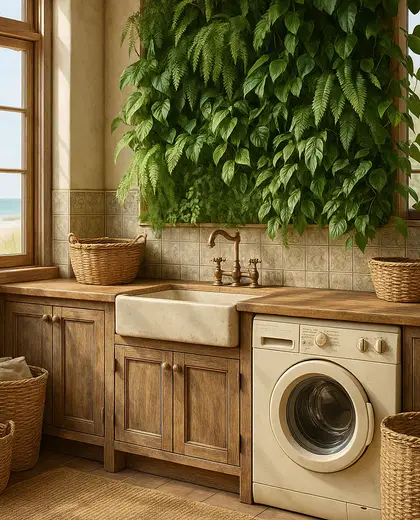
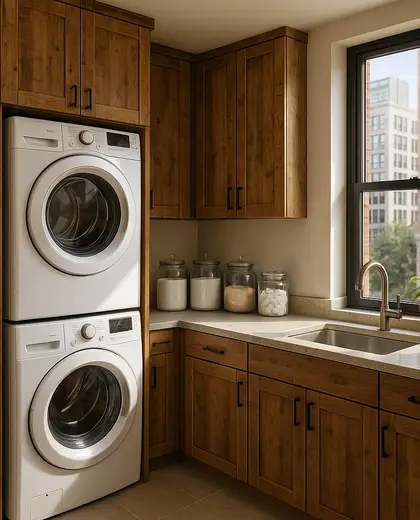
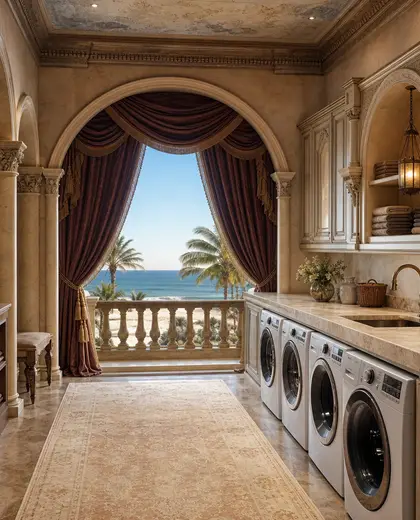
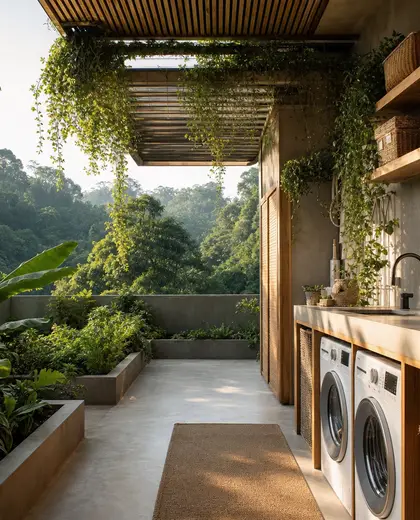
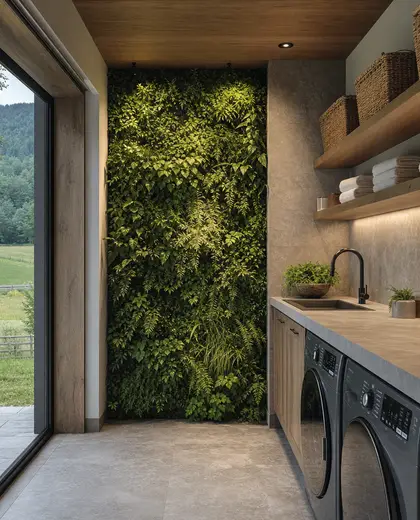
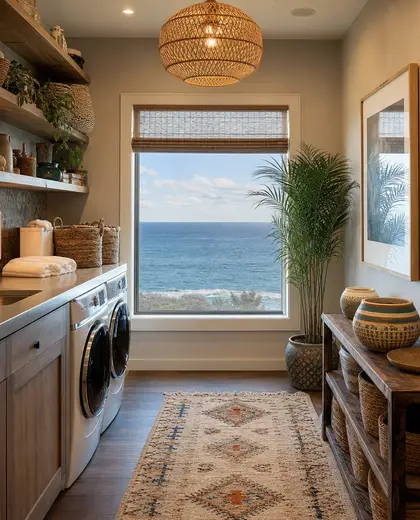
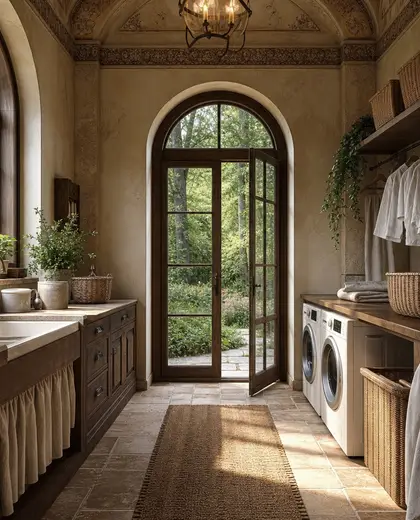
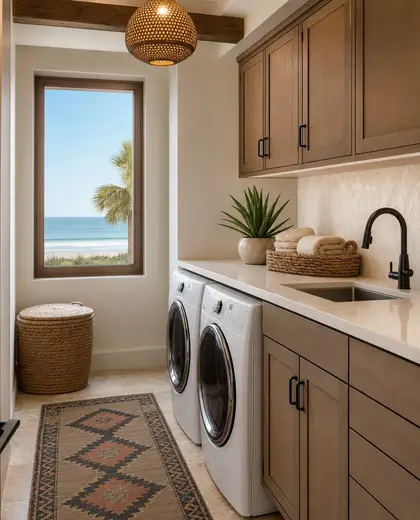
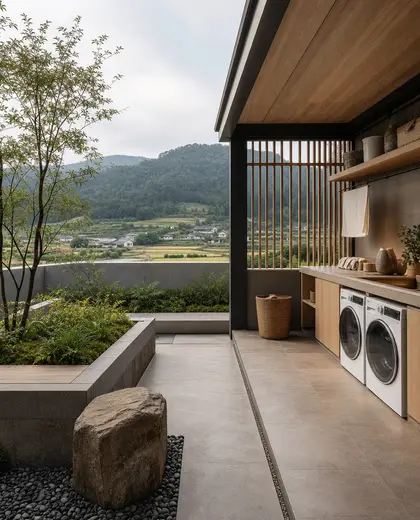
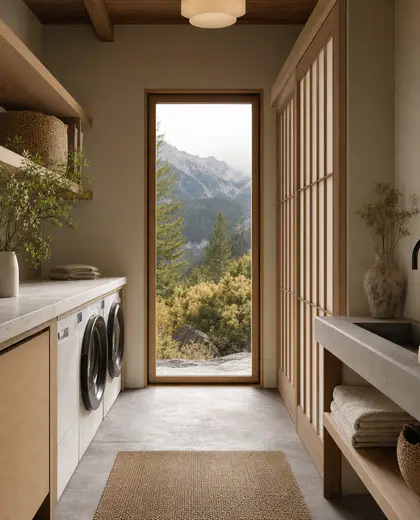
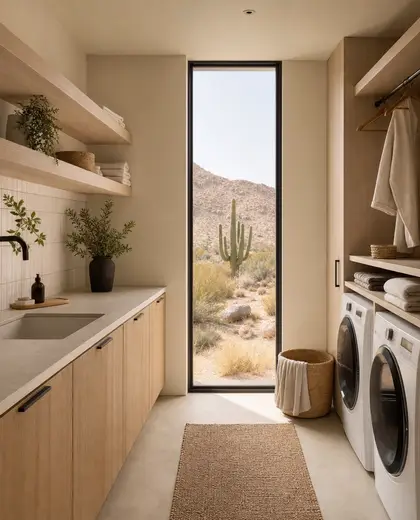
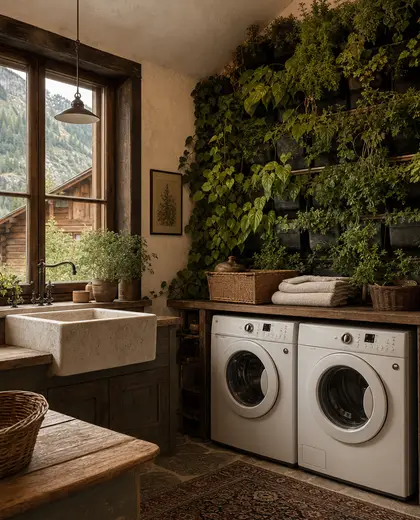
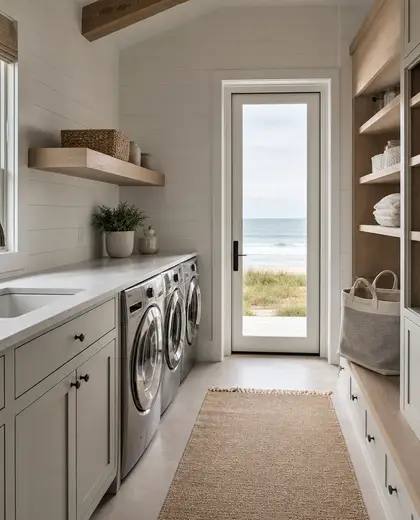
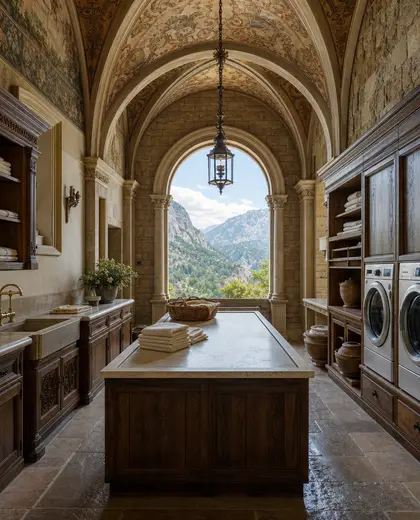
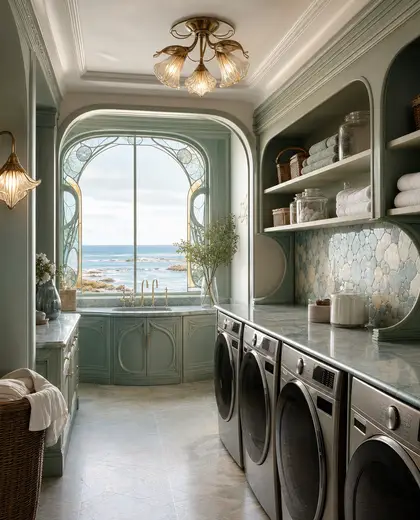
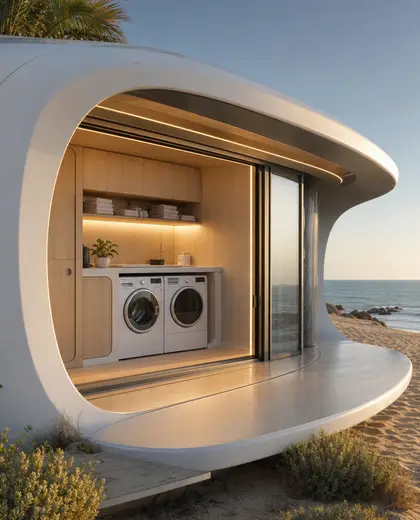
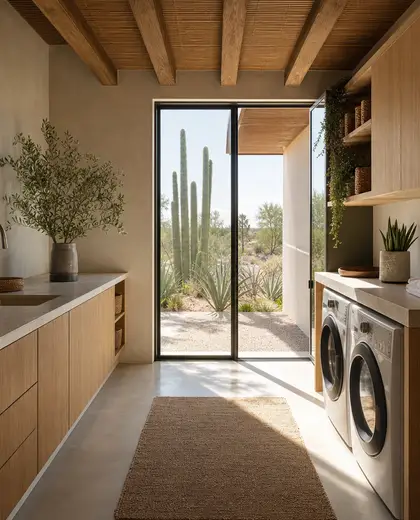
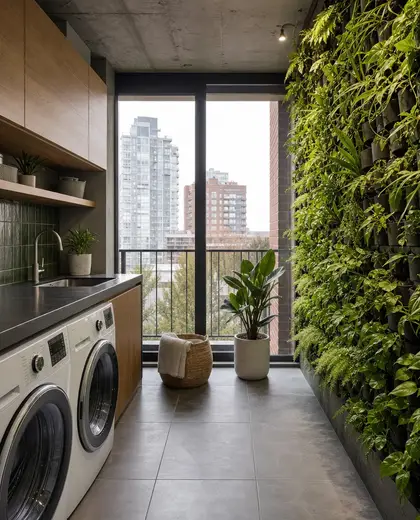
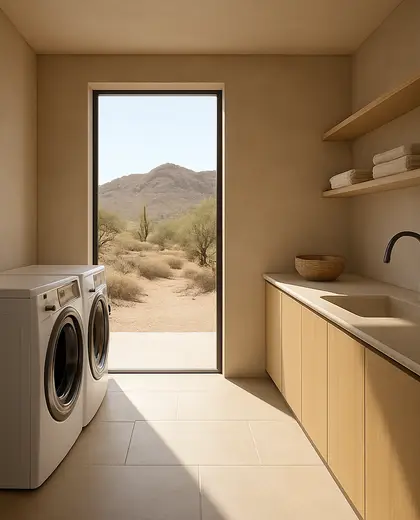
A laundry room composition is defined by durable, easy-clean surfaces such as porcelain tile, quartz, painted millwork, and moisture-resistant cabinetry. The palette is usually light and calm, with whites, soft greys, warm wood, and muted accents to keep the room bright and functional. Typical elements include a washer-dryer pair, a sink, countertop folding space, upper storage, and built-in hampers or drying solutions.
- laundry room

— References
References to explore


What should a laundry room include?
Most laundry rooms include a washer and dryer, countertop for folding, closed storage for detergents and linens, and preferably a sink or hanging rail if space allows.

Which finishes work best in a laundry room?
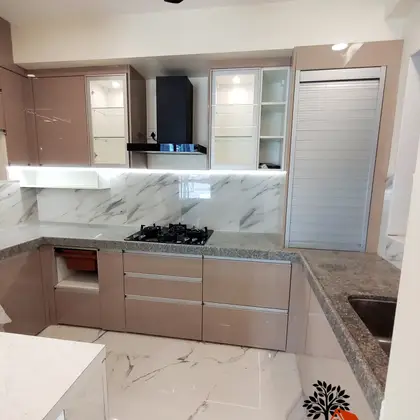
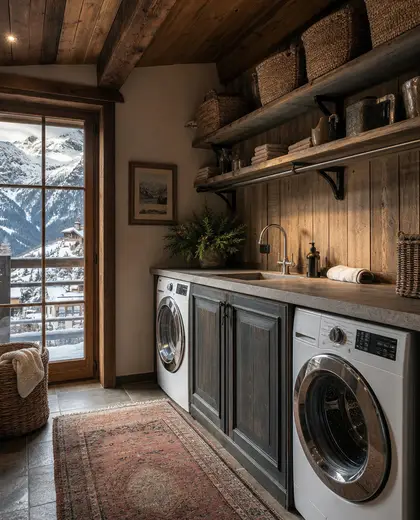
Choose finishes that resist moisture and are easy to wipe down, such as tile floors, sealed counters, and washable paint or cabinetry finishes.
Can a laundry room be designed in a small space?
Yes. Compact layouts can use stacked appliances, wall-mounted shelving, sliding doors, and a slim counter to keep the room functional without taking much area.

— The style
What defines it
Porcelain tile, quartz, laminate or stone-look counters, moisture-resistant MDF, painted wood, and metal hardware are common because they handle humidity and frequent use.
White, off-white, pale grey, beige, and light wood tones are the most common base, sometimes with darker hardware or backsplash details for contrast.
It often connects with mudrooms, closets, utility rooms, or back entries, and may share finishes with kitchens and service areas for a cohesive home interior.
— Professionals
Who has already built it

- mawar electrical serviceselectricians · Bengaluru · 1 projectsView profile →
- the achievers archsmart home professionals · Delhi · 1 projectsView profile →
- home interior decoratorscarpenters · Rampur · 3 projectsView profile →
- pavit ceramics pvt ltdceramic manufacturers · Ahmedabad · 2 projectsView profile →
— Questions
Frequently asked questions
What should a laundry room include?
Most laundry rooms include a washer and dryer, countertop for folding, closed storage for detergents and linens, and preferably a sink or hanging rail if space allows.
Which finishes work best in a laundry room?
Choose finishes that resist moisture and are easy to wipe down, such as tile floors, sealed counters, and washable paint or cabinetry finishes.
Can a laundry room be designed in a small space?
Yes. Compact layouts can use stacked appliances, wall-mounted shelving, sliding doors, and a slim counter to keep the room functional without taking much area.