PlanAin the studio
Grid
Grid places a structural grid line: parallel to a line you click, at a distance you show or type, or through a point towards a second point or at a typed angle. Walls, columns and every other tool snap to it, and the sections and elevations carry it.
What it is
Grid places the structural grid lines of the project. It works the way Guide does, with two ways of placing a line. Click a line that the magnet follows (the face of a wall, an edge, another grid line or a guide) and the new grid line runs parallel to it, at the distance you show or type. Click a point or empty space and the new grid line runs through it, towards a second point or at an angle you type.
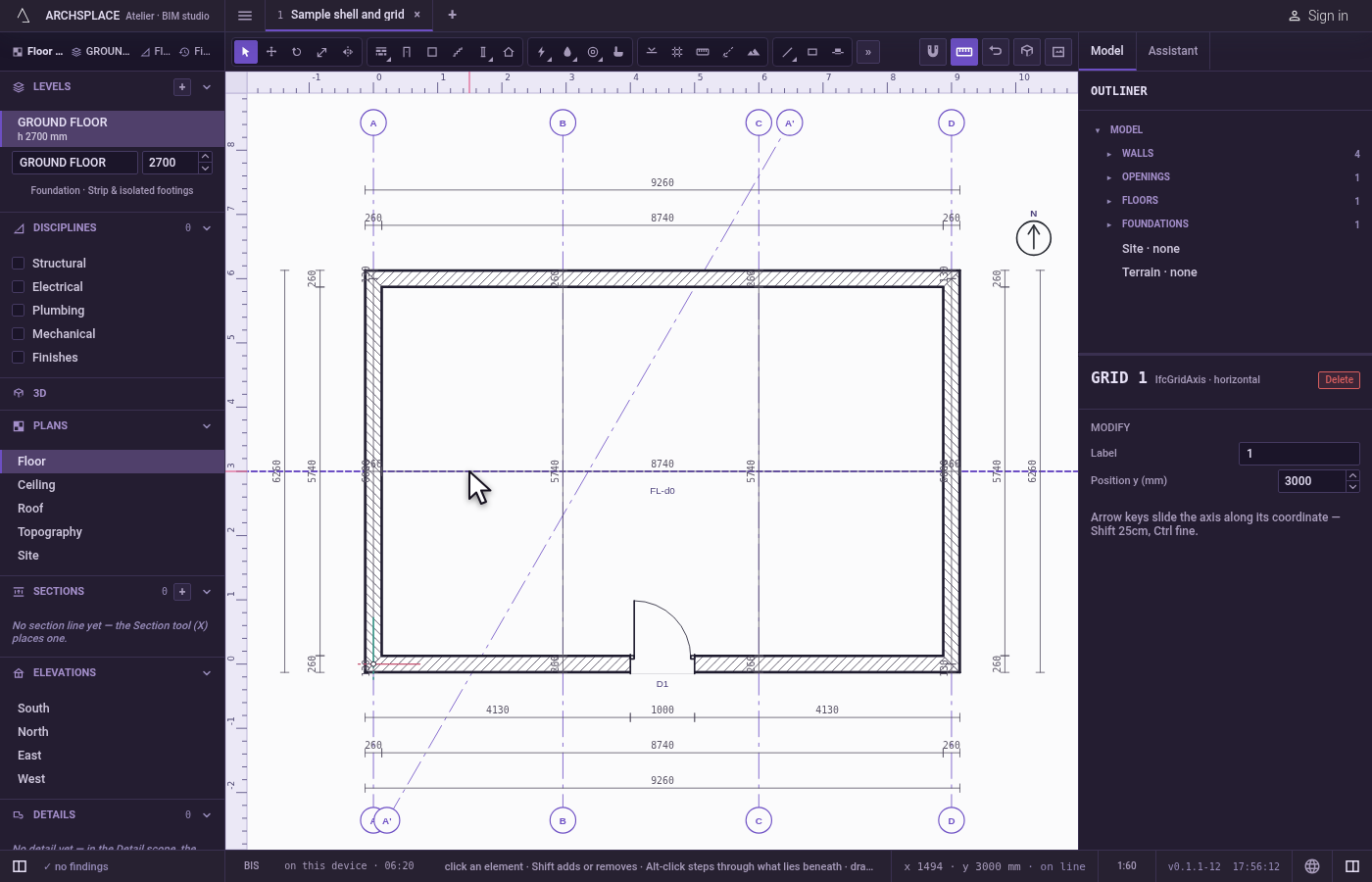
A grid line that runs exactly vertical takes a letter, A, B, C; one that runs exactly horizontal takes a number, 1, 2, 3; one at an angle takes a letter with a prime, A', B'. The magnet of every tool follows the grid lines and catches the points where two of them cross, the Structural overlay dimensions them, and the sections and elevations draw them.
When to use it
- To set out a structural grid before placing columns and walls.
- To add a grid line parallel to an existing wall at a given distance.
- To place a grid line at an angle for a wing that does not follow the main grid.
The steps
Pick the tool. Press
A, or click the Grid button. The status bar describes both ways: a line, or a point.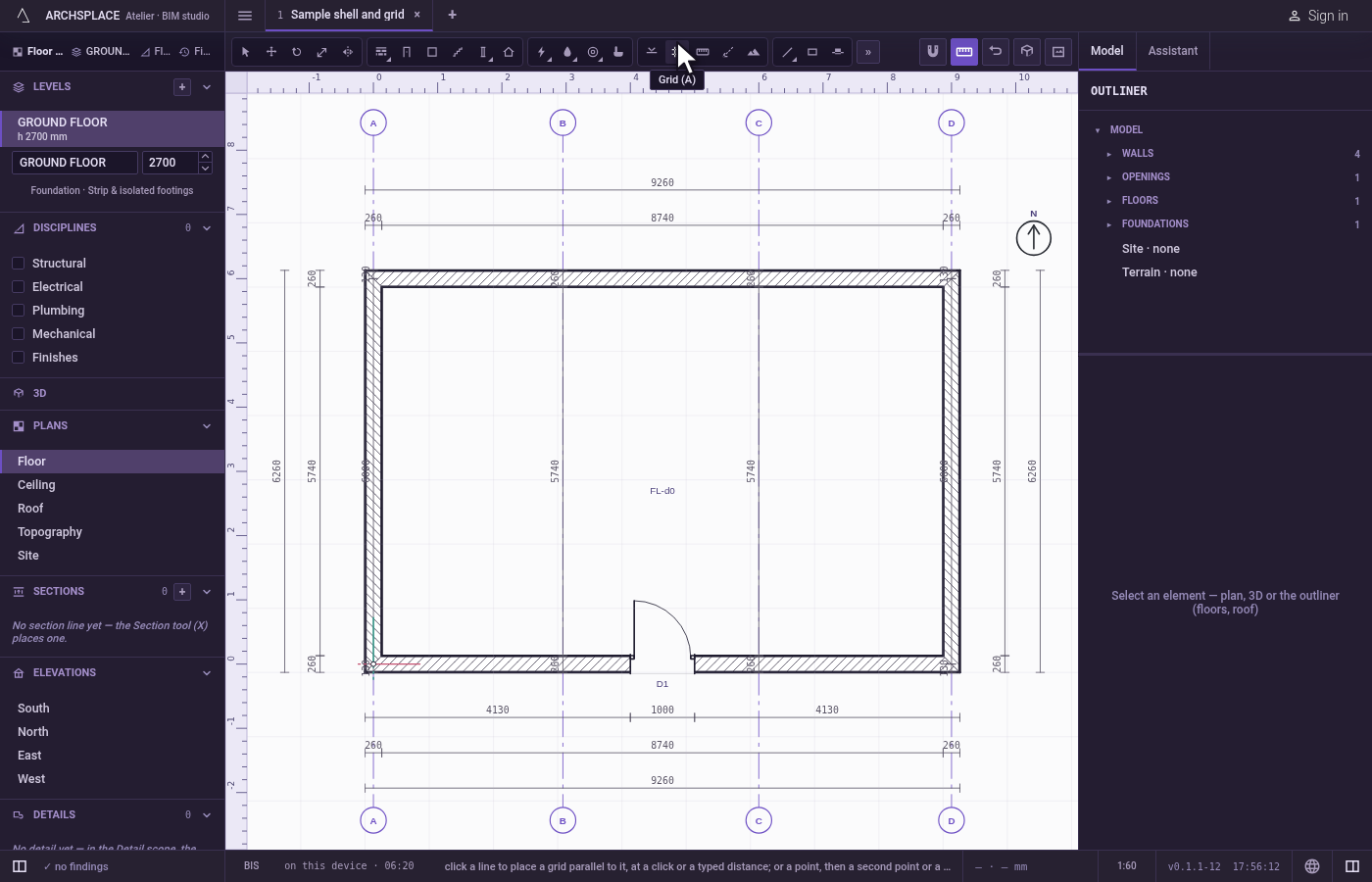
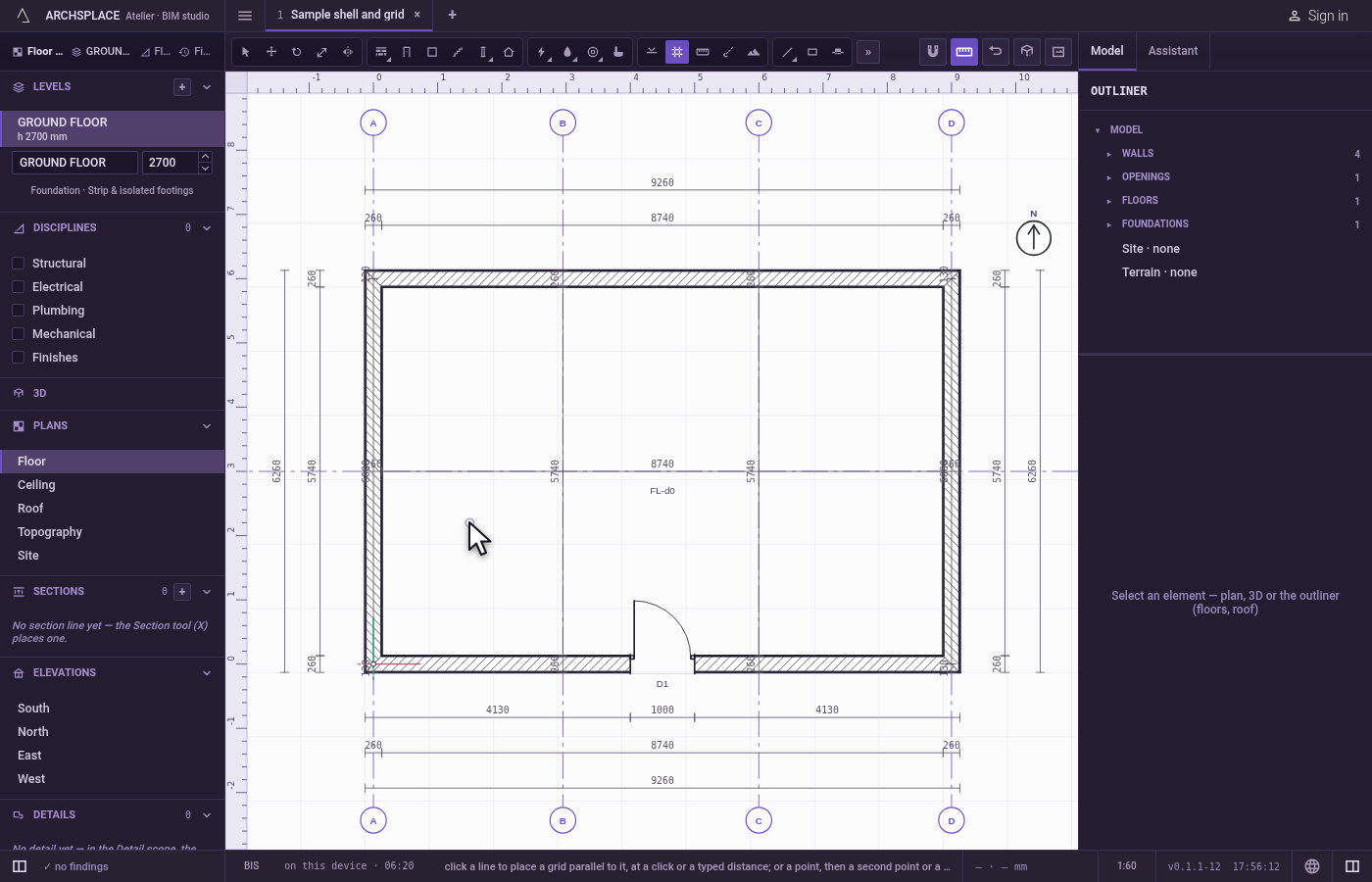
Click the reference. Click on a line that the magnet follows to place a grid line parallel to it. Or click a point, or empty space, to place one through that point.
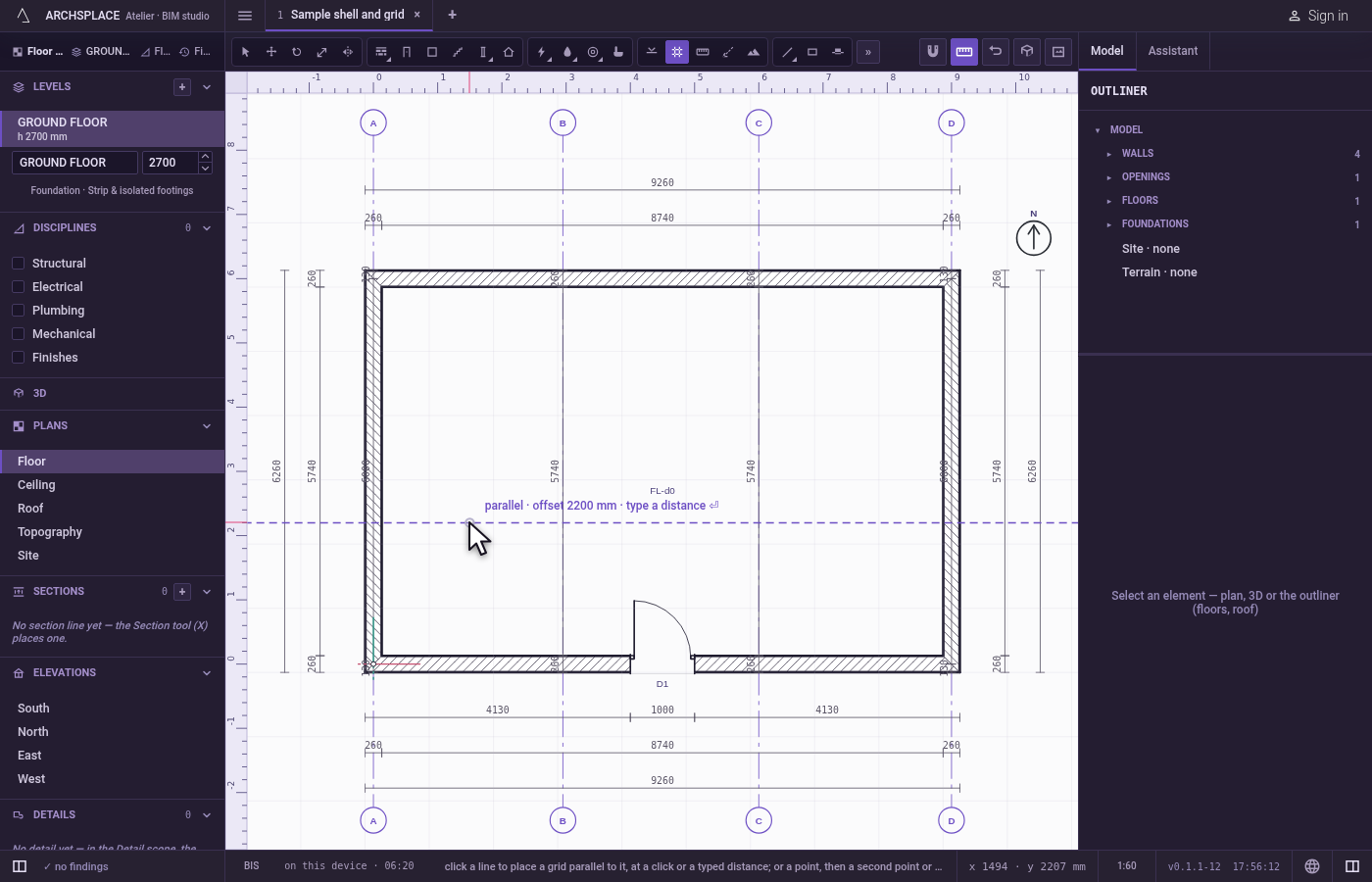
Parallel: show or type the distance. A dashed line follows the cursor, parallel to the reference, and the label beside it shows its distance. Click to place it there, or type the distance in the project units and press Enter: the grid line is placed at that distance on the side of the cursor.
Or, through a point: show or type the direction. The line turns about the point towards the cursor, and the label shows its angle. Click a second point to place it; Shift, or F8 while it is on, keeps it exactly vertical or horizontal. Or type
<followed by an angle in degrees, anticlockwise from the horizontal of the plan, and press Enter.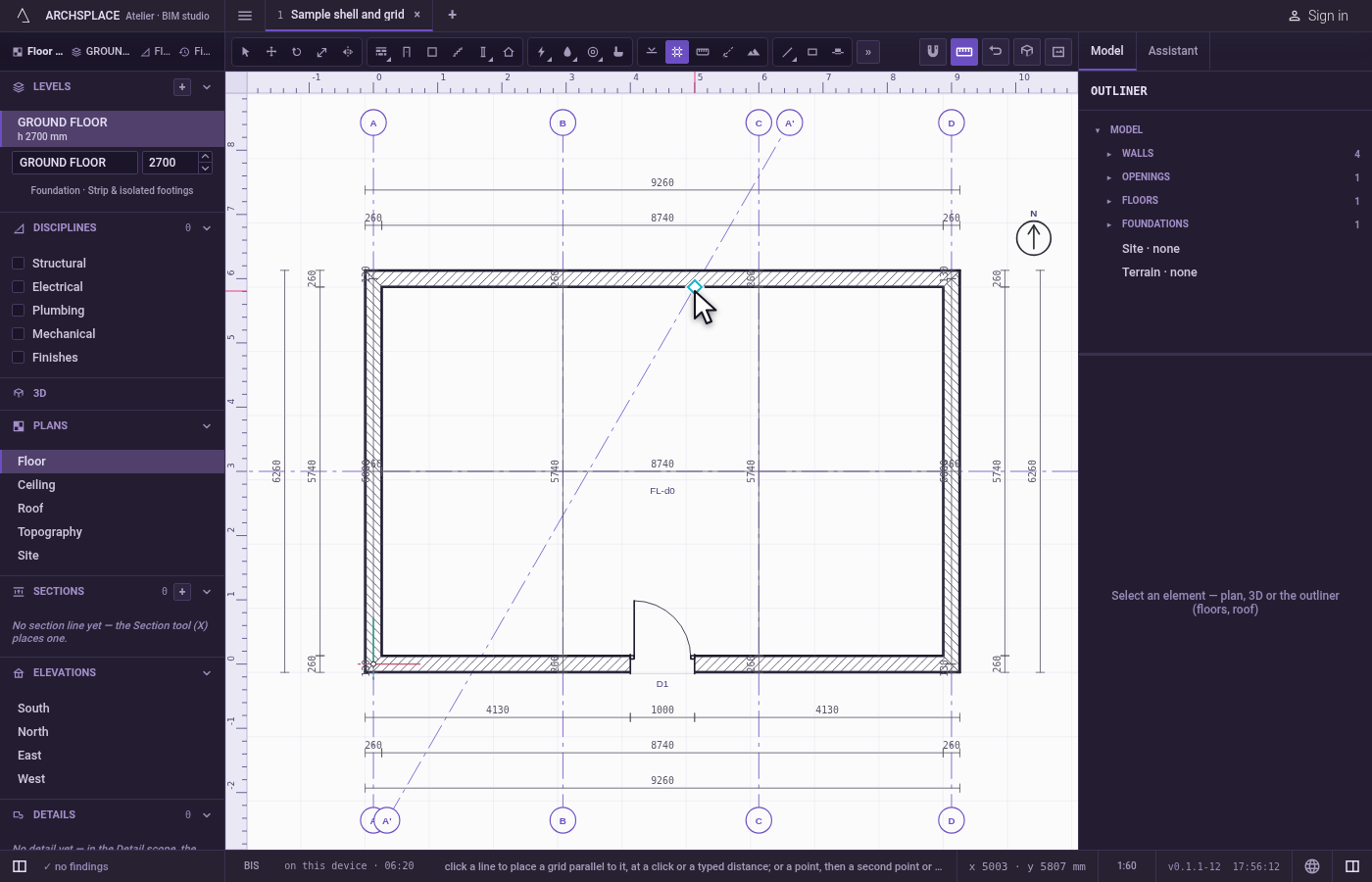
Edit it in its panel. Select the grid line with Select: its panel sets its label and its position, or, for a grid line at an angle, its line through two points and its angle. With Select, drag a grid line along itself, or nudge it with the arrow keys.
What it refuses
- A grid line on its own reference. A parallel grid line at zero distance from its reference is refused, with a message asking you to move the cursor or type a distance.
- A second point on the first. A direction needs a second point away from the first one; the studio says so.
- A typed value that is not valid. A distance must be a positive length, and an angle is written like
<45; anything else is refused with a reminder of the format. - A box over grid lines. A box and Select all never pick a grid line: click it.
What it writes to the contract
One new entry at the end of the project's list of grids, as one step that one undo reverses. A vertical or horizontal grid line is written as its axis, its position to the nearest millimetre and its label. A grid line at an angle is written as two points through which it passes and its label. Esc brings Select back without placing anything.
Concepts
Common questions
How are grid lines labelled?
A vertical grid line takes a letter (A, B, C) and a horizontal one a number (1, 2, 3), in the order in which you place them. A grid line at an angle takes a letter with a prime (A', B'). You can rename any of them in its panel.
How do I place a grid line 6 m from another?
Pick the Grid tool, click the existing grid line, place the cursor on the side where the new one goes, type 6 and press Enter.