— Ideas & inspiration
Bathroom composition
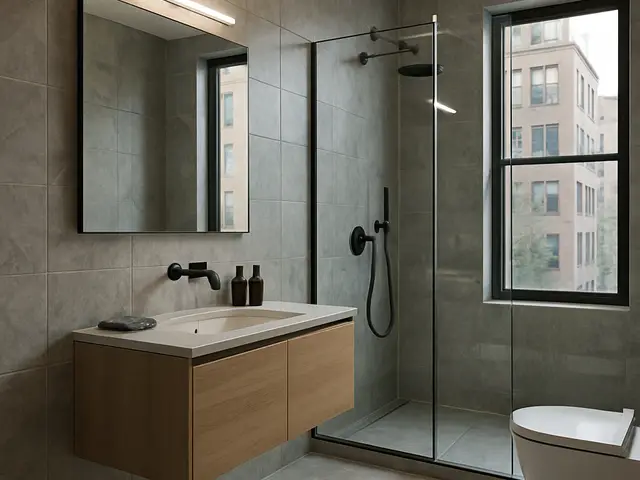
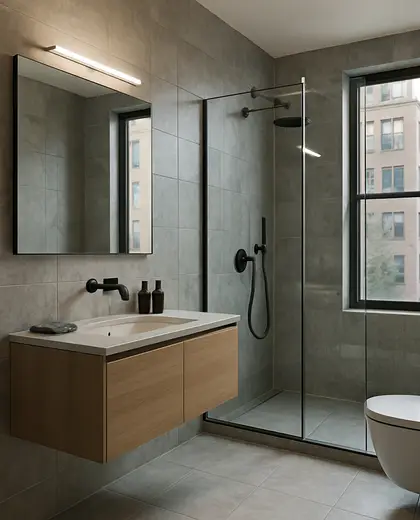
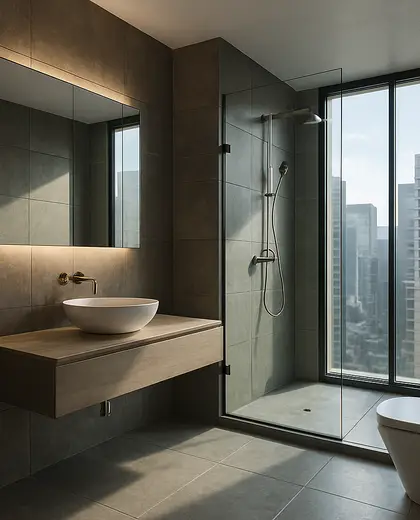
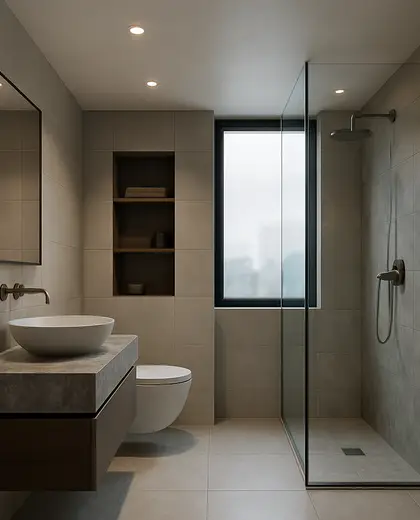
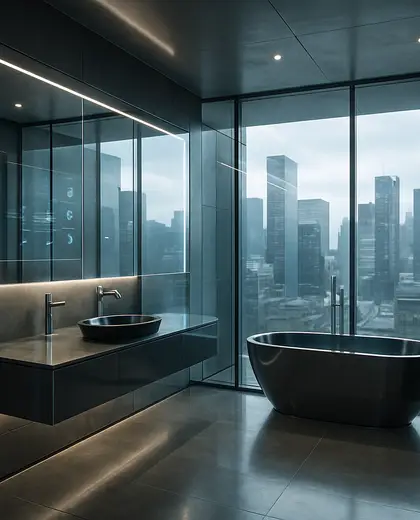
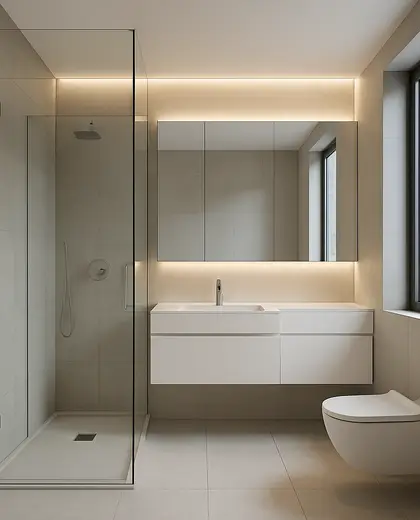
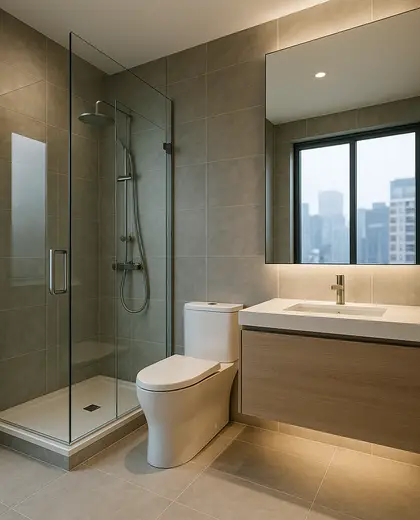
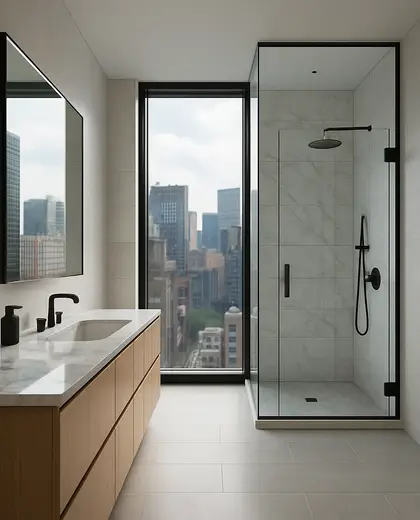
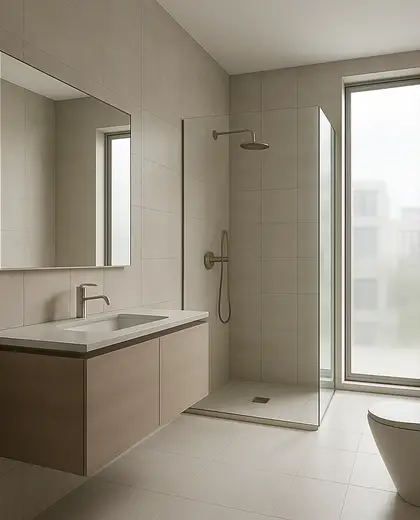
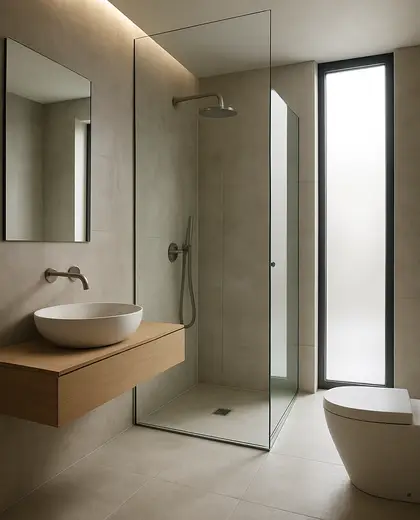
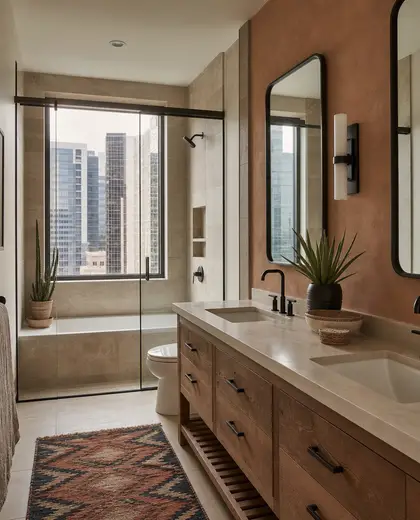
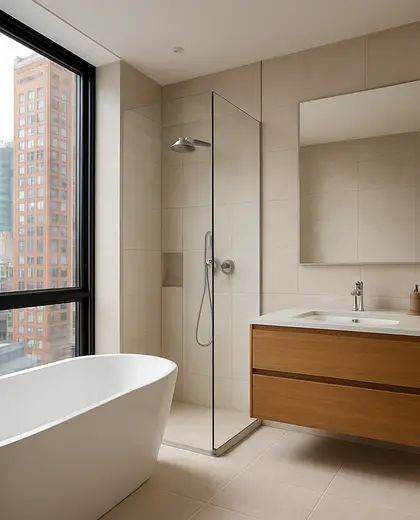
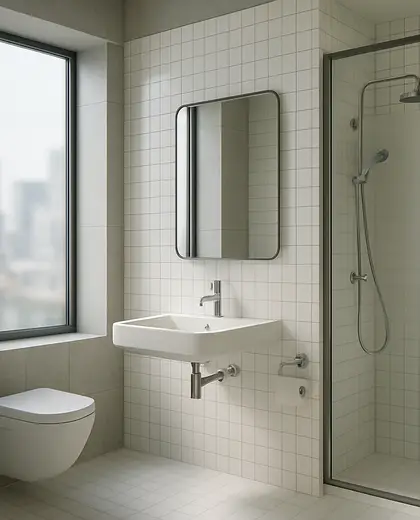
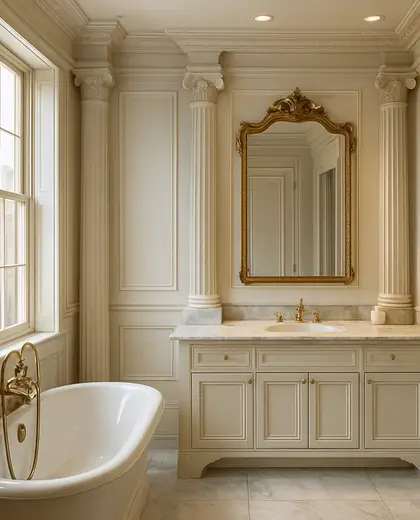
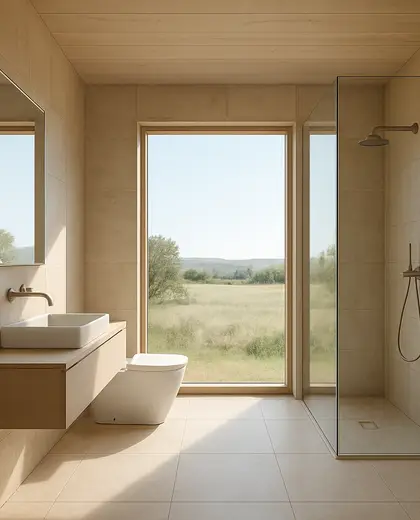
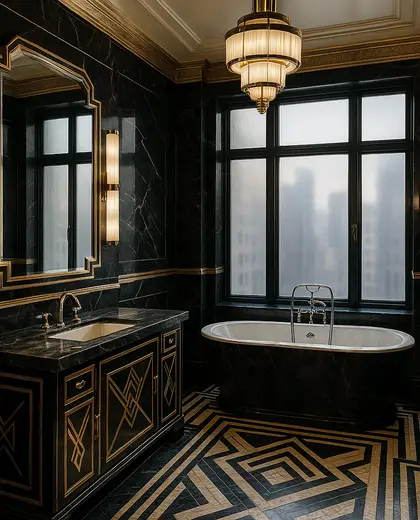
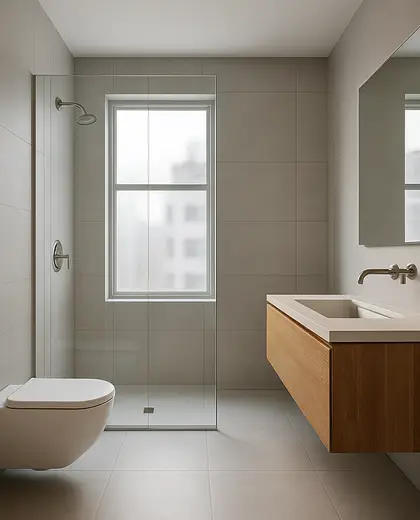
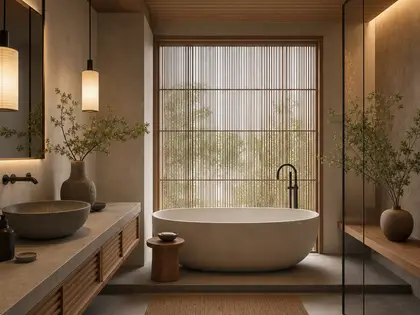
A bathroom composition is defined by moisture-resistant surfaces, durable fixtures, and a clear separation of wet and dry zones. Common materials include tile, stone, sealed wood, glass, porcelain, and metal, usually in a palette of white, gray, beige, muted green, or dark accents. The composition is shaped by the basin, shower or tub, mirror, storage, lighting, and easy-to-clean detailing.
- bathroom
— References
References to explore
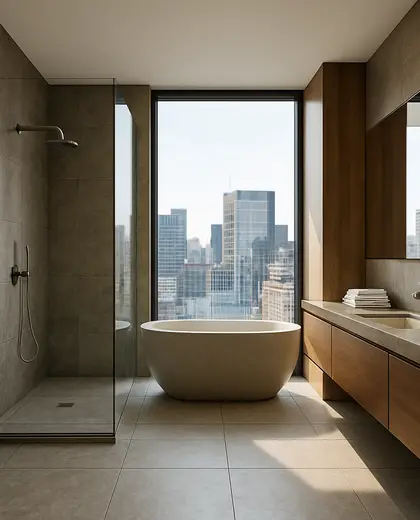
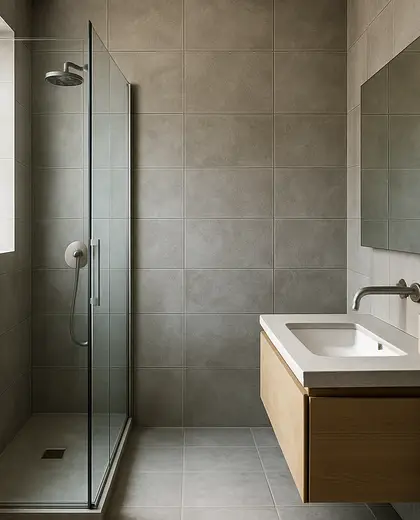
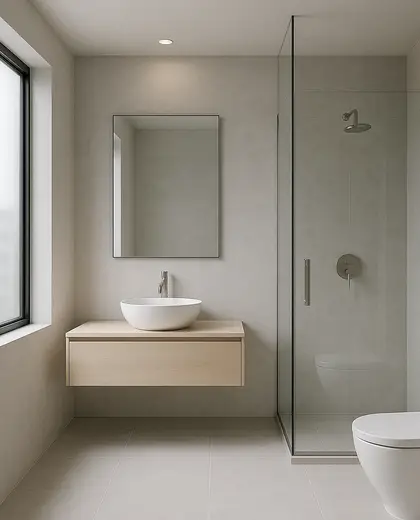
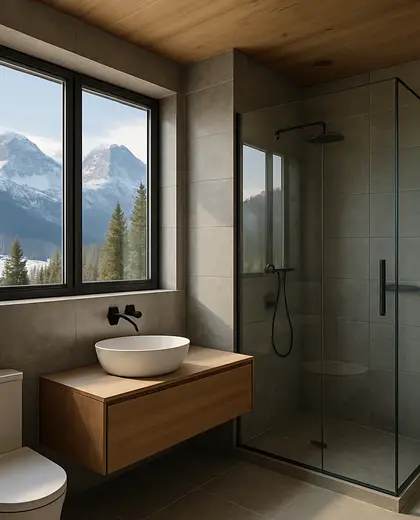
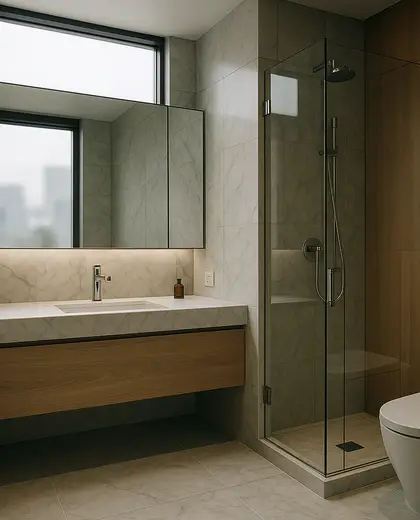
What makes a bathroom composition different from a simple bathroom layout?
A composition considers how materials, fixtures, lighting, and circulation work together, not just where the toilet, sink, and shower are placed.
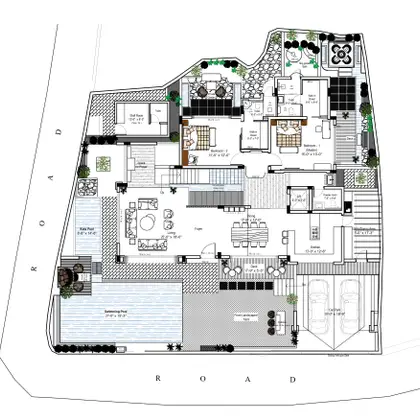
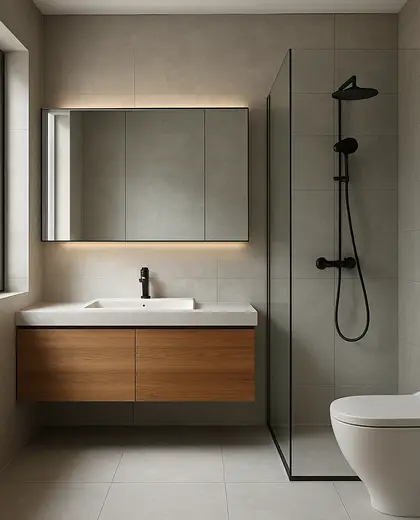
Which materials hold up best in a bathroom?
Non-porous or well-sealed materials perform best: porcelain tile, stone with proper sealing, glass, metal, and moisture-resistant cabinetry.

Can a bathroom composition feel warm instead of clinical?
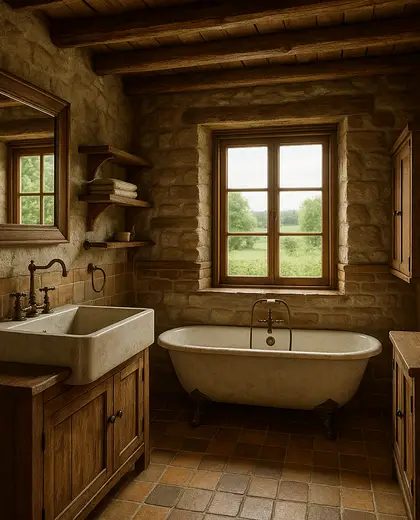
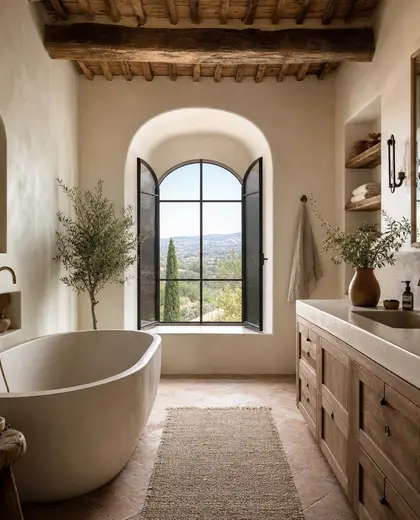
Yes. Warmer woods, softer lighting, textured tile, and beige or muted earth tones can make the space feel less sterile while staying practical.
— The style
What defines it
Porcelain tile, natural stone, glass, stainless steel, sealed timber, and painted moisture-resistant finishes.
Typically soft neutrals such as white, sand, gray, and taupe, with black or brass used as accents.
Works with underfloor heating, recessed lighting, built-in storage, and compact fixtures for a clean layout.
— Professionals
Who has already built it





- mawar electrical serviceselectricians · Bengaluru · 1 projectsView profile →
- the achievers archsmart home professionals · Delhi · 1 projectsView profile →
- home interior decoratorscarpenters · Rampur · 3 projectsView profile →
- pavit ceramics pvt ltdceramic manufacturers · Ahmedabad · 2 projectsView profile →
— Questions
Frequently asked questions
What makes a bathroom composition different from a simple bathroom layout?
A composition considers how materials, fixtures, lighting, and circulation work together, not just where the toilet, sink, and shower are placed.
Which materials hold up best in a bathroom?
Non-porous or well-sealed materials perform best: porcelain tile, stone with proper sealing, glass, metal, and moisture-resistant cabinetry.
Can a bathroom composition feel warm instead of clinical?
Yes. Warmer woods, softer lighting, textured tile, and beige or muted earth tones can make the space feel less sterile while staying practical.