— Ideas & inspiration
Art Deco
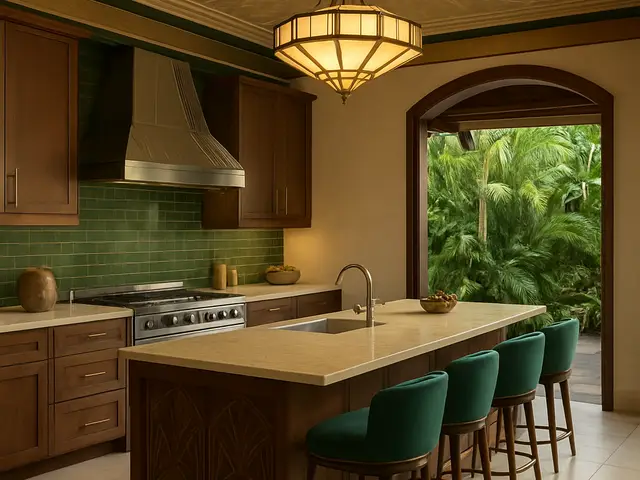
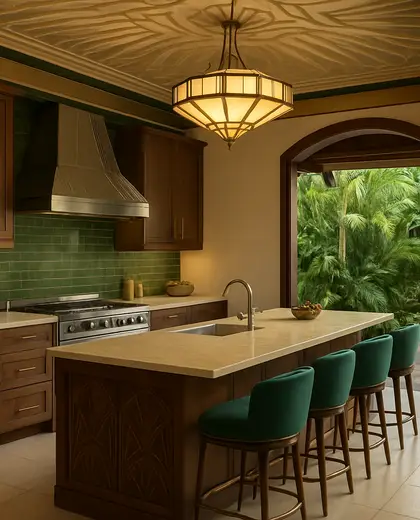
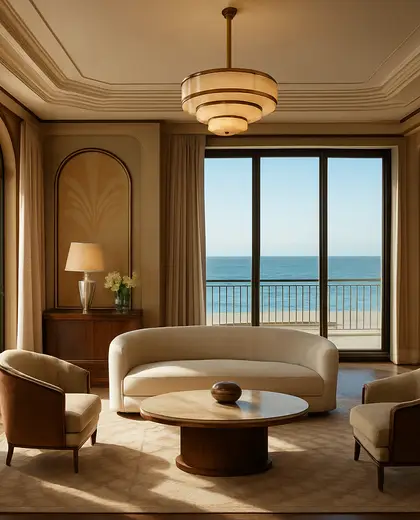
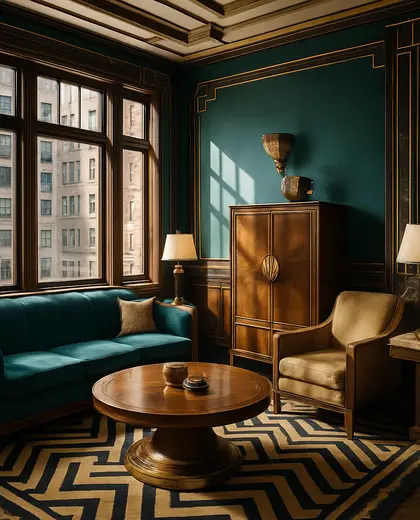
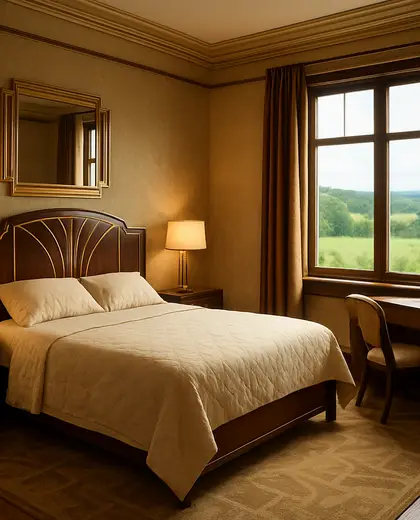
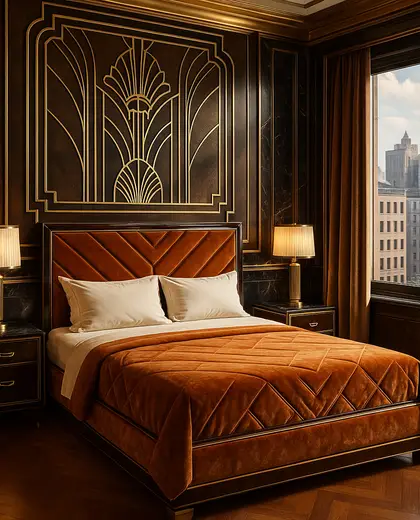
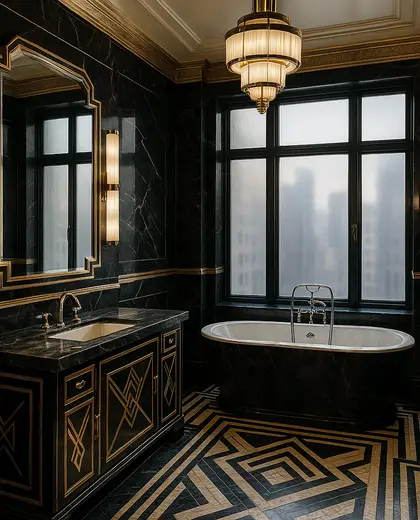
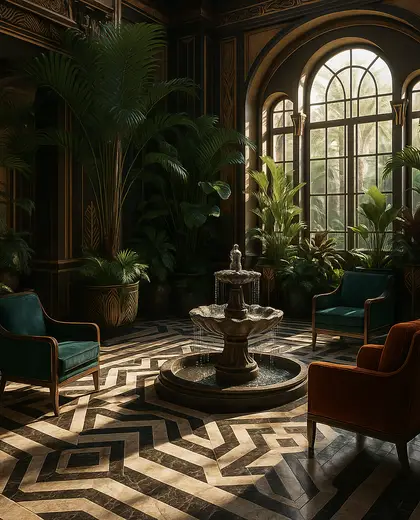
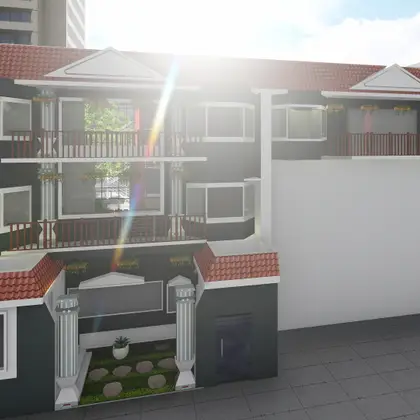
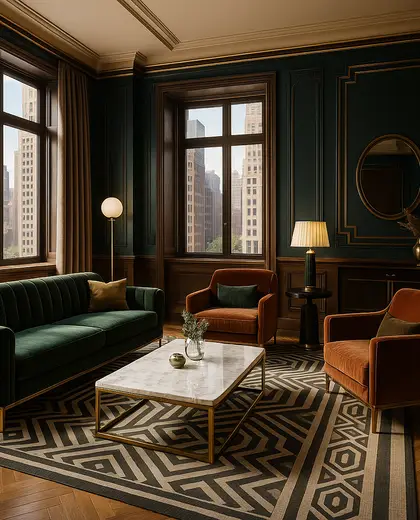
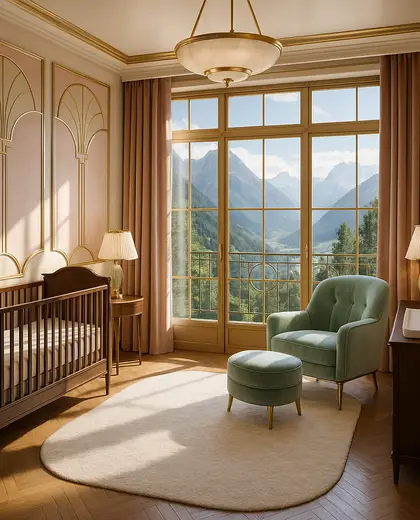
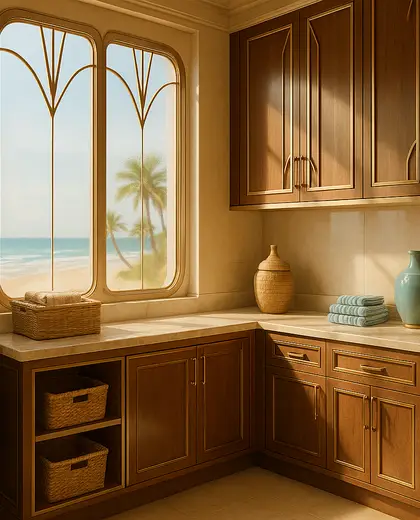
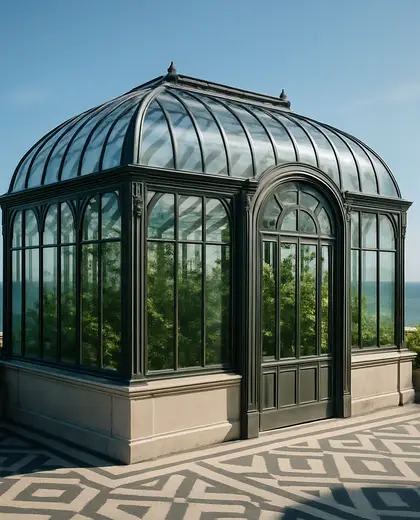
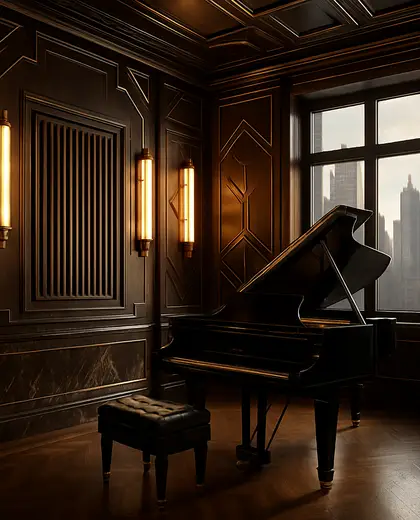
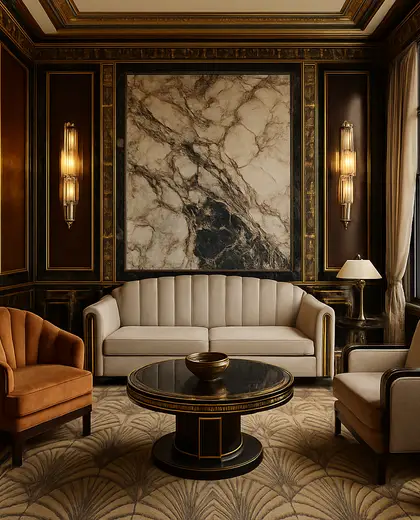
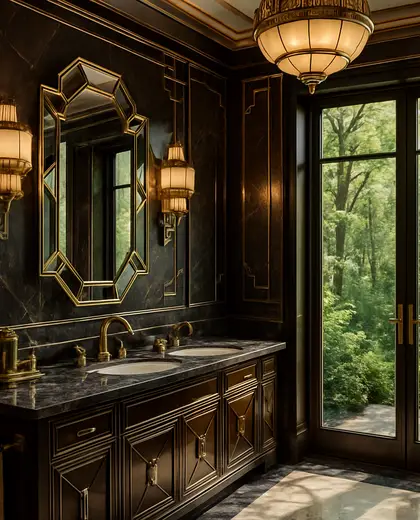
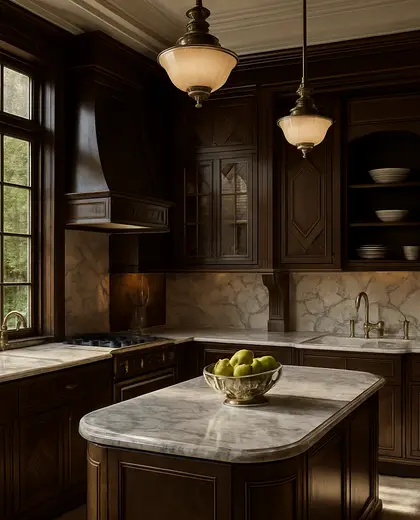
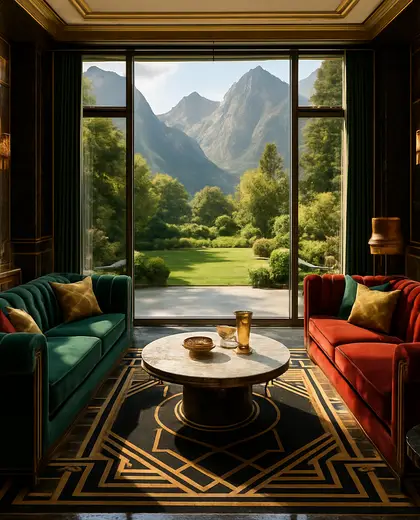
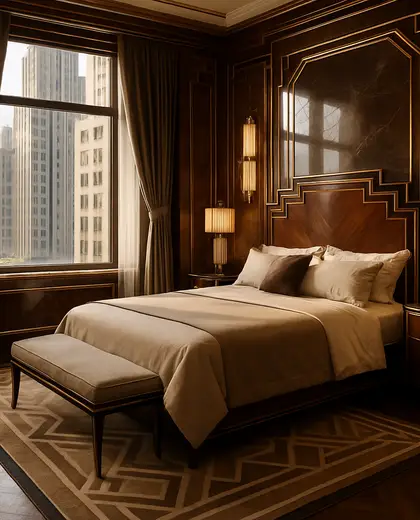
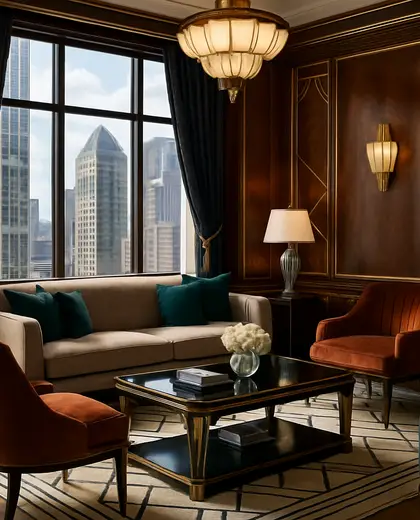
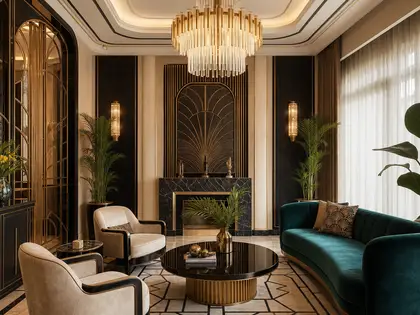
Art Deco is defined by symmetrical layouts, stepped forms, sunburst motifs, and strong geometry. It often uses polished materials such as marble, brass, lacquered wood, glass, and velvet, with high-contrast detailing and reflective finishes. The palette typically mixes black, white, gold, emerald, navy, and deep jewel tones.
- art deco
— References
References to explore


What makes a room feel Art Deco instead of just glamorous?
Art Deco relies on geometry and symmetry, not only shine. Look for repeated shapes, stepped profiles, bold trim, and materials with a crisp, polished finish.

Can Art Deco work in a small home?
Yes, if you keep the palette controlled and use a few strong features rather than many decorative layers. Mirrors, slim brass details, and a patterned rug can suggest the style without overcrowding the space.



Does Art Deco have to be very dark or dramatic?
No. Many Art Deco interiors use light walls with dark accents, especially black, brass, or jewel-toned details. The key is contrast and clean geometry, not a fully dark room.

— The style
What defines it
Marble, brass, chrome, lacquered wood, mirrored glass, velvet, and occasionally terrazzo or exotic veneers.
Black and white anchors with gold accents, plus rich jewel tones like emerald, sapphire, burgundy, and deep navy.
Works well with modern minimalism, classic moldings, warm wood floors, and statement lighting when you want a more layered interior.
— Professionals
Who has already built it





- sandeep parchitects · 2 projectsView profile →
- home interior decoratorscarpenters · Rampur · 3 projectsView profile →
- pavit ceramics pvt ltdceramic manufacturers · Ahmedabad · 2 projectsView profile →
- Bristolfurniture sellers · Bangalore · 6 projectsView profile →
— Questions
Frequently asked questions
What makes a room feel Art Deco instead of just glamorous?
Art Deco relies on geometry and symmetry, not only shine. Look for repeated shapes, stepped profiles, bold trim, and materials with a crisp, polished finish.
Can Art Deco work in a small home?
Yes, if you keep the palette controlled and use a few strong features rather than many decorative layers. Mirrors, slim brass details, and a patterned rug can suggest the style without overcrowding the space.
Does Art Deco have to be very dark or dramatic?
No. Many Art Deco interiors use light walls with dark accents, especially black, brass, or jewel-toned details. The key is contrast and clean geometry, not a fully dark room.