— Blog · 28 July 2026 · 3 min read
Japandi bathroom: calm, clean and quietly luxurious
Learn how to create a Japandi bathroom with warm natural materials, a soft neutral palette, uncluttered storage and thoughtful detailing suited to Indian homes.
Keep the look calm and pared back
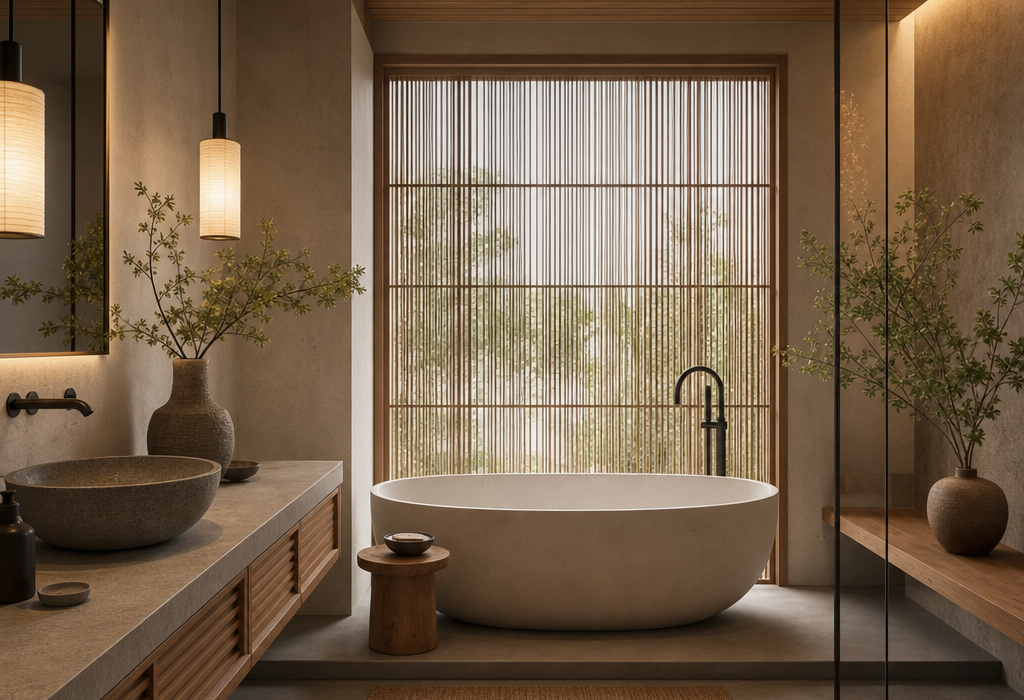
Japandi works best in a bathroom when every element feels intentional. The style blends Japanese restraint with Scandinavian warmth, so the overall mood should be serene, uncluttered and quietly elegant. Start with clear surfaces, hidden storage and simple lines. In Indian homes, this approach is especially useful in compact bathrooms, where visual calm can make the room feel larger and easier to maintain.
Choose a soft, earthy palette
Use warm white, sand, stone grey, taupe and muted beige as your base colours, then add small touches of charcoal, dark wood or matte black for contrast. Avoid harsh gloss and overly bright tones. If you want a little richness, bring in clay, olive or muted sage through towels, a bath mat or a single stool. The palette should feel natural in both daylight and warm evening lighting, and it should sit comfortably with Indian weather and dust, which tend to favour finishes that do not show marks too quickly.
Focus on natural materials and simple surfaces
Matte vitrified tiles, stone-finish porcelain, microcement-style walls and light timber are ideal for this style. A teak-inspired vanity, bamboo accents or a wood-look laminate with a realistic grain can bring warmth without making the room heavy. For the floor, choose a slip-resistant surface in a soft stone or wood tone. Keep the grout lines neat and the tile pattern simple, such as large-format squares or slim rectangular tiles, so the room feels seamless and composed.
Use clean-lined fixtures and functional furniture
Select a wall-hung or slim-profile vanity with concealed storage, a plain round or oval mirror, and a basin with a smooth, uncomplicated shape. Brass can work if it is brushed and understated, but matte black, stainless steel or soft nickel often suit Japandi better. Keep the shower zone open and streamlined with clear glass partitions and minimal framing. In a bathroom, the furniture should look light on the eye, with enough closed storage for toiletries, cleaning supplies and extra towels to preserve the uncluttered effect.
Finish with quiet details that feel considered
The final layers should be subtle rather than decorative. Use a textured cotton hand towel, a ceramic soap dish, a stone tray and perhaps one small plant that can handle humidity, such as a peace lily or a hardy fern. Lighting should be warm and diffused: a pair of simple wall lights beside the mirror or a soft ceiling light with no harsh glare. Keep accessories to a minimum, and choose quality over quantity. When every detail is calm, tactile and practical, the bathroom feels like a restful retreat rather than a display.
Find the best architects and designers for your bathroom project
Free, no commitment / Less than 5 minutes
Are you an architect or designer? Sign up for free! »