— Ideas & inspiration
Nursery
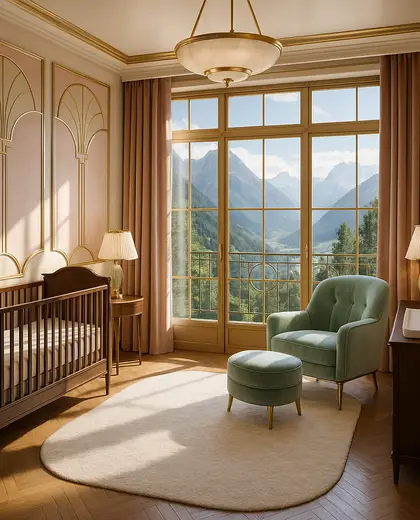
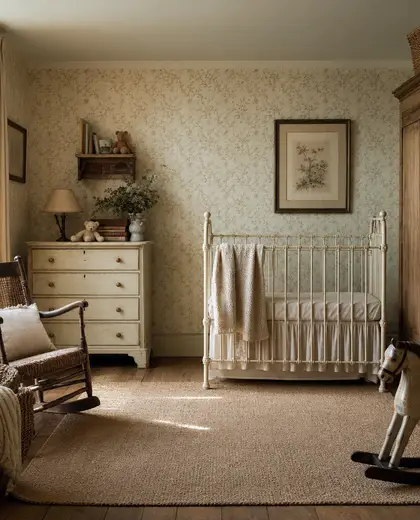
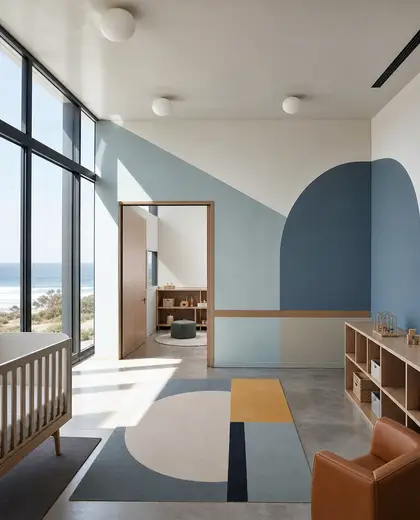
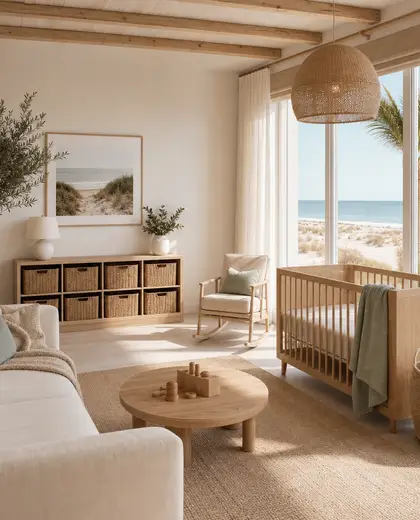
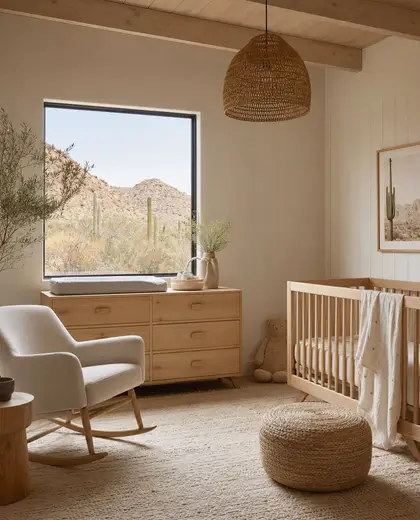
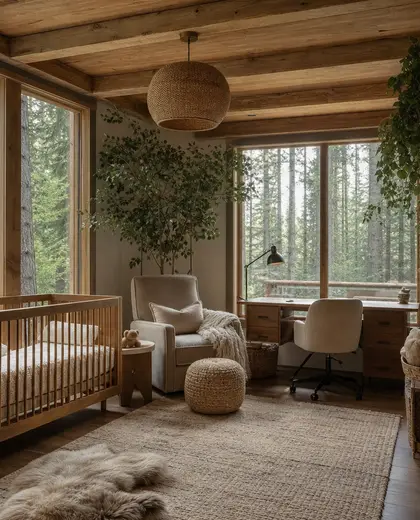
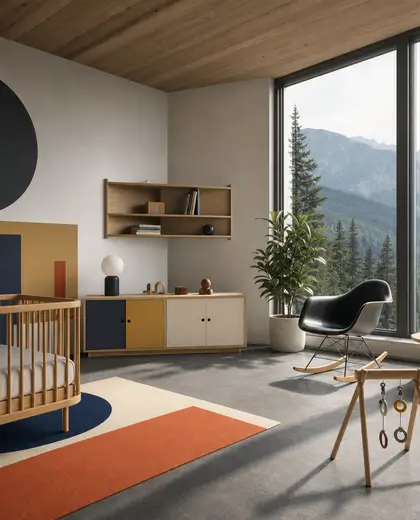
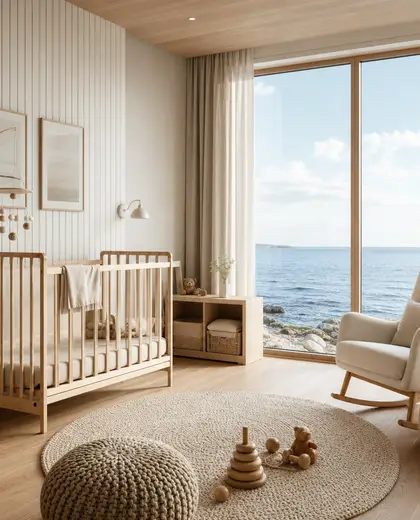
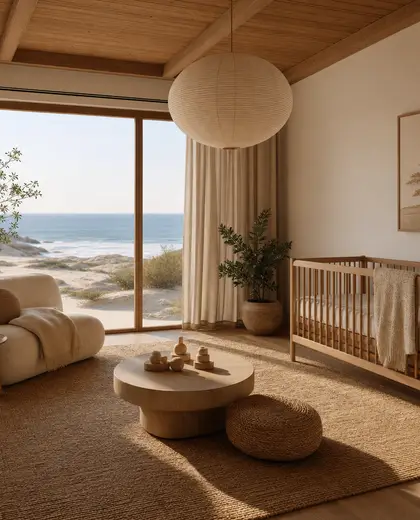
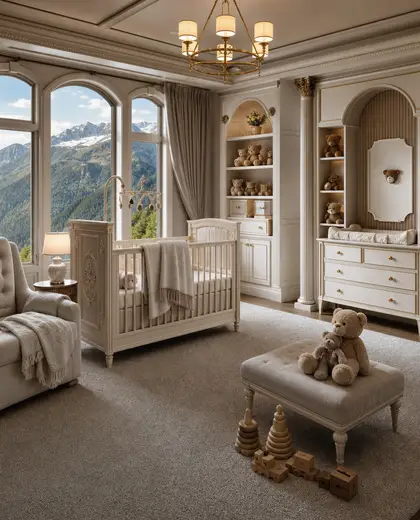
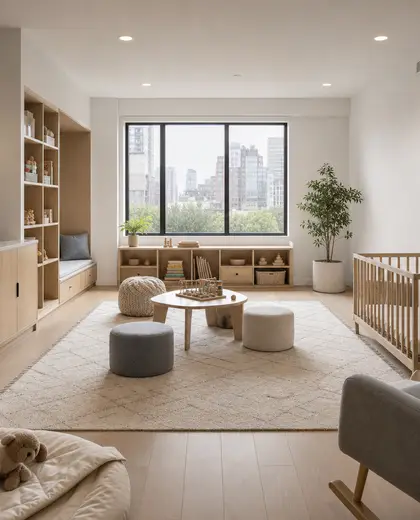
A nursery is typically defined by soft, safe surfaces, light woods, painted millwork, and washable textiles. The palette stays calm and low-contrast, often using warm whites, muted pastels, and natural tones. Built-in storage, a crib, a changing area, blackout window treatments, and layered lighting are common defining elements.
- nursery
— References
References to explore
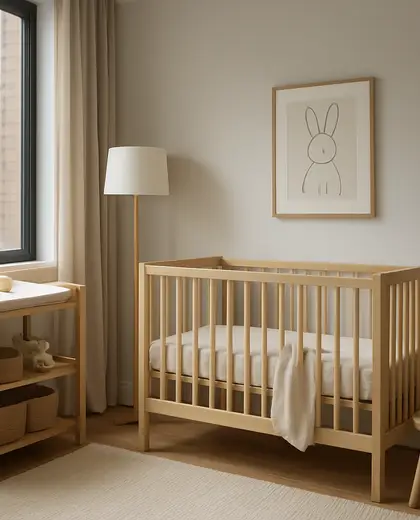
What makes a nursery different from a regular bedroom?
A nursery centers on infant care and sleep, so it usually includes a crib, changing storage, blackout window coverings, soft lighting, and finishes that are easy to clean and maintain.
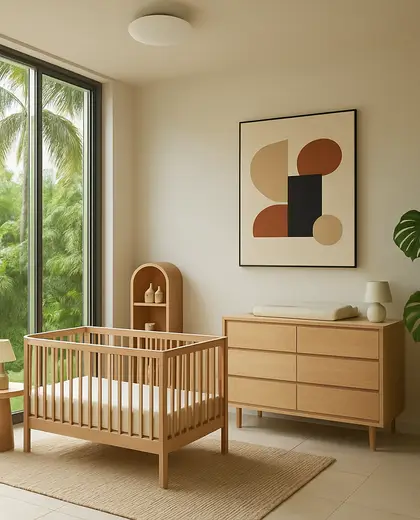
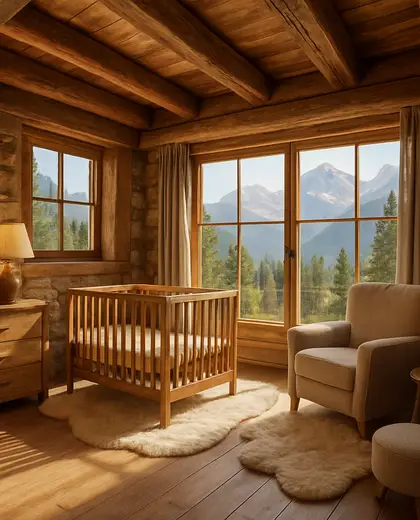
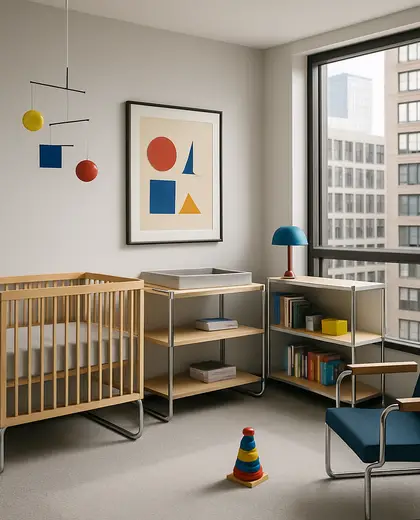

Can a nursery use darker colors?
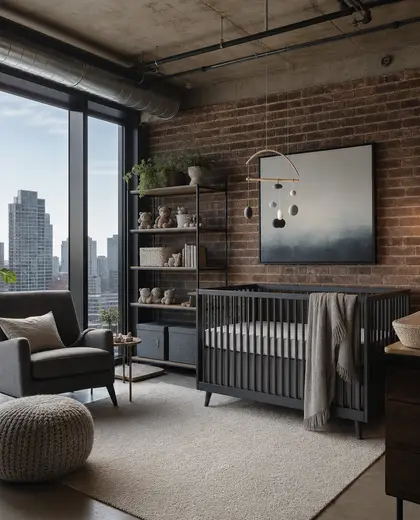
Yes, but they are usually balanced with lighter walls, natural wood, or plenty of daylight so the room still feels calm and restful. Deep tones work best as accents rather than the dominant finish.


What flooring works well in a nursery?
Hardwood, engineered wood, or cork are common because they are durable and can be softened with washable rugs. Plush wall-to-wall carpet is less common where easy cleaning matters.



— The style
What defines it
Painted MDF or wood millwork, oak or ash furniture, cotton and linen textiles, cork or rubber flooring, and easy-clean wall paint are common.
Warm white, pale beige, soft gray, blush, sage, and dusty blue are typical, with a restrained contrast level to keep the room calm.
Nursery design often pairs with Scandinavian, contemporary, transitional, or gentle traditional interiors, especially when the rest of the home uses natural finishes.
— Professionals
Who has already built it
- mohd wasimarchitects · 6 projectsView profile →
- home interior decoratorscarpenters · Rampur · 3 projectsView profile →
- pavit ceramics pvt ltdceramic manufacturers · Ahmedabad · 2 projectsView profile →
- nikitha kumananinterior designers · 6 projectsView profile →
— Questions
Frequently asked questions
What makes a nursery different from a regular bedroom?
A nursery centers on infant care and sleep, so it usually includes a crib, changing storage, blackout window coverings, soft lighting, and finishes that are easy to clean and maintain.
Can a nursery use darker colors?
Yes, but they are usually balanced with lighter walls, natural wood, or plenty of daylight so the room still feels calm and restful. Deep tones work best as accents rather than the dominant finish.
What flooring works well in a nursery?
Hardwood, engineered wood, or cork are common because they are durable and can be softened with washable rugs. Plush wall-to-wall carpet is less common where easy cleaning matters.