— Ideas & inspiration
Mud Room
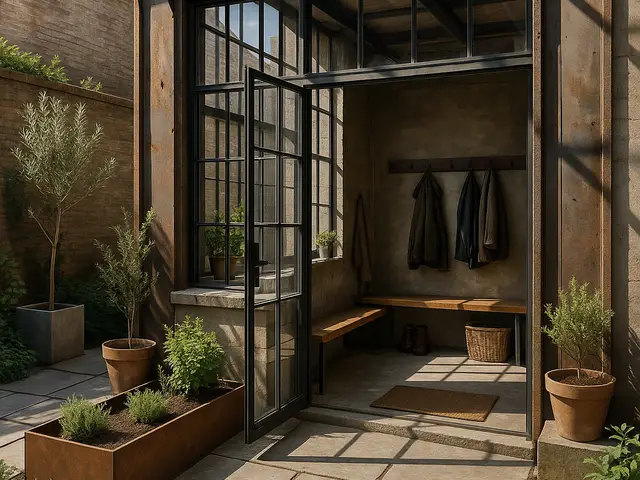
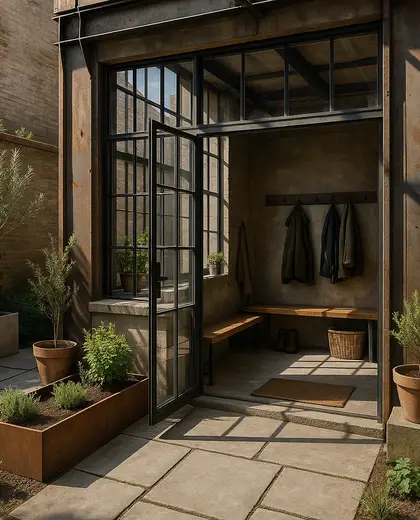
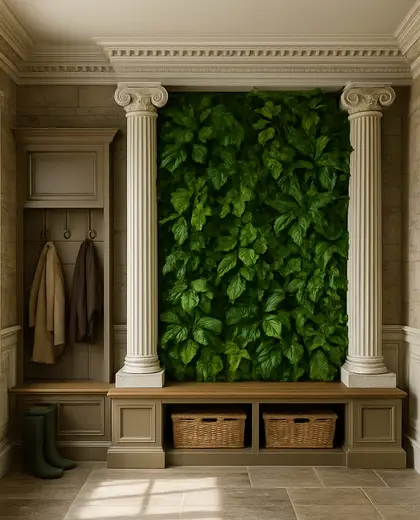
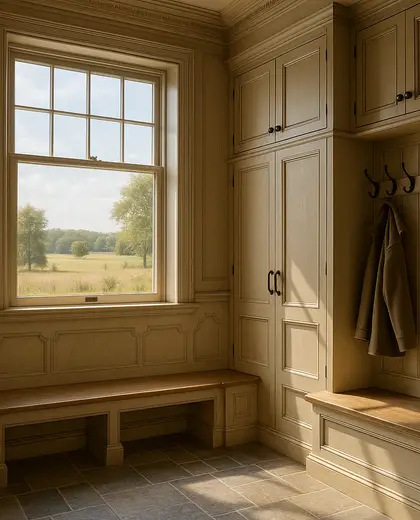
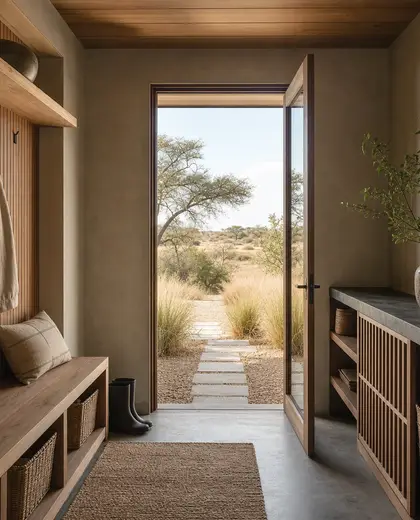
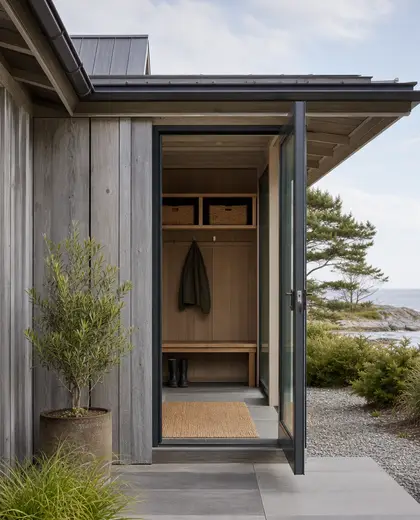
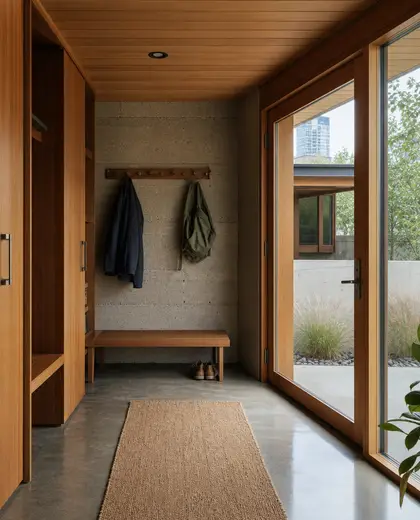
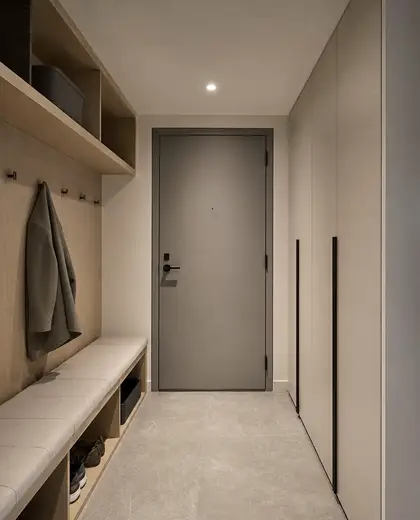
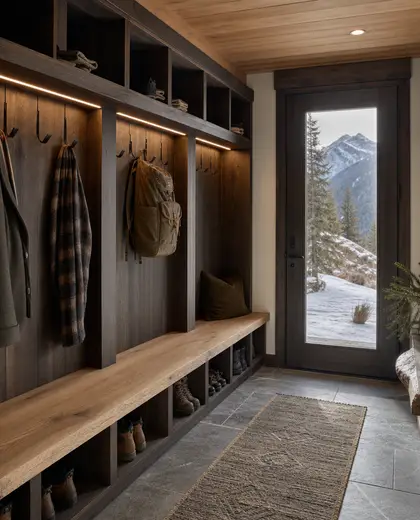
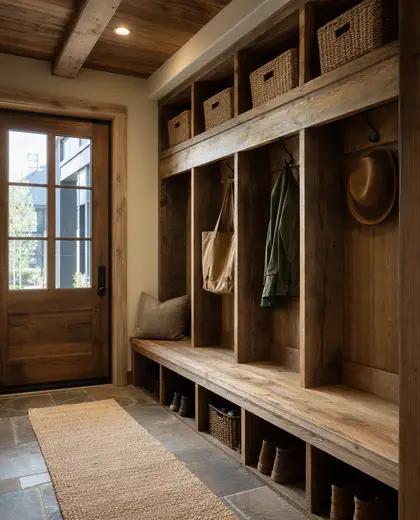
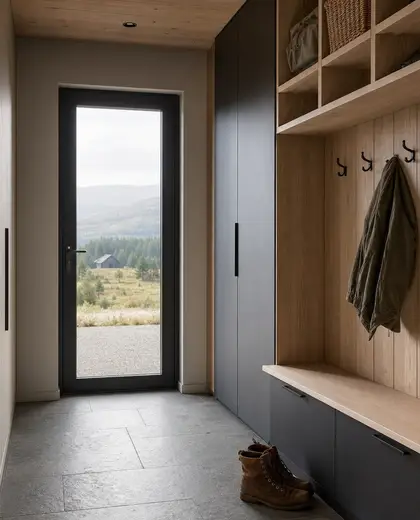
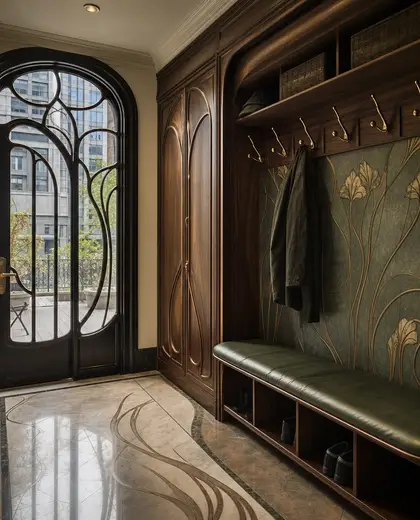
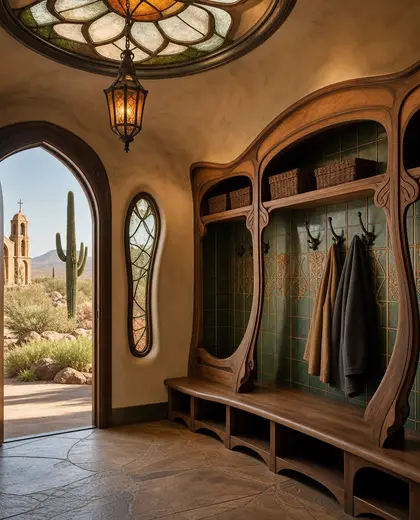
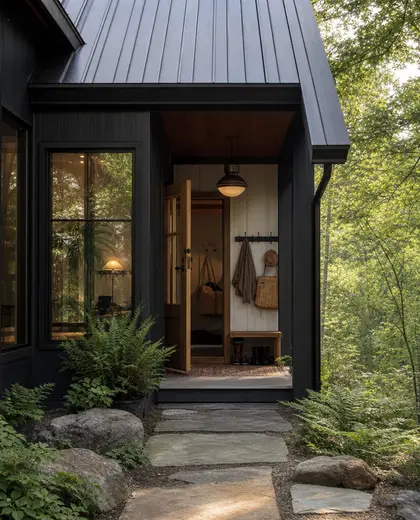
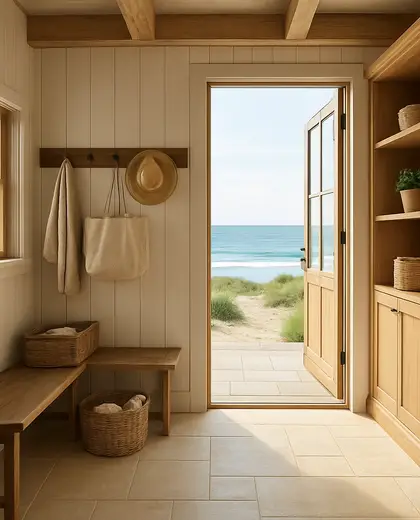
A mud room is a practical transition space that manages dirt, wet gear, and daily comings and goings before they reach the main home. It is typically built with durable materials such as tile, stone, sealed wood, painted millwork, and metal hardware, with built-in benches, hooks, cubbies, and cabinetry. The look is usually restrained and easy to clean, using a palette of warm neutrals, grays, and muted earth tones.
- mud room
— References
References to explore
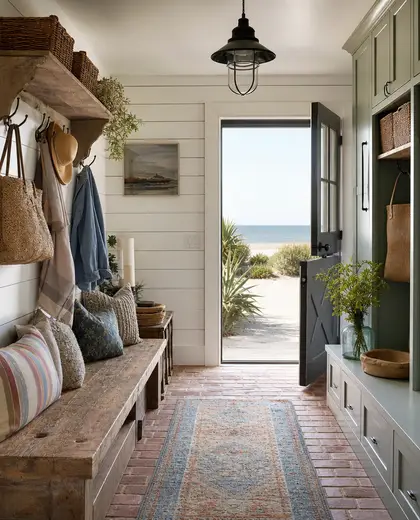
What makes a mud room different from a hallway or entryway?
A mud room is more storage- and cleanup-focused. It usually includes durable flooring, a place to sit, and organized storage for shoes, coats, bags, and outdoor gear.
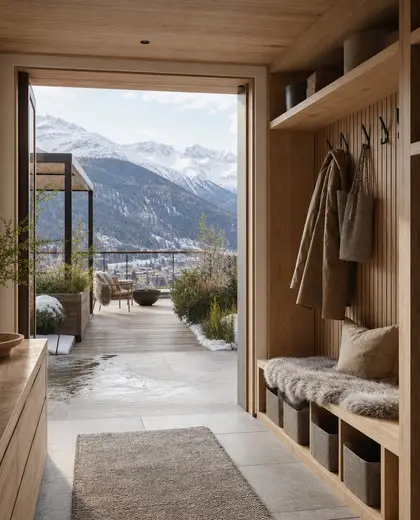

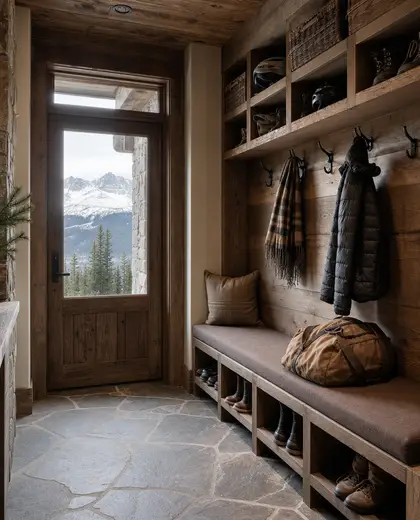
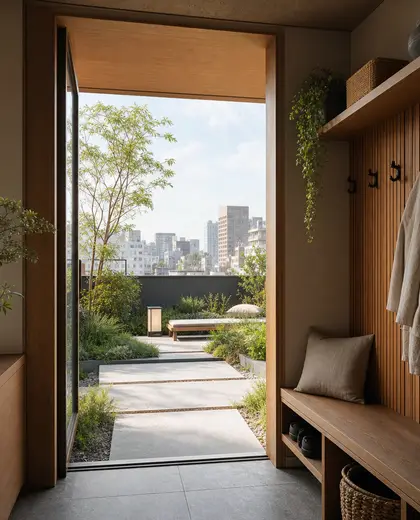
What flooring works best in a mud room?
Hard-wearing, moisture-resistant flooring is usually the safest choice, such as porcelain tile, stone, sealed concrete, or other surfaces that are easy to mop and can handle wet shoes.
Does a mud room need to be a separate room?
Not always. It can be a dedicated room, but it can also be a defined zone in a back entry, garage entry, or corridor with built-ins and durable finishes.
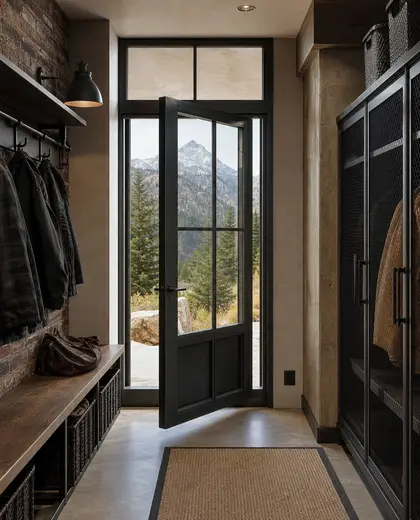
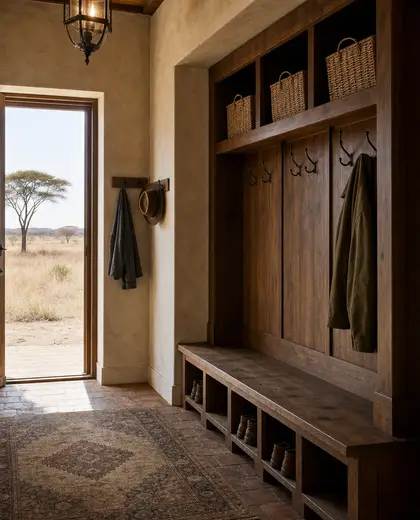
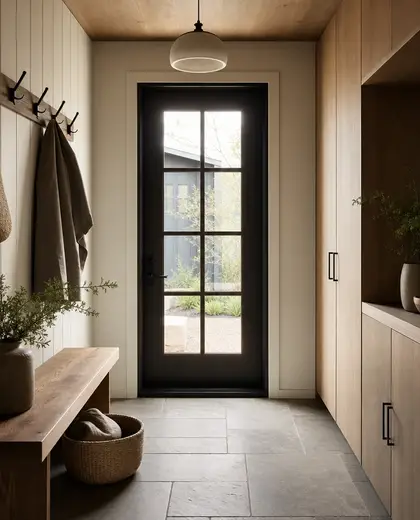
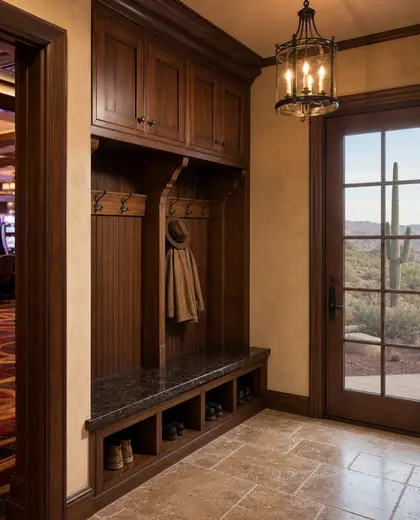
— The style
What defines it
Durable finishes like porcelain tile, natural stone, sealed oak, painted MDF or wood, and wipeable bench surfaces are common.
Neutral and grounded tones work best: whites, soft grays, taupe, clay, olive, and darker accents that hide wear.
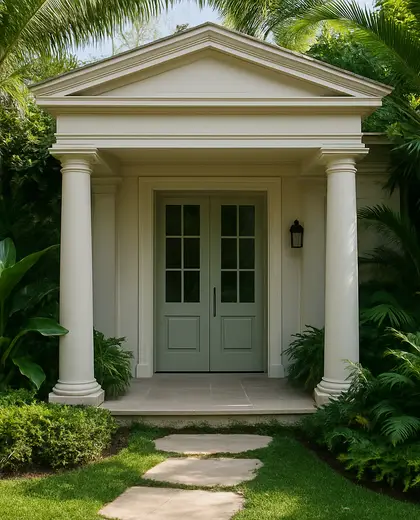
Mud rooms often connect to laundry rooms, side entries, kitchens, garages, or back halls, and pair well with built-in storage and utility zones.
— Professionals
Who has already built it
- praveen kumar singh3d renderers · Ranchi · 6 projectsView profile →
- origin architectsarchitects · 6 projectsView profile →
- mawar electrical serviceselectricians · Bengaluru · 1 projectsView profile →
- anurag vermainterior designers · 6 projectsView profile →
— Questions
Frequently asked questions
What makes a mud room different from a hallway or entryway?
A mud room is more storage- and cleanup-focused. It usually includes durable flooring, a place to sit, and organized storage for shoes, coats, bags, and outdoor gear.
What flooring works best in a mud room?
Hard-wearing, moisture-resistant flooring is usually the safest choice, such as porcelain tile, stone, sealed concrete, or other surfaces that are easy to mop and can handle wet shoes.
Does a mud room need to be a separate room?
Not always. It can be a dedicated room, but it can also be a defined zone in a back entry, garage entry, or corridor with built-ins and durable finishes.