— Ideas & inspiration
Indoor garden
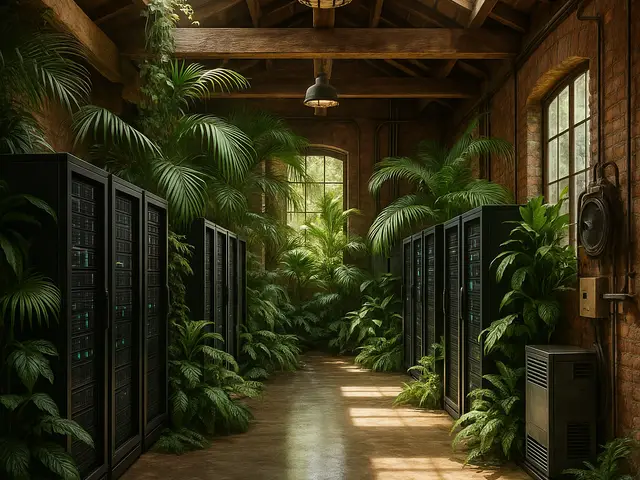
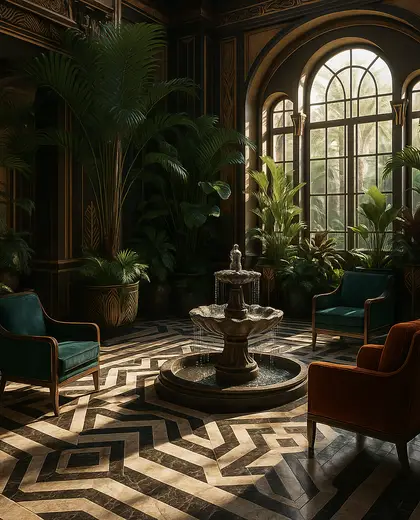
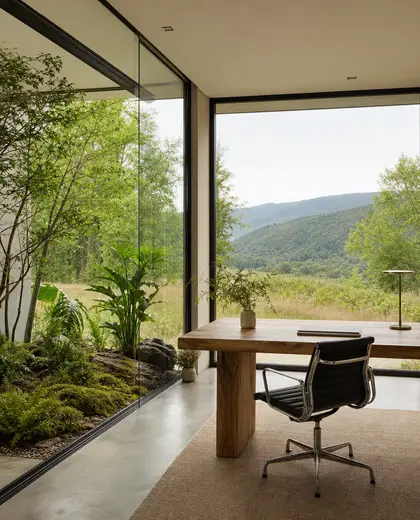
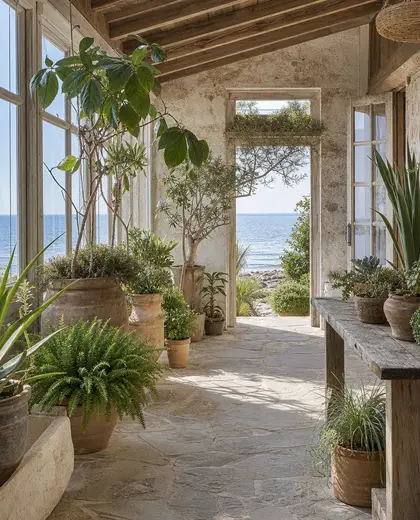
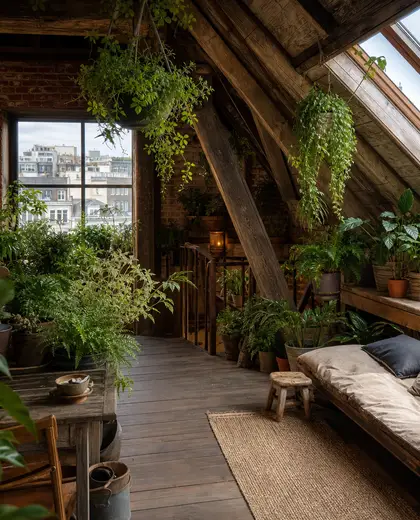
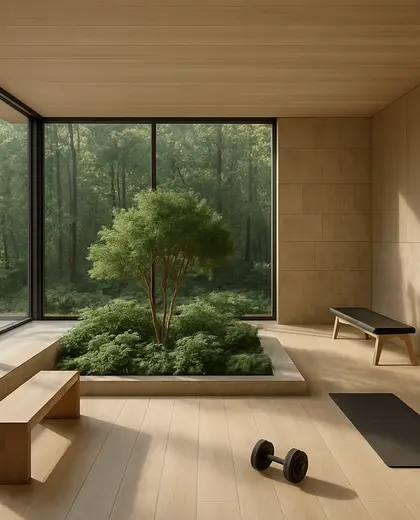
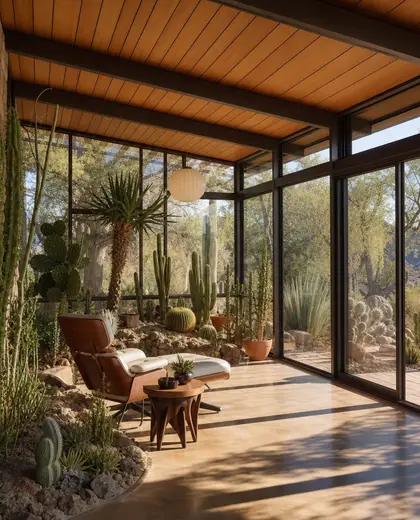
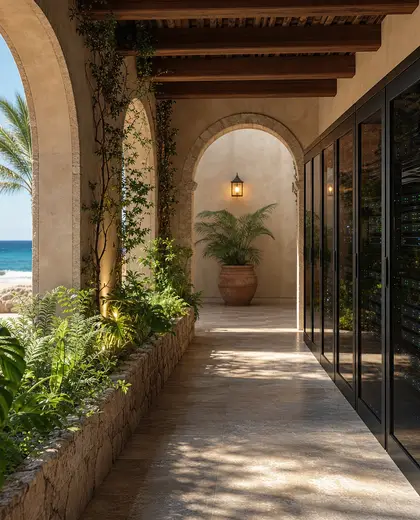
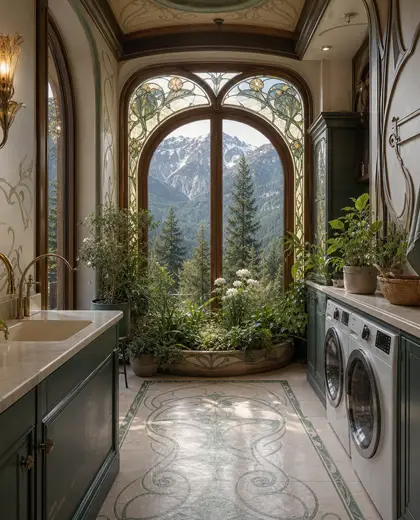
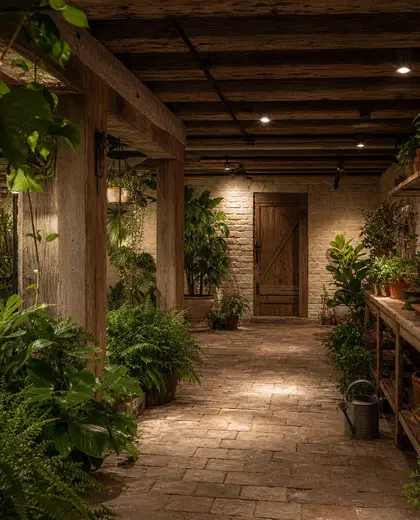
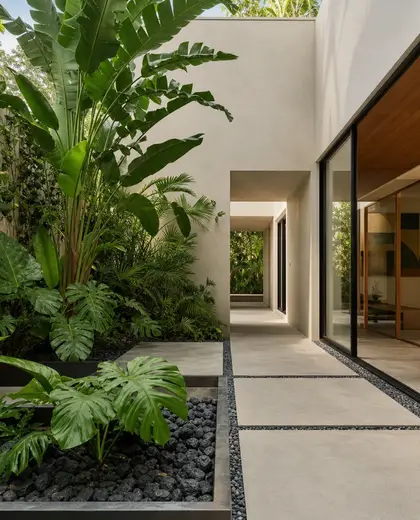
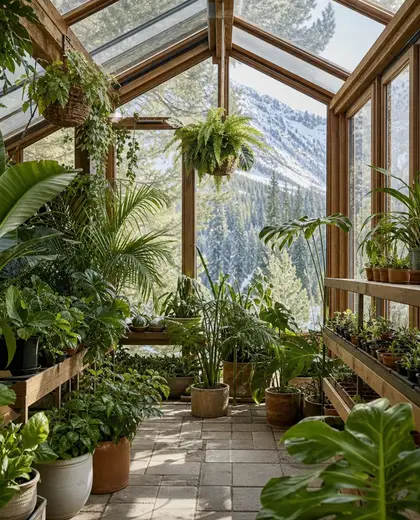
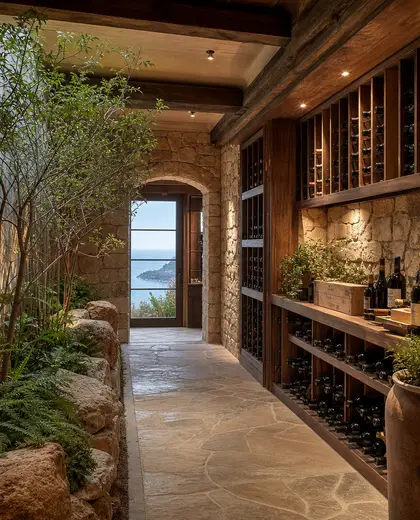
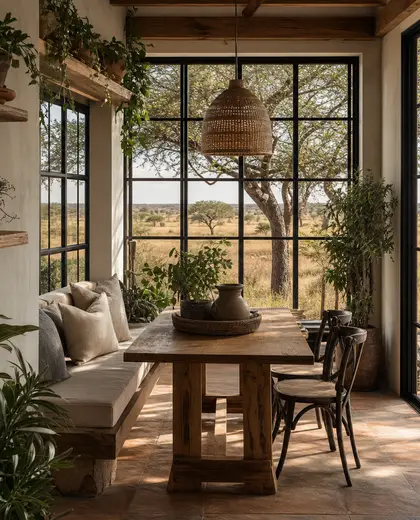
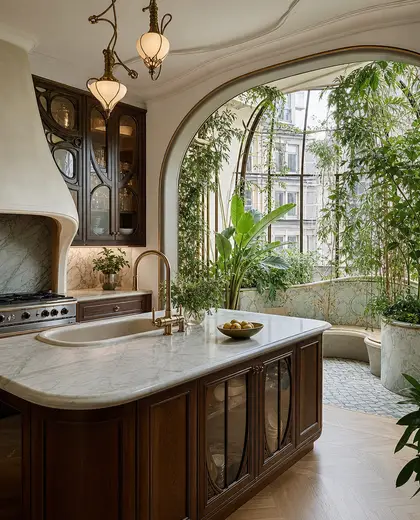
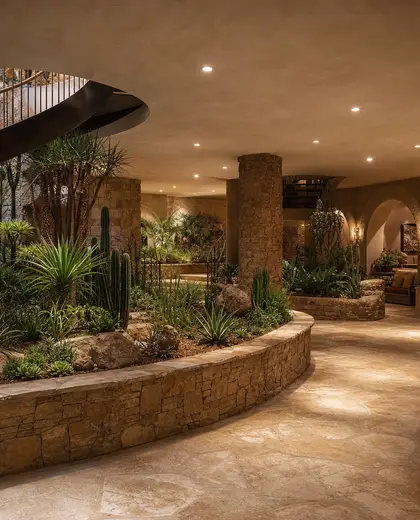
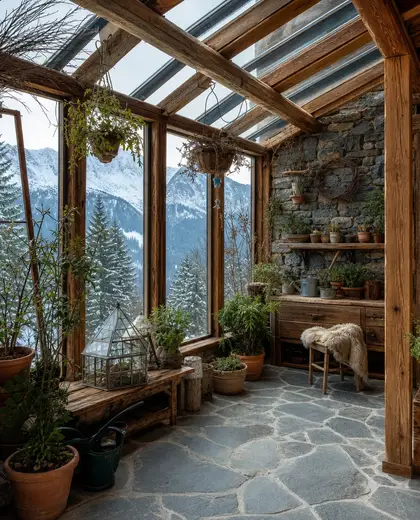
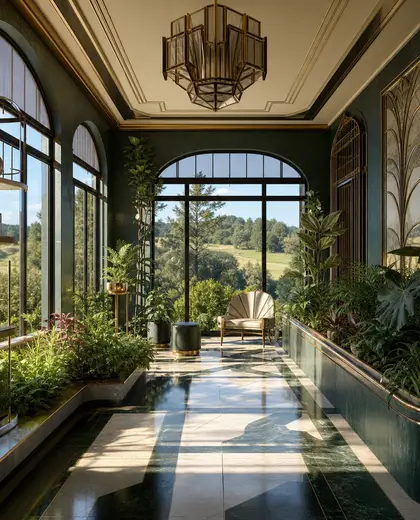
An indoor garden is defined by living planting integrated into the interior, usually through planters, green walls, atriums, or planted light wells. It relies on moisture-tolerant finishes such as stone, tile, sealed concrete, treated timber, and corrosion-resistant metal around the planting zone. The palette is typically natural and layered, combining greens with soil browns, soft neutrals, and daylight-driven surfaces.
- indoor garden
— References
References to explore

Do indoor gardens need direct sunlight?
Not always. Many work with bright indirect light, skylights, or grow lighting, depending on the plants chosen.
What is the main maintenance concern?
Water management is the key issue: drainage, waterproofing, and humidity control need to be planned carefully to protect surrounding finishes.

Can an indoor garden work in a small home?
Yes. A compact planter, a light well, or a narrow planted corner can create the effect without taking much floor area.
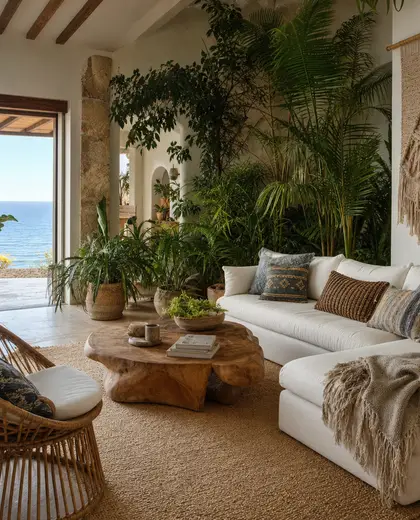
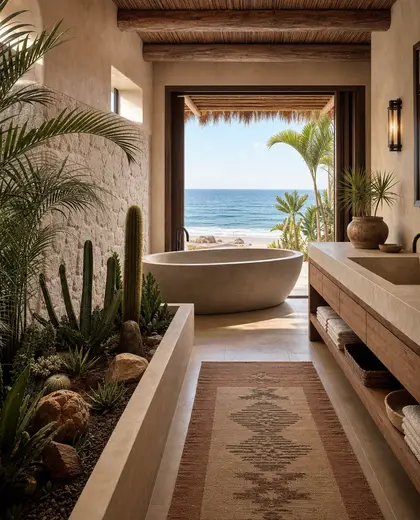
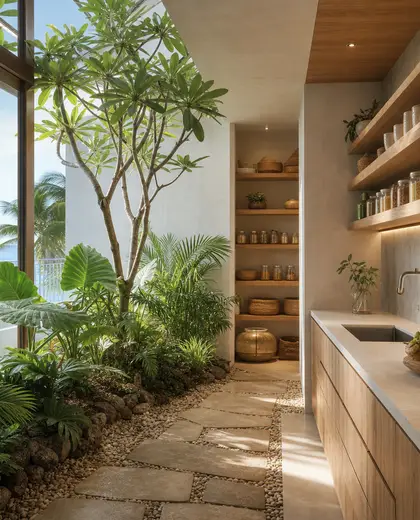
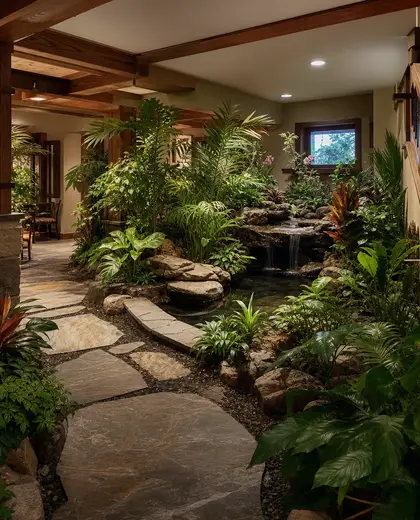

— The style
What defines it
Stone, ceramic tile, sealed concrete, treated wood, powder-coated metal, and waterproof membranes.
Green foliage, earthy browns, off-white or sand-toned walls, and daylight-reflective neutrals.
Skylights, courtyards, glass partitions, timber detailing, and calm minimal interiors.
— Professionals
Who has already built it
- pavitar guptaarchitects · Ambala · 6 projectsView profile →
- pavit ceramics pvt ltdceramic manufacturers · Ahmedabad · 2 projectsView profile →
- nikitha kumananinterior designers · 6 projectsView profile →
- Bristolfurniture sellers · Bangalore · 6 projectsView profile →
— Questions
Frequently asked questions
Do indoor gardens need direct sunlight?
Not always. Many work with bright indirect light, skylights, or grow lighting, depending on the plants chosen.
What is the main maintenance concern?
Water management is the key issue: drainage, waterproofing, and humidity control need to be planned carefully to protect surrounding finishes.
Can an indoor garden work in a small home?
Yes. A compact planter, a light well, or a narrow planted corner can create the effect without taking much floor area.