— Ideas & inspiration
Rural facades with grounded texture
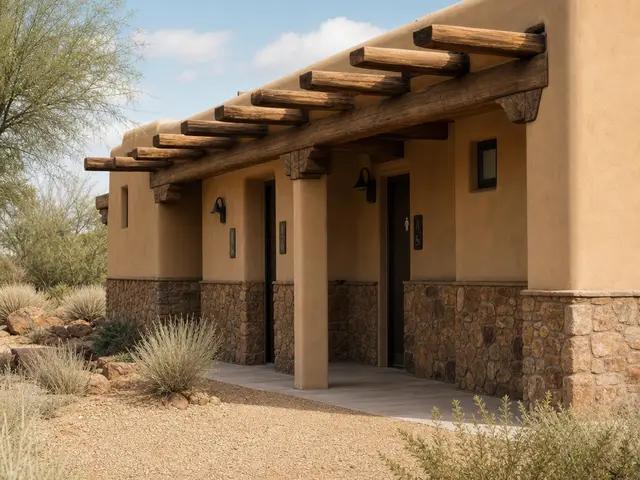
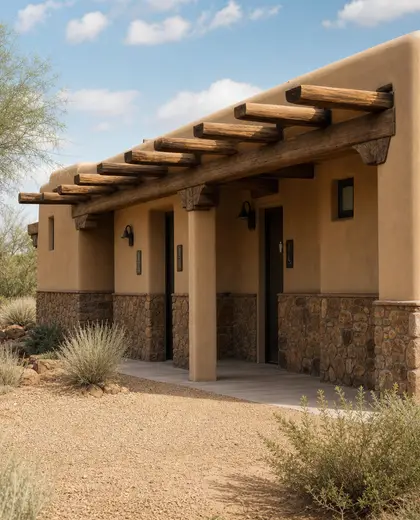
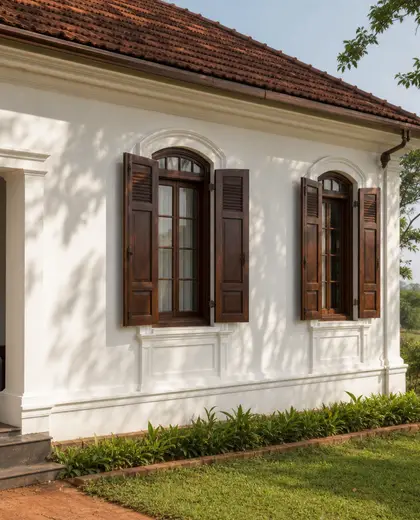
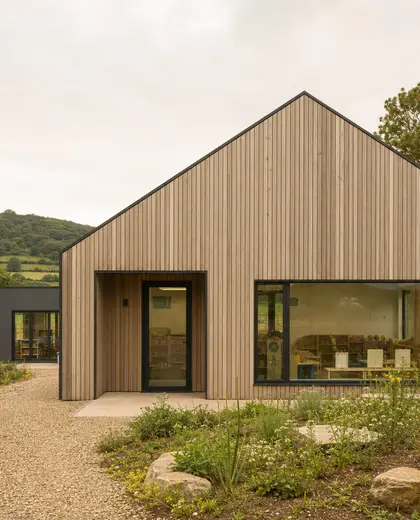
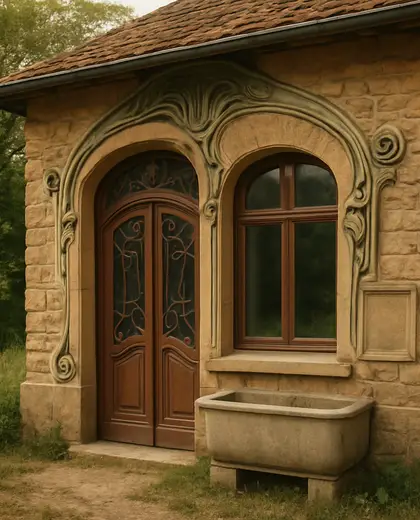
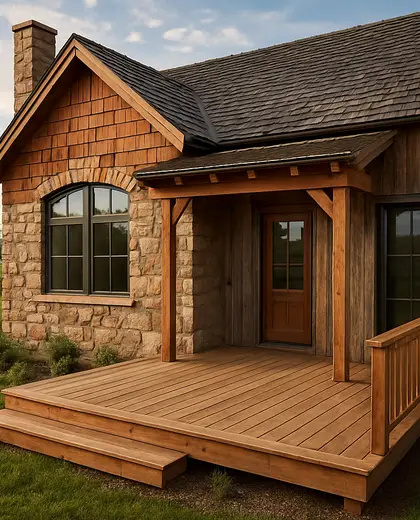
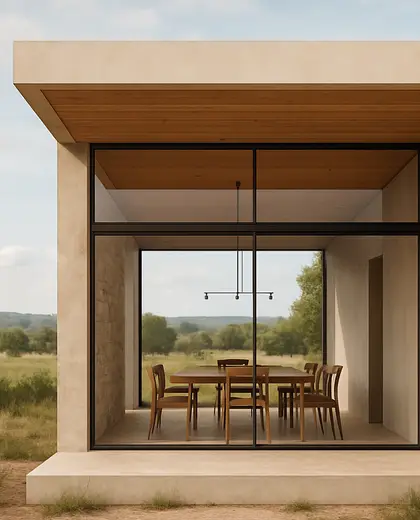
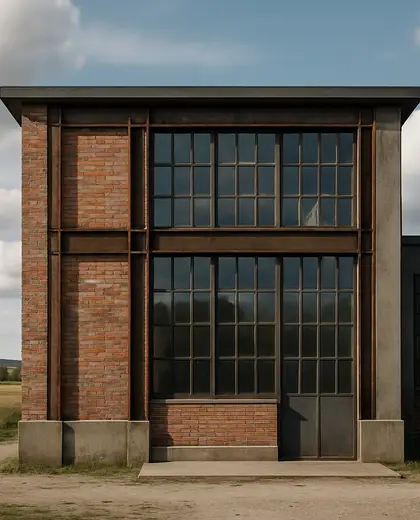
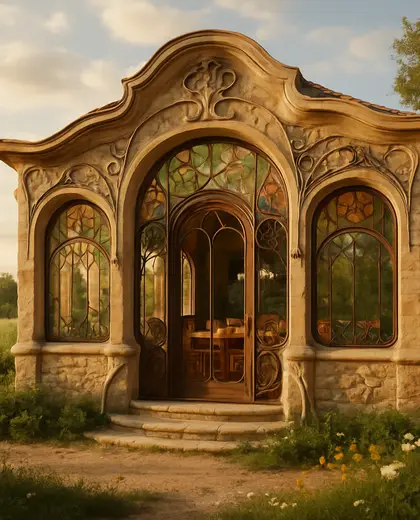
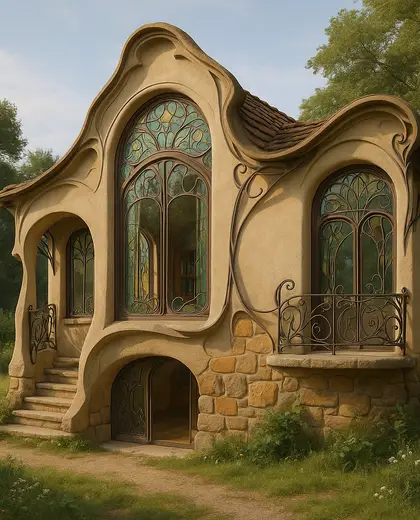
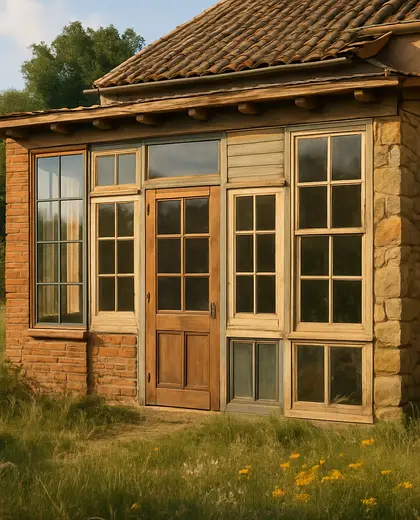
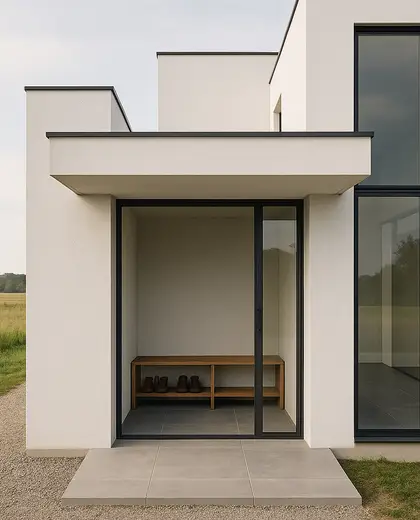
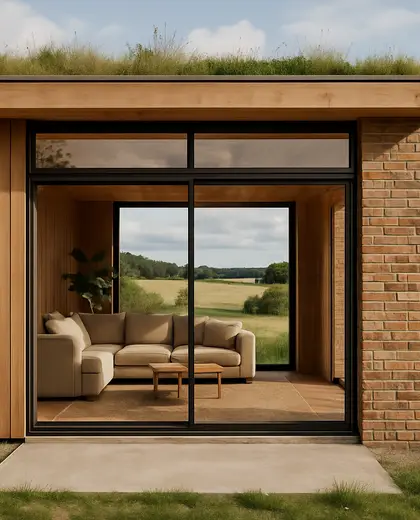
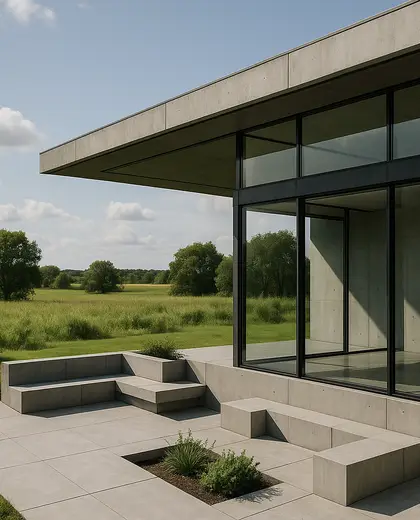
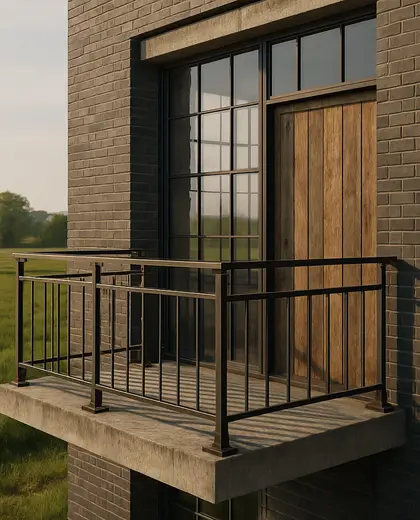
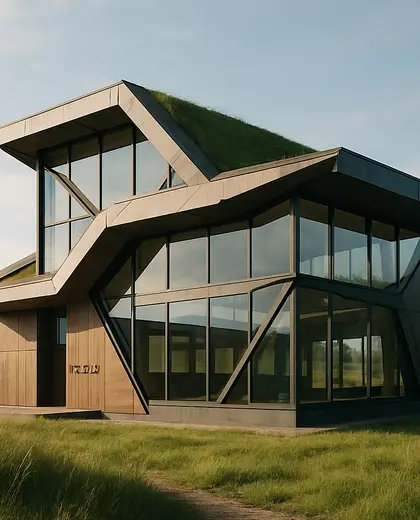
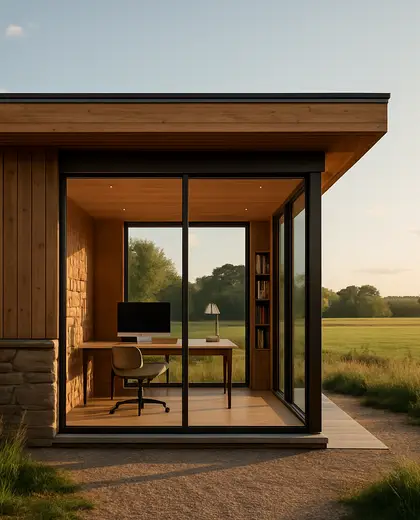
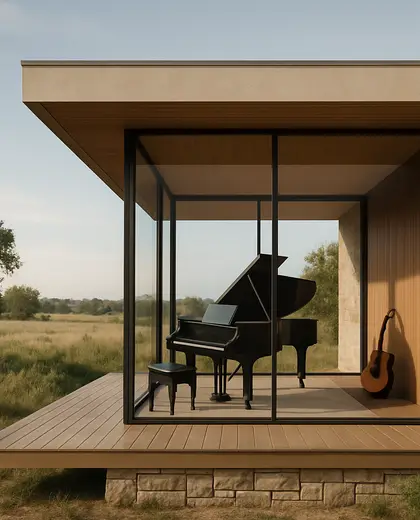
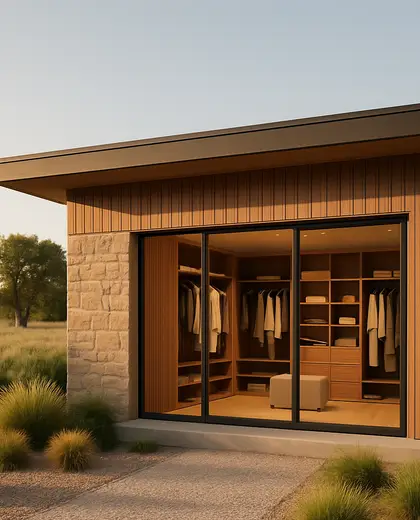
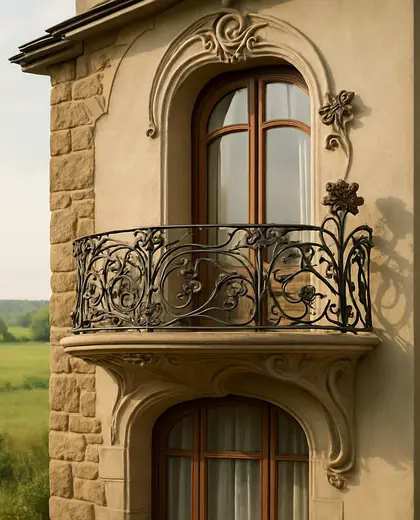
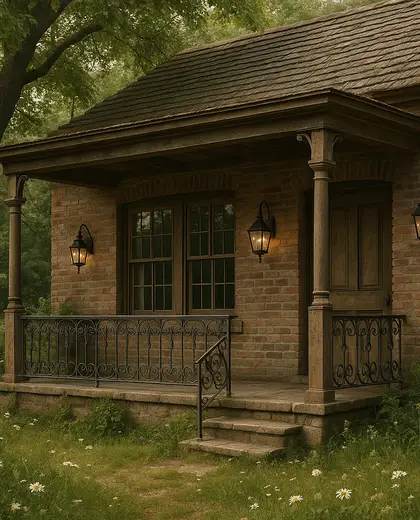
This composition is defined by a facade that feels rooted in the landscape, often using timber, stone, brick, lime render, or board-formed concrete. The palette stays muted and natural, with weathered grays, earthy browns, soft whites, and deep greens. Key elements include simple openings, shaded entries, pitched or low-slung forms, and materials that age visibly over time.
- facade
- rural
— References
References to explore
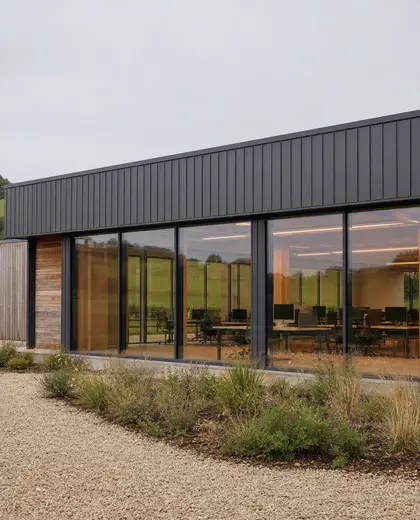
What makes a facade feel rural rather than suburban?
A rural facade usually uses local or weathered materials, simpler massing, and a quieter palette. It often has deeper reveals, more texture, and fewer decorative details.
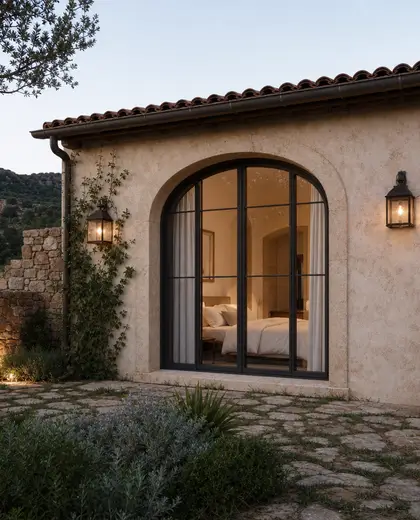
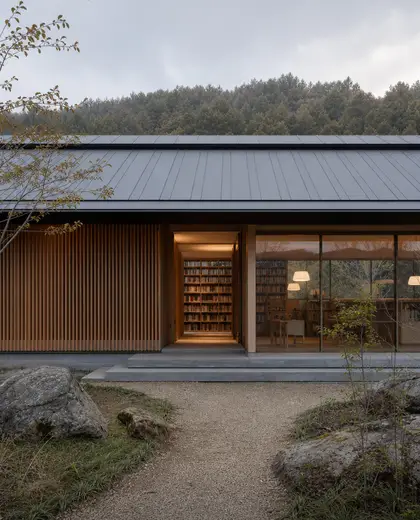
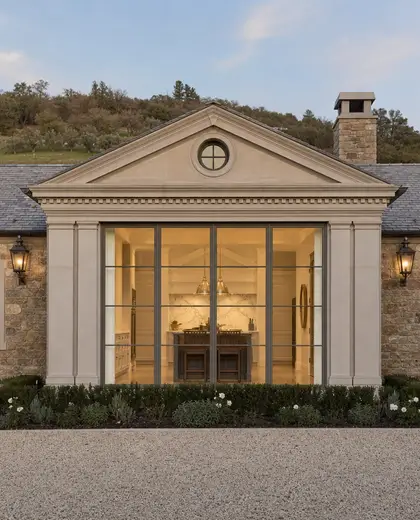
Can a rural facade still look modern?
Yes. Clean lines, large windows, and simplified forms can sit comfortably with timber, stone, or render if the detailing stays restrained.
Do rural facades need to match the surrounding buildings exactly?
Not exactly, but they should respond to the site and local context. Matching nearby materials or rooflines can help a new home feel settled in the landscape.
— The style
What defines it
Timber, local stone, brick, lime render, metal roofing, and textured concrete are common choices.
Use softened neutrals and earth tones: whitewash, clay, taupe, charcoal, moss, and weathered wood tones.
Works well with countryside settings, barn-inspired volumes, generous openings, and restrained detailing.
— Professionals
Who has already built it
- chaitanya anvekarinterior designers · Mumbai · 20 projectsView profile →
- urban arch studioarchitects · 19 projectsView profile →
- Bristolfurniture sellers · Bangalore · 6 projectsView profile →
- FurnitureRootsfurniture makers · Jodhpur · 6 projectsView profile →
— Explore
Keep exploring
— Questions
Frequently asked questions
What makes a facade feel rural rather than suburban?
A rural facade usually uses local or weathered materials, simpler massing, and a quieter palette. It often has deeper reveals, more texture, and fewer decorative details.
Can a rural facade still look modern?
Yes. Clean lines, large windows, and simplified forms can sit comfortably with timber, stone, or render if the detailing stays restrained.
Do rural facades need to match the surrounding buildings exactly?
Not exactly, but they should respond to the site and local context. Matching nearby materials or rooflines can help a new home feel settled in the landscape.