— Ideas & inspiration
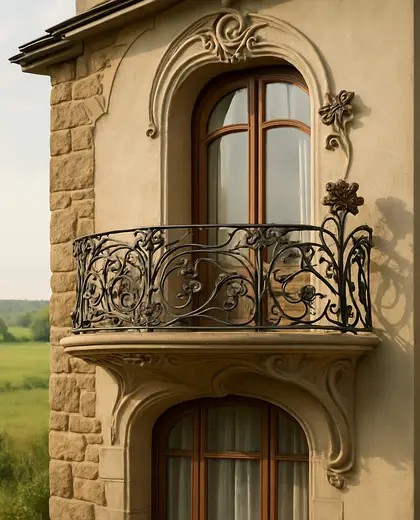
Art Nouveau Facades With Curving Detail and Floral Ironwork
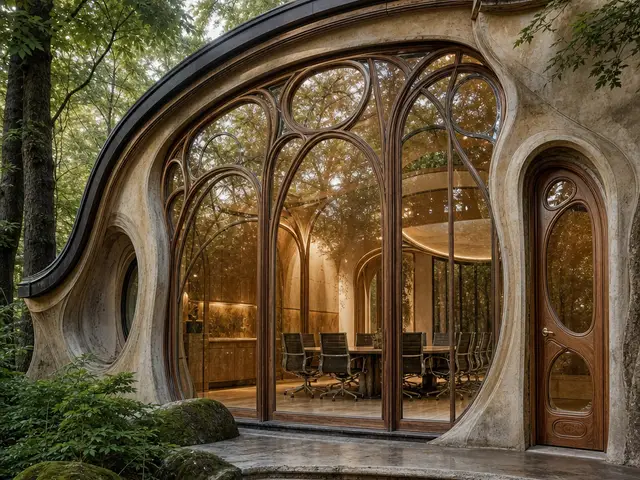
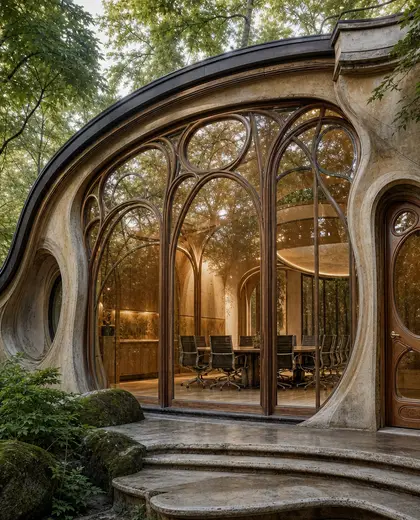
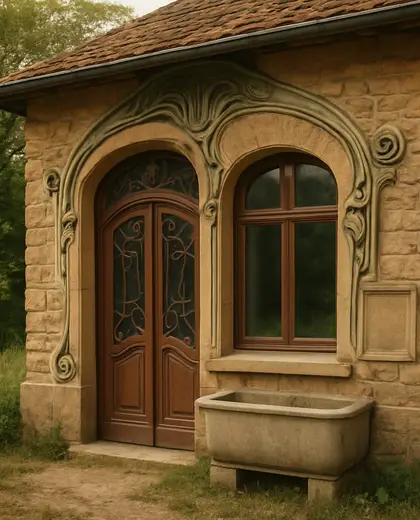
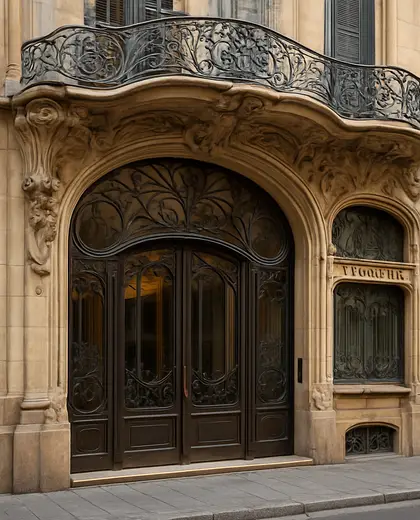
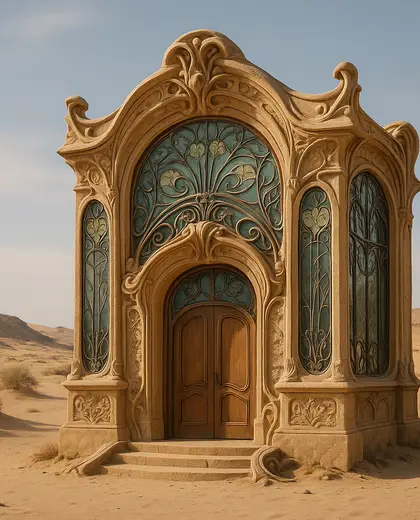
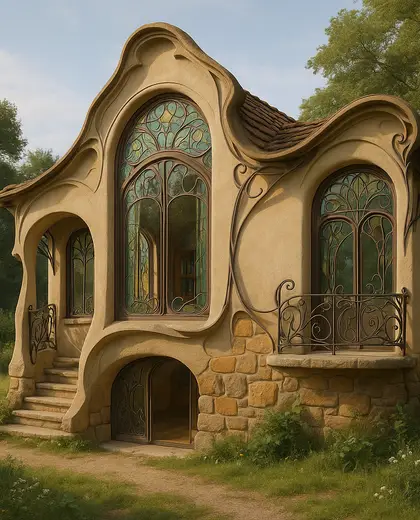
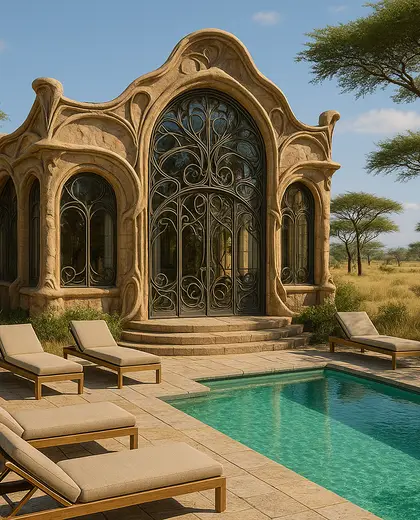
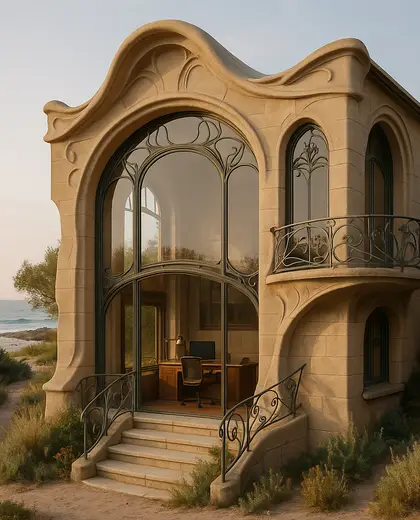
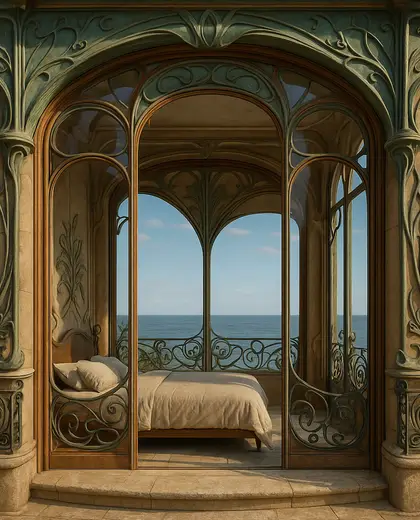
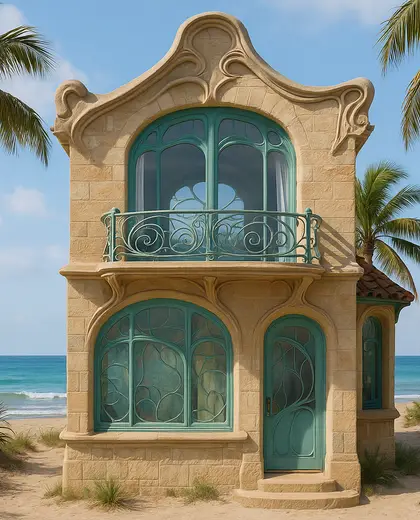
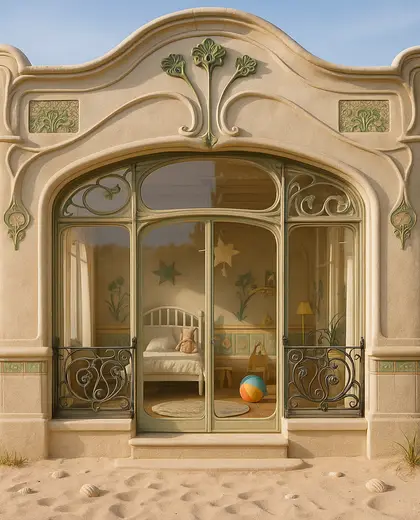
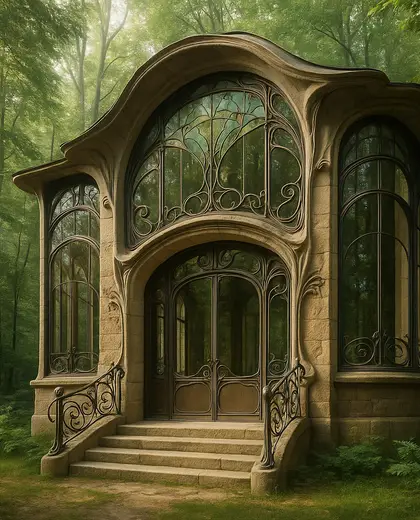
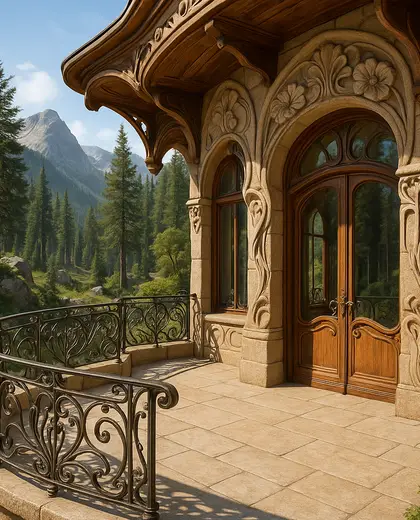
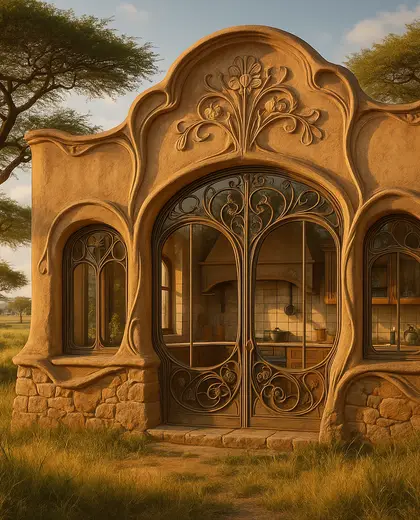
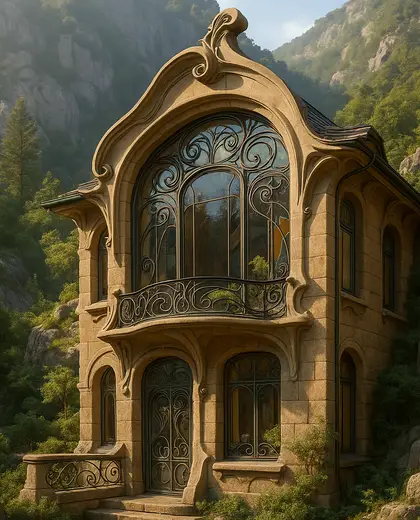
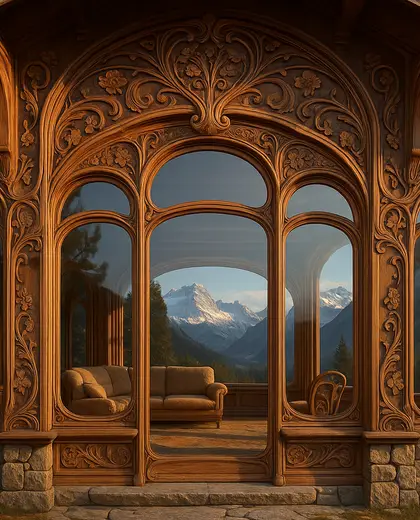
An art nouveau facade is defined by flowing, organic lines, ornamental metalwork, and sculpted detail around windows, doors, and cornices. Common materials include stucco, stone, brick, ceramic tiles, wrought iron, and carved wood, often arranged in asymmetrical compositions. The palette is usually soft and natural, with cream, sage, muted gold, deep green, terracotta, and dark bronze accents.
- facade
- art nouveau
— References
References to explore
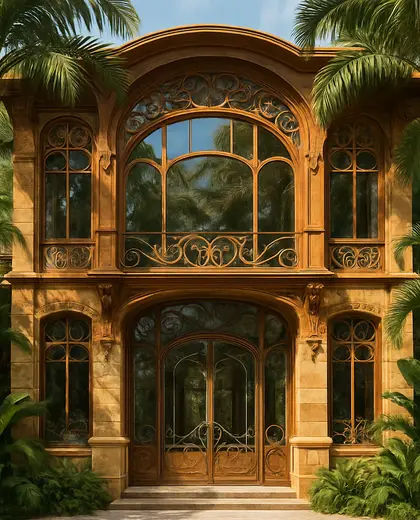
What makes a facade feel art nouveau instead of just decorative?
The key is the combination of flowing, plant-like forms and integrated ornament, rather than added decoration alone. Look for curved profiles, stylized floral motifs, and materials shaped into the architecture itself.
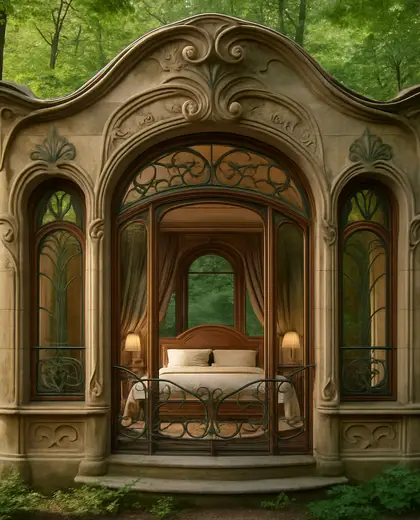
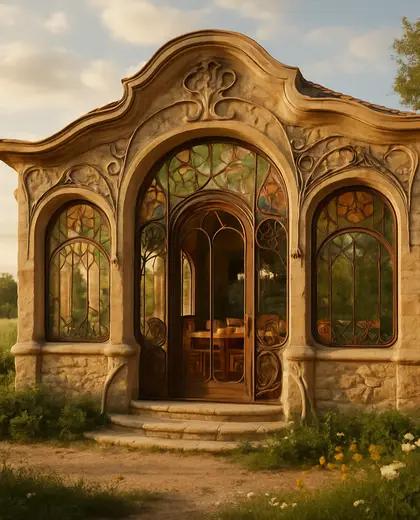
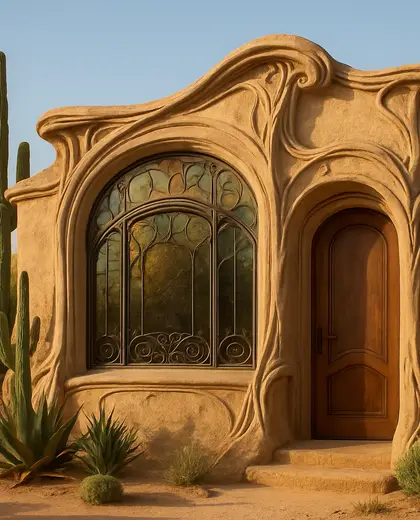
Can an art nouveau facade work on a modern house?
Yes, if it is adapted with restraint. You can use arched openings, patterned glass, wrought-iron railings, and a softer material palette without reproducing a historic facade exactly.
Which exterior finishes suit this style best?
Smooth stucco, natural stone, glazed tile, painted timber, and dark metal detailing all suit the style well. Finishes should feel tactile and handcrafted, with not too much gloss or sharp contrast.
— The style
What defines it
Stucco, stone, brick, ceramic tile, wrought iron, carved wood, and stained glass are common.
Soft neutrals, earthy greens, warm terracotta, muted gold, and dark metal accents.
Curved lines, botanical motifs, decorative balconies, arched openings, and fluid window tracery.
— Professionals
Who has already built it
- nikitha kumananinterior designers · 6 projectsView profile →
- urban arch studioarchitects · 19 projectsView profile →
- Bristolfurniture sellers · Bangalore · 6 projectsView profile →
- FurnitureRootsfurniture makers · Jodhpur · 6 projectsView profile →
— Explore
Keep exploring
— Questions
Frequently asked questions
What makes a facade feel art nouveau instead of just decorative?
The key is the combination of flowing, plant-like forms and integrated ornament, rather than added decoration alone. Look for curved profiles, stylized floral motifs, and materials shaped into the architecture itself.
Can an art nouveau facade work on a modern house?
Yes, if it is adapted with restraint. You can use arched openings, patterned glass, wrought-iron railings, and a softer material palette without reproducing a historic facade exactly.
Which exterior finishes suit this style best?
Smooth stucco, natural stone, glazed tile, painted timber, and dark metal detailing all suit the style well. Finishes should feel tactile and handcrafted, with not too much gloss or sharp contrast.