— Ideas & inspiration
Home cinema rooms with a refined architectural feel
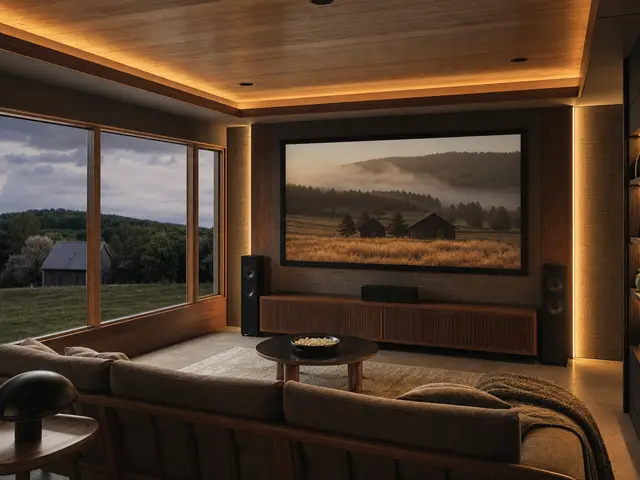
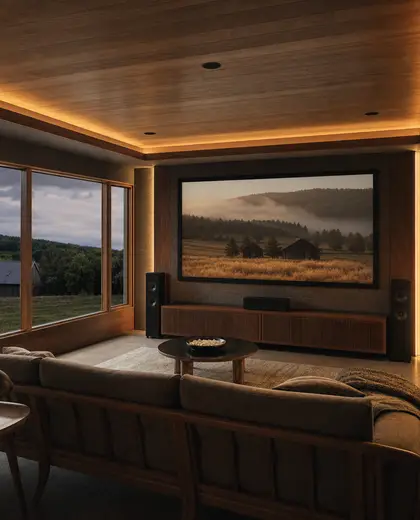
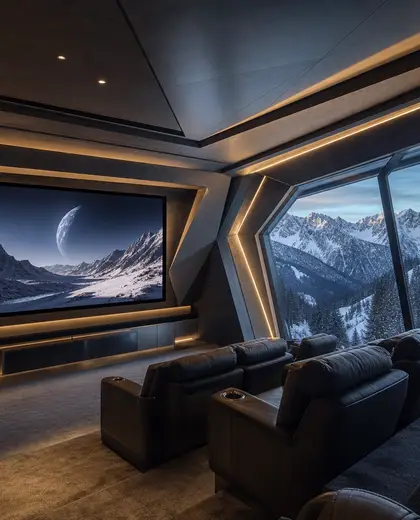
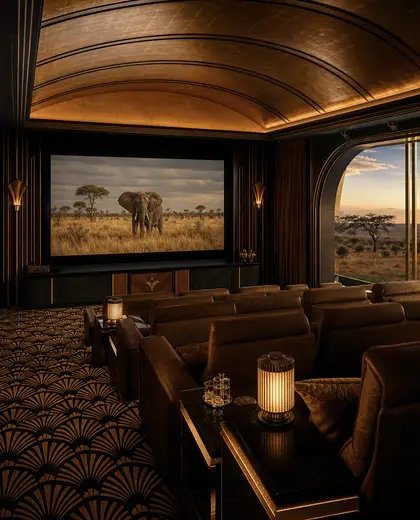
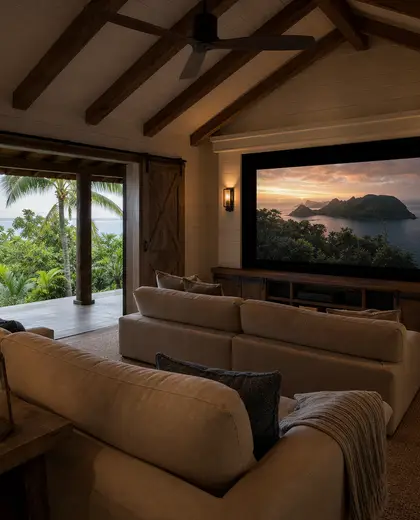
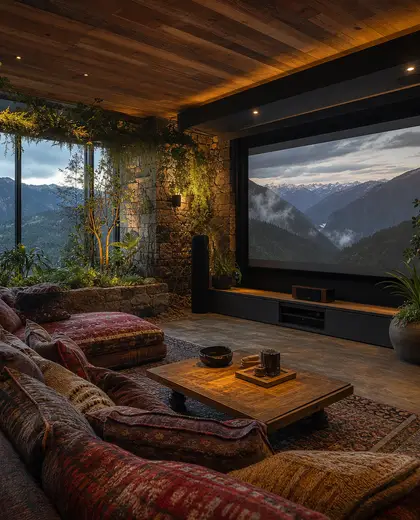
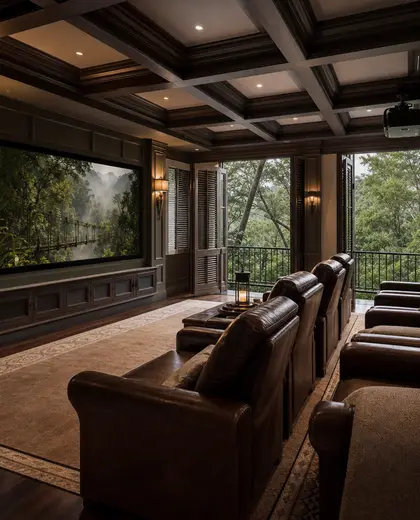
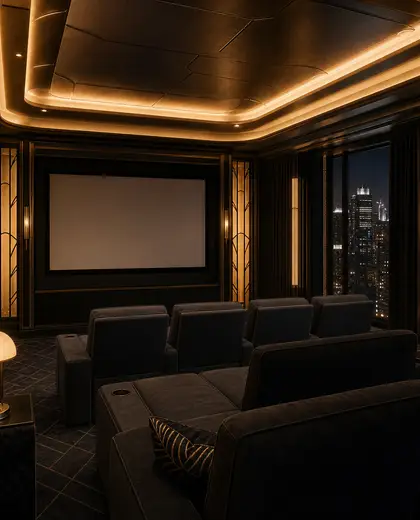
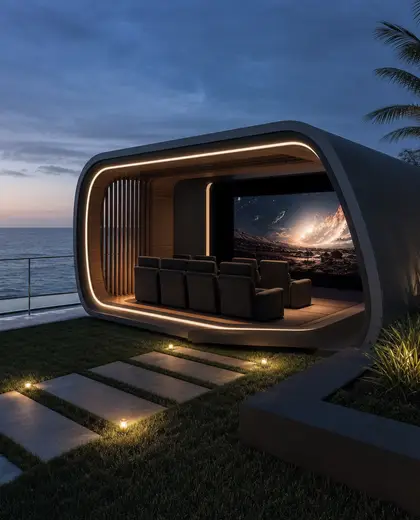
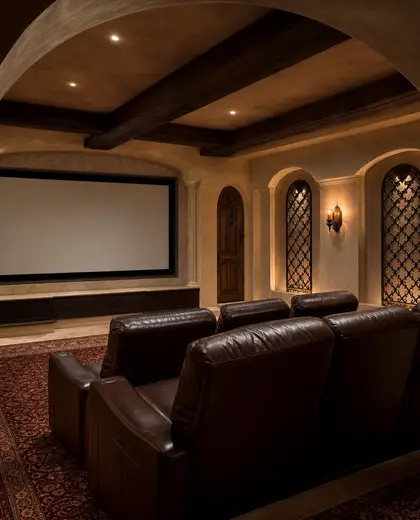
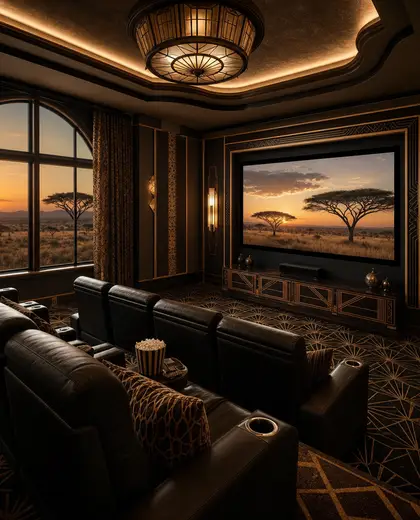
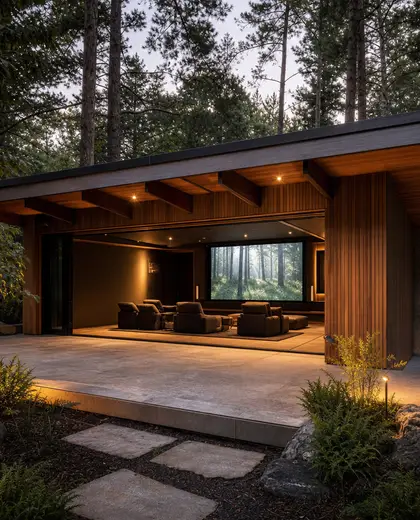
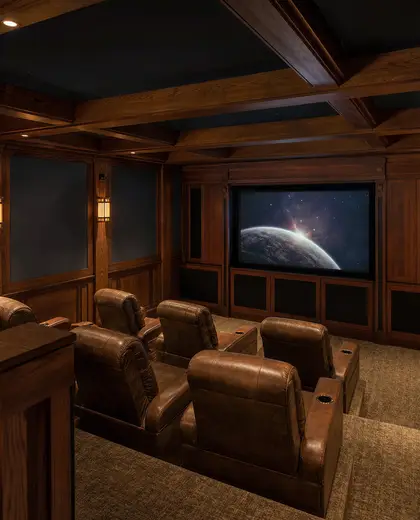
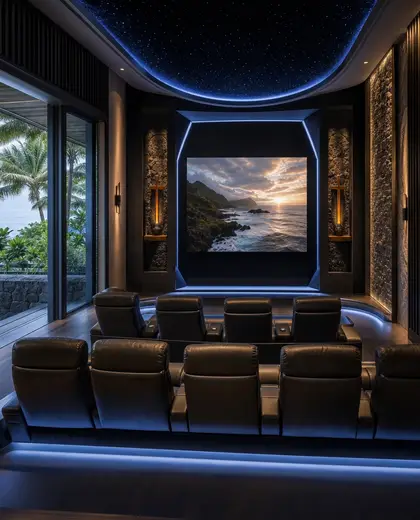
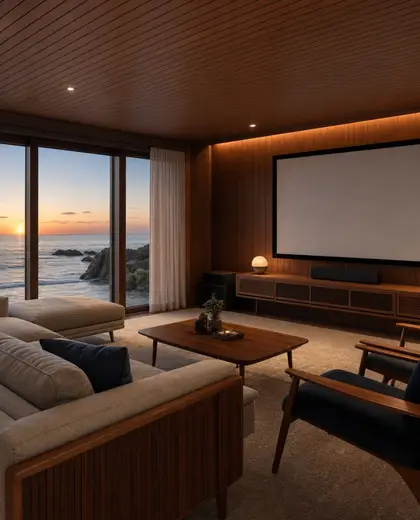
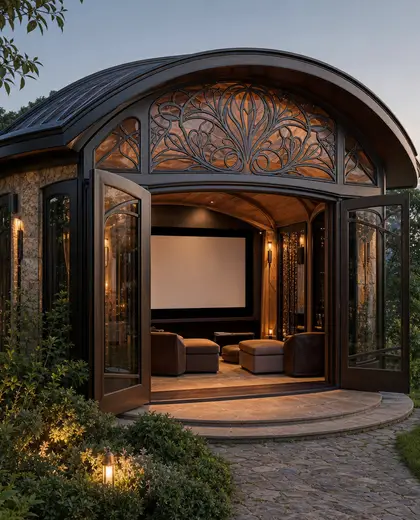
A home cinema composition is defined by a dark, controlled interior with layered lighting, acoustic wall treatments, and a deep, immersive seating layout. Common finishes include matte timber, fabric panels, velvet upholstery, stone, and low-sheen painted surfaces to reduce glare and improve sound. The result is a room that feels both theatrical and comfortably domestic.
- home cinema
— References
References to explore
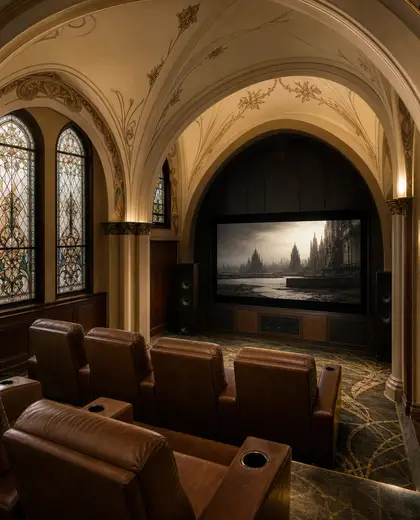
What makes a home cinema different from a regular living room TV setup?
A home cinema is designed around light control, sound absorption, and focused viewing, rather than general daytime use. It usually includes darker finishes, better seating alignment, and integrated audio-visual elements.
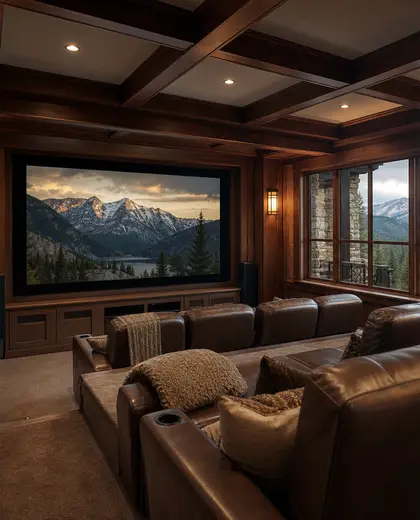
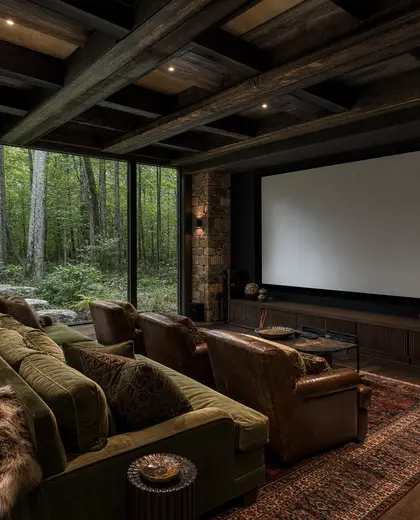
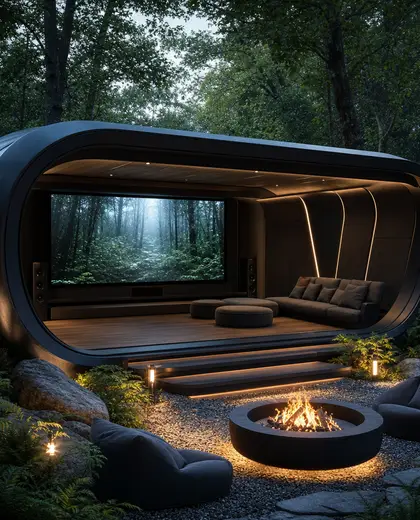
Can a home cinema work in a small room?
Yes, if the layout is compact and the finishes are chosen to support acoustics and screen visibility. Wall-mounted equipment, slim seating, and muted materials help the room feel balanced without needing a large footprint.
Do I need a fully dark room for this style?
Not necessarily, but the space should limit reflections and allow flexible dimming. Many homeowners use layered lighting and deeper tones to keep the room cinematic without making it feel closed in.
— The style
What defines it
Acoustic panels, timber veneer, carpet, fabric wall coverings, velvet seating, and matte metal details.
Deep neutrals, charcoal, warm browns, muted blacks, and occasional low-intensity accent lighting.
Lounge seating, concealed speakers, media walls, projection systems, and dimmable architectural lighting.
— Professionals
Who has already built it
- home interior decoratorscarpenters · Rampur · 3 projectsView profile →
- decons company indiaarchitects · 6 projectsView profile →
- pavit ceramics pvt ltdceramic manufacturers · Ahmedabad · 2 projectsView profile →
- chaitanya anvekarinterior designers · Mumbai · 20 projectsView profile →
— Questions
Frequently asked questions
What makes a home cinema different from a regular living room TV setup?
A home cinema is designed around light control, sound absorption, and focused viewing, rather than general daytime use. It usually includes darker finishes, better seating alignment, and integrated audio-visual elements.
Can a home cinema work in a small room?
Yes, if the layout is compact and the finishes are chosen to support acoustics and screen visibility. Wall-mounted equipment, slim seating, and muted materials help the room feel balanced without needing a large footprint.
Do I need a fully dark room for this style?
Not necessarily, but the space should limit reflections and allow flexible dimming. Many homeowners use layered lighting and deeper tones to keep the room cinematic without making it feel closed in.