— Ideas & inspiration
Art deco in the desert
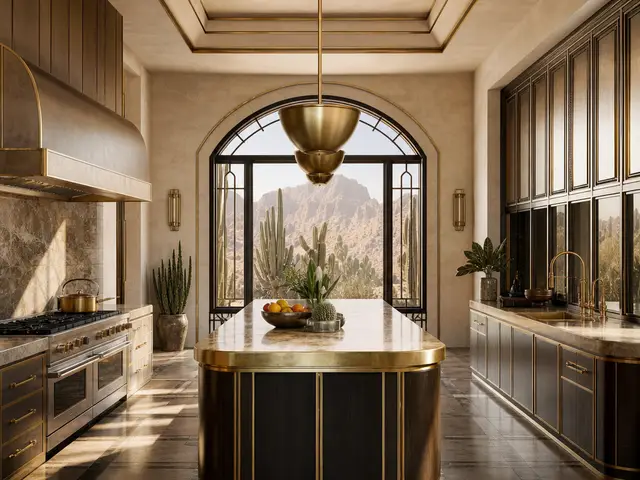
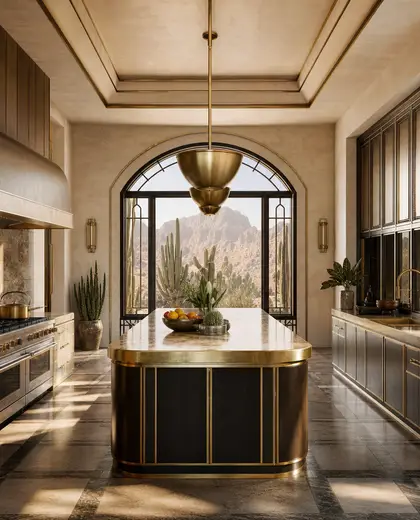
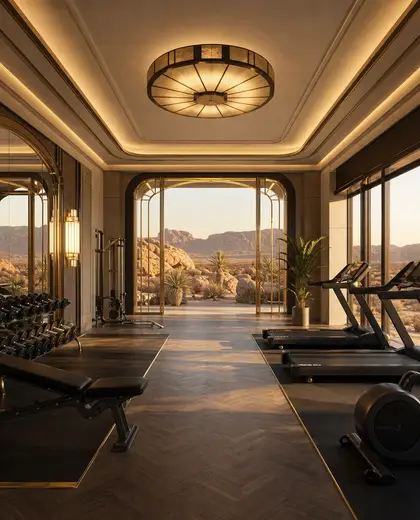
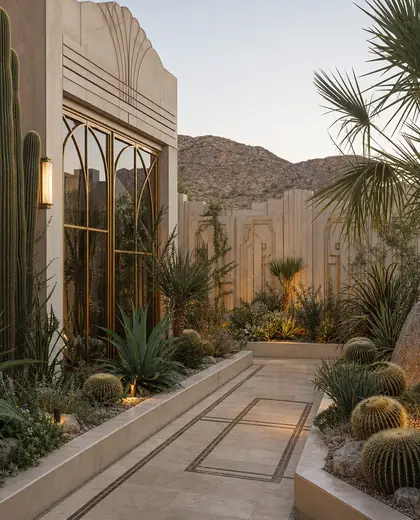
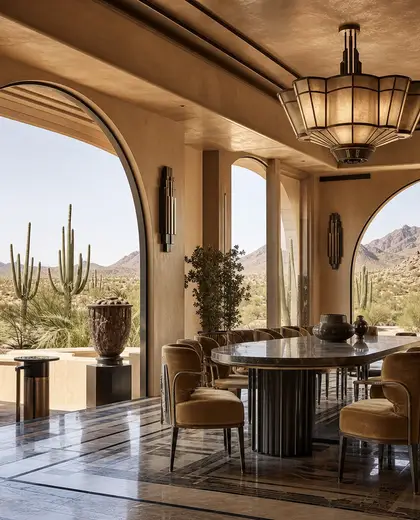
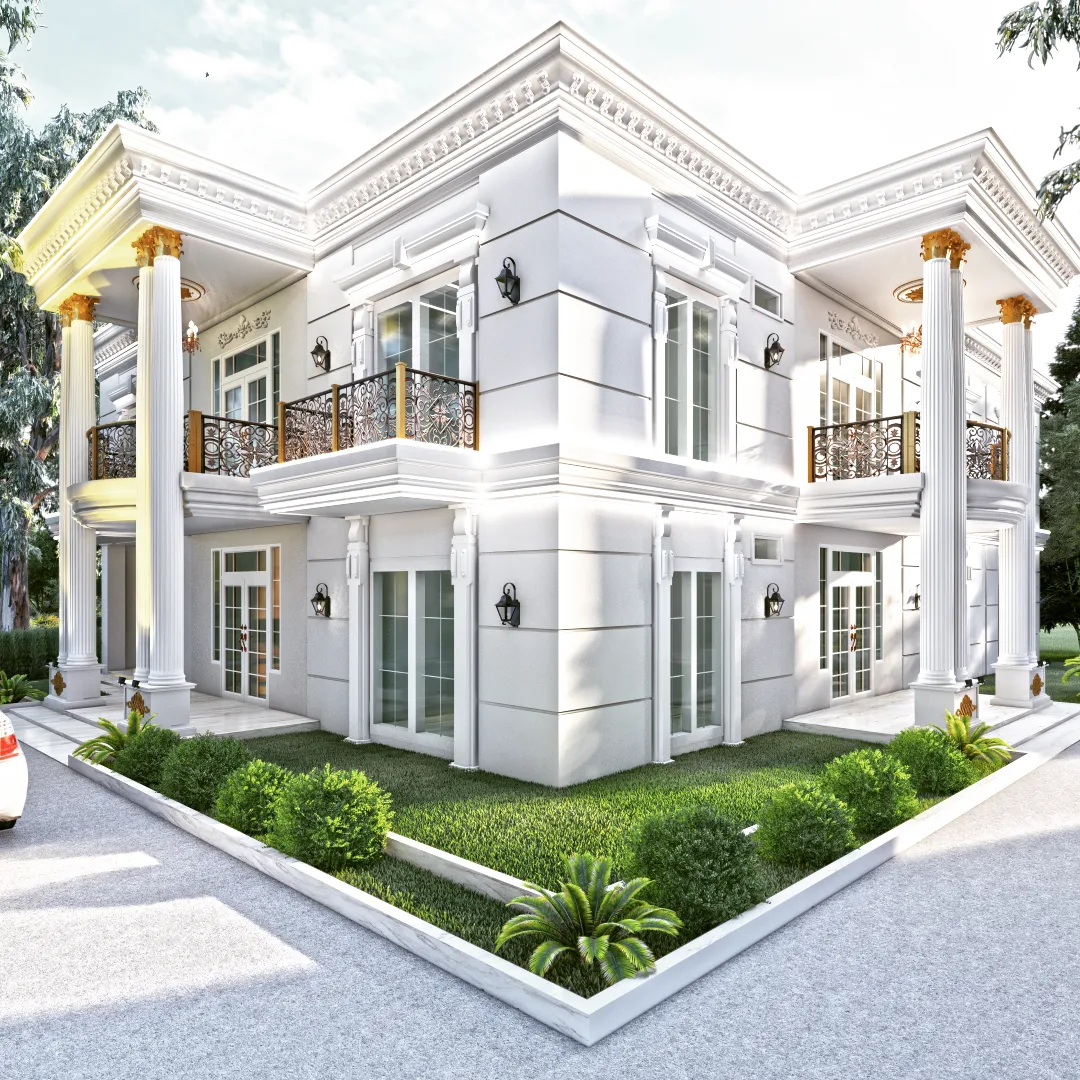
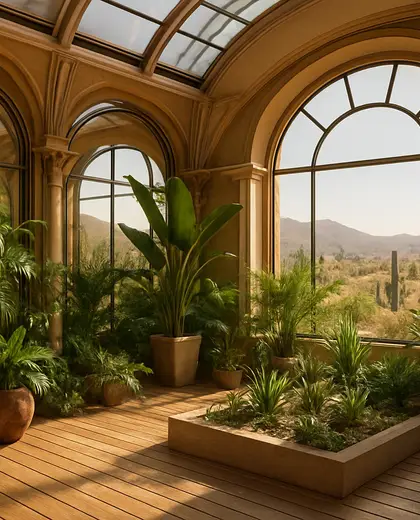
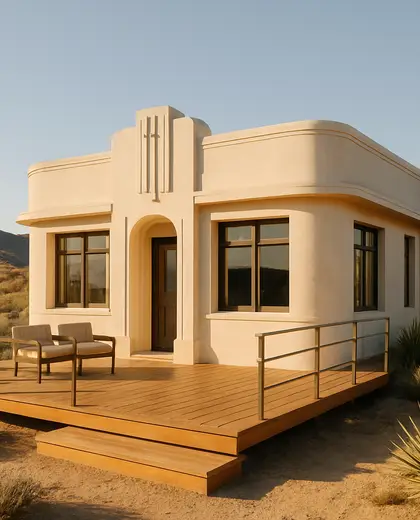
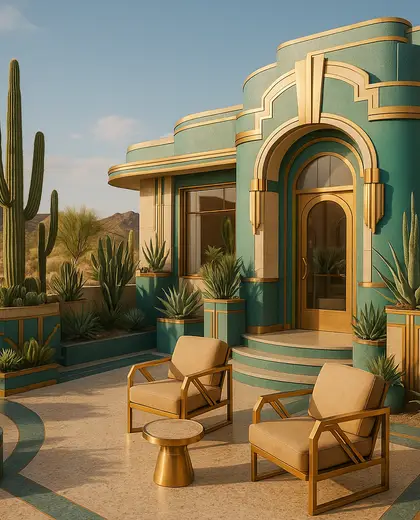
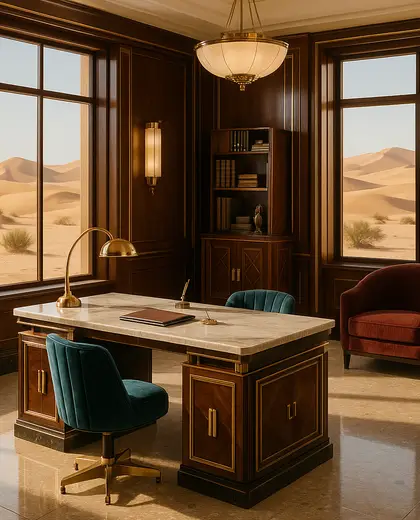
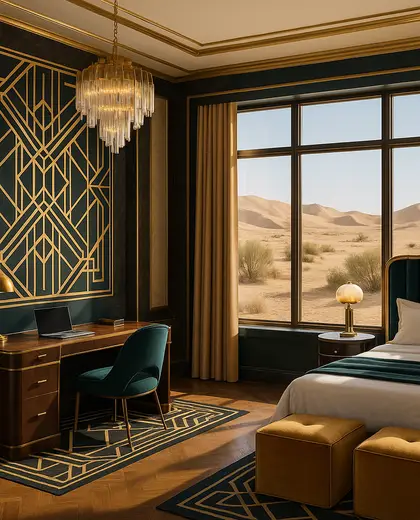
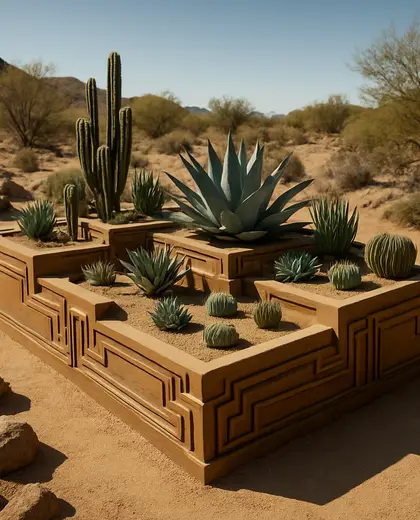
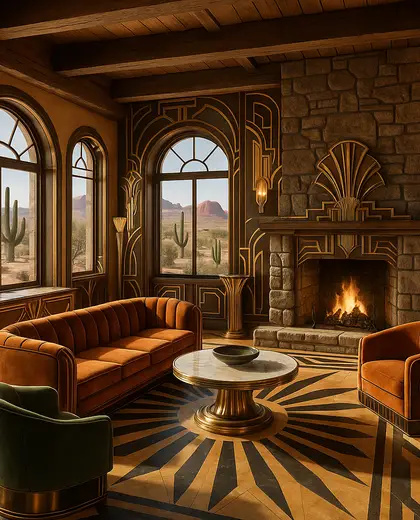
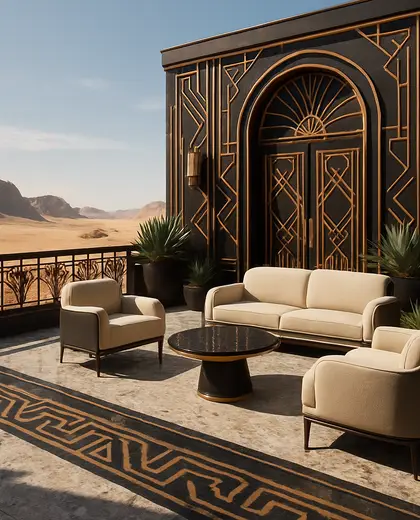
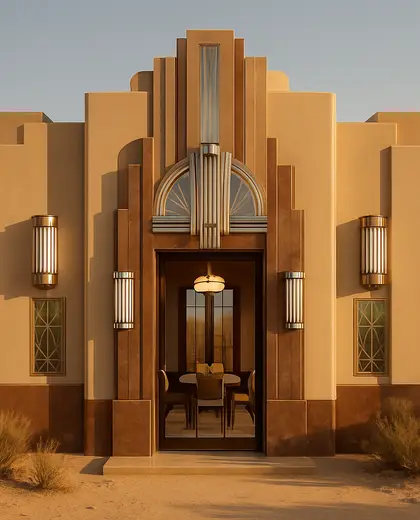
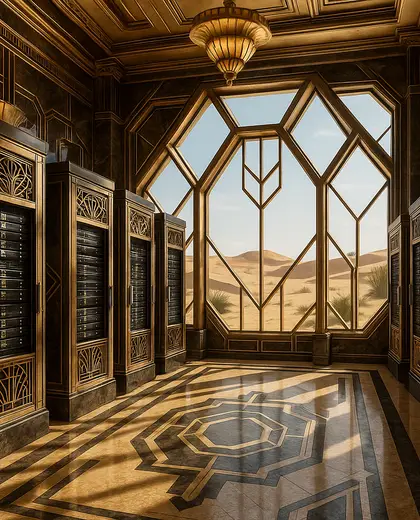
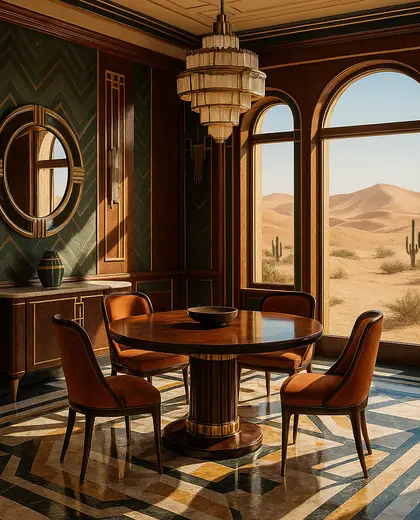
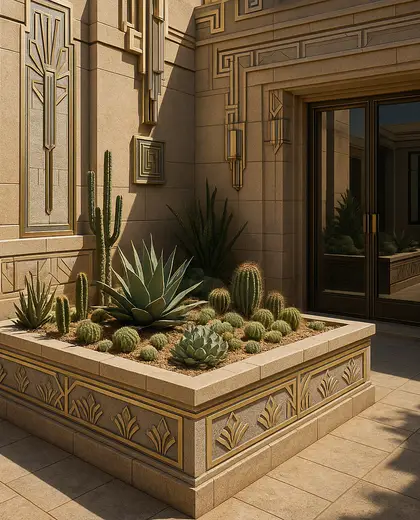
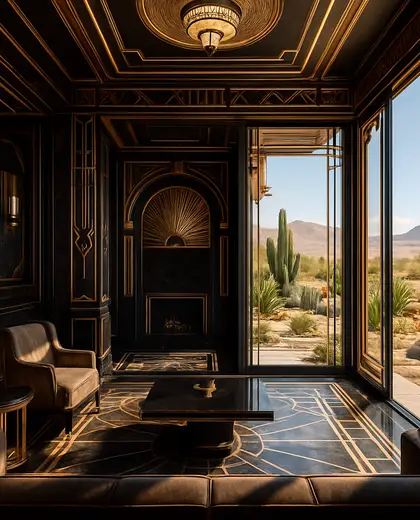
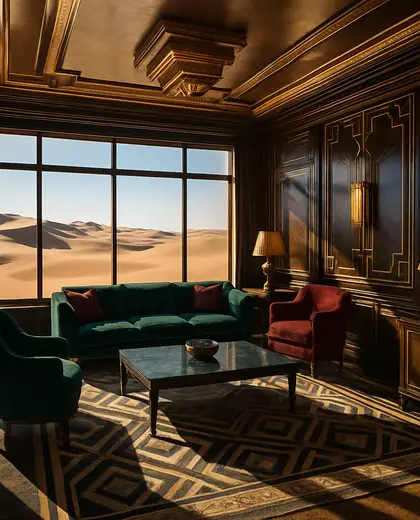
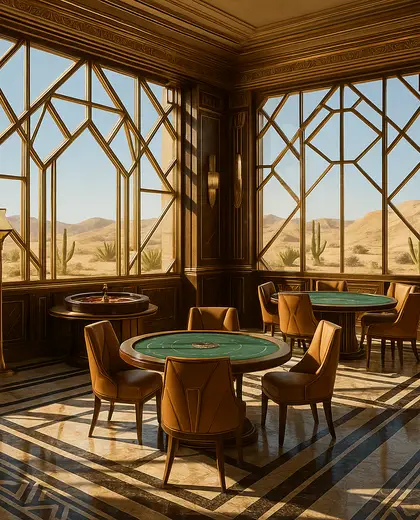
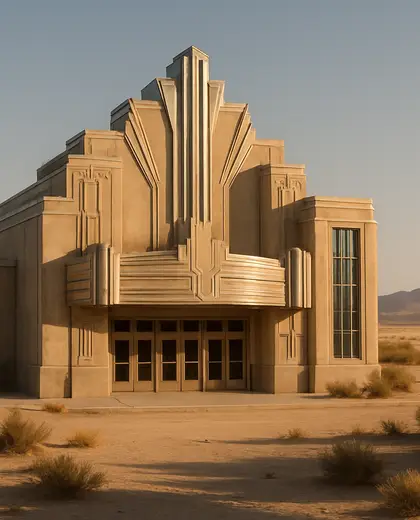
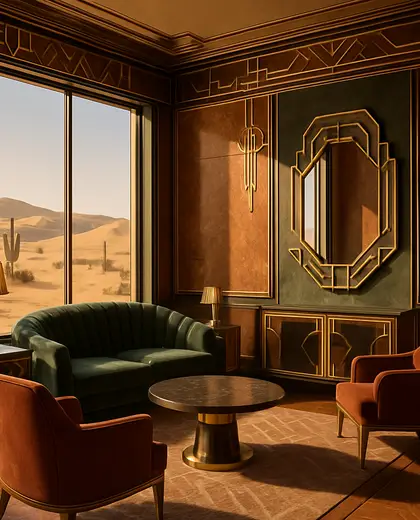
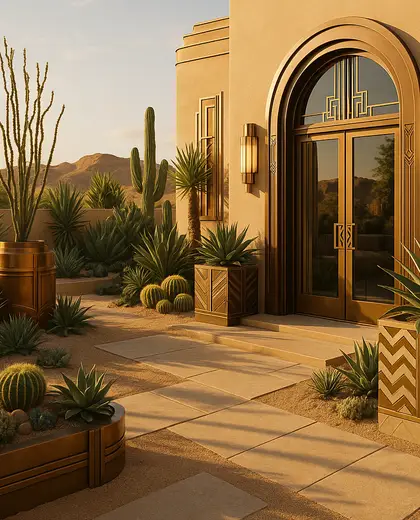
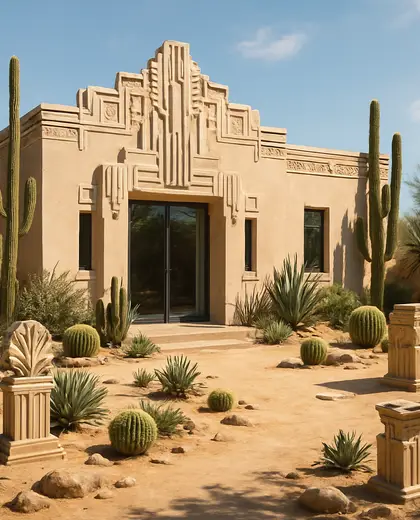
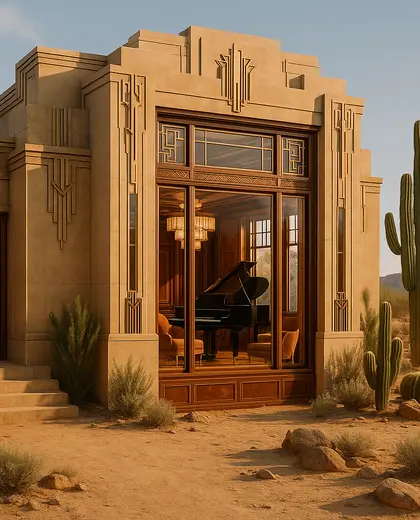
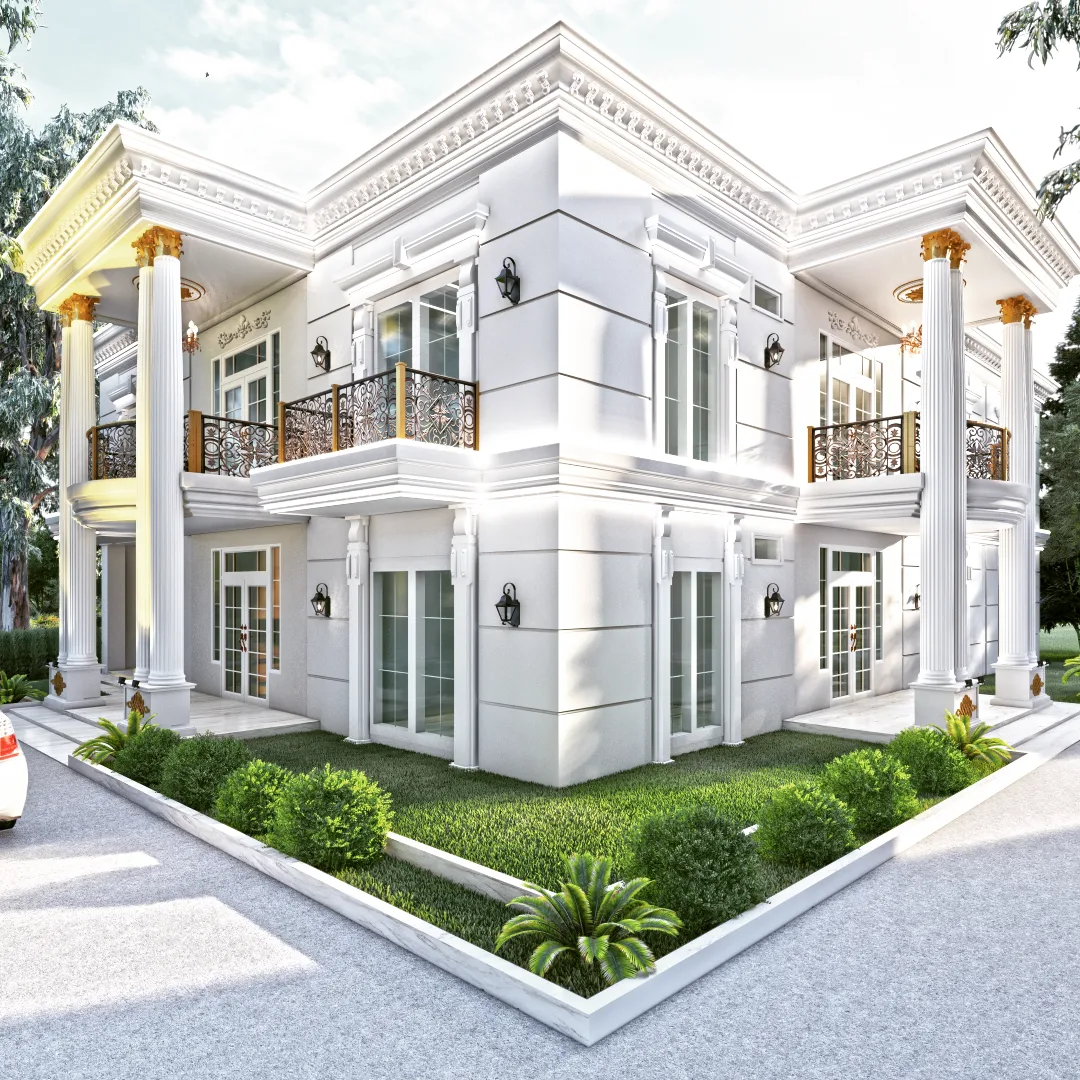
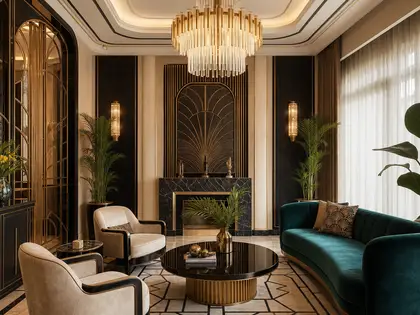
This composition pairs the geometry and glamour of art deco with the restraint of desert settings. It often uses stucco, stone, terrazzo, brass, and shaded glass in a palette of sand, terracotta, ivory, black, and sun-washed gold. The look is defined by strong symmetry, stepped forms, bold outlines, and details that catch warm light without feeling heavy.
- art deco
- desert
— References
References to explore
Will art deco work in a hot desert climate?
Yes, if the design uses shade, thermal mass, and materials suited to strong sun. Deep overhangs, recessed glazing, and textured plaster help the style perform well.
Does this style have to feel flashy?
No. In a desert setting, the ornament is often restrained, with emphasis on geometry, clean lines, and a few carefully placed metal or glass details.
What should I avoid if I want this look at home?
Avoid overly glossy finishes, heavy dark interiors, and too much surface decoration. The composition works best when the desert palette stays calm and the art deco elements stay crisp and intentional.
— The style
What defines it
Stucco, limestone, terrazzo, metal trim, and fluted or ribbed glass are common, with occasional wood and polished stone accents.
Earthy desert tones lead the scheme: sand, clay, ochre, ivory, deep brown, black, and muted metallics like brass or bronze.
It blends art deco symmetry and ornament with desert architecture cues such as deep shade, thick walls, arched openings, and textured finishes.
— Professionals
Who has already built it



- pavit ceramics pvt ltdceramic manufacturers · Ahmedabad · 2 projectsView profile →
- ar ghanshyam badgujararchitects · Pune · 1 projectsView profile →
- Bristolfurniture sellers · Bangalore · 6 projectsView profile →
- FurnitureRootsfurniture makers · Jodhpur · 6 projectsView profile →
— Questions
Frequently asked questions
Will art deco work in a hot desert climate?
Yes, if the design uses shade, thermal mass, and materials suited to strong sun. Deep overhangs, recessed glazing, and textured plaster help the style perform well.
Does this style have to feel flashy?
No. In a desert setting, the ornament is often restrained, with emphasis on geometry, clean lines, and a few carefully placed metal or glass details.
What should I avoid if I want this look at home?
Avoid overly glossy finishes, heavy dark interiors, and too much surface decoration. The composition works best when the desert palette stays calm and the art deco elements stay crisp and intentional.