— Ideas & inspiration
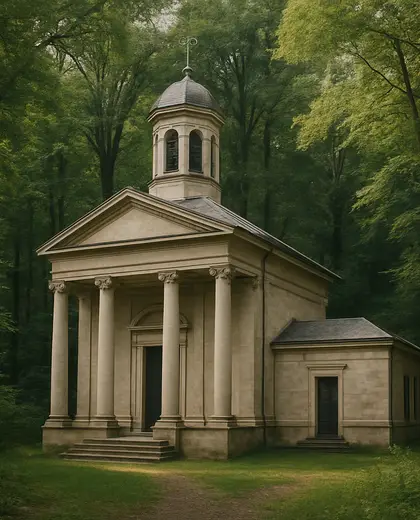
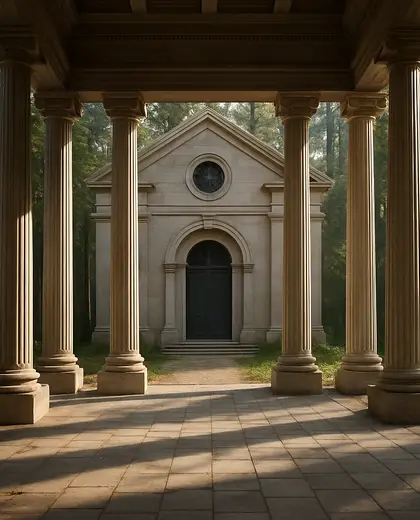
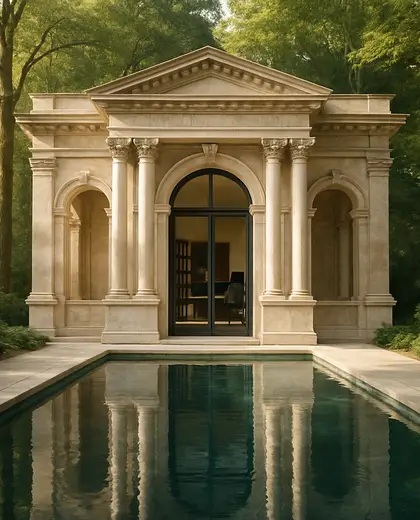
Neoclassical calm under a forest canopy
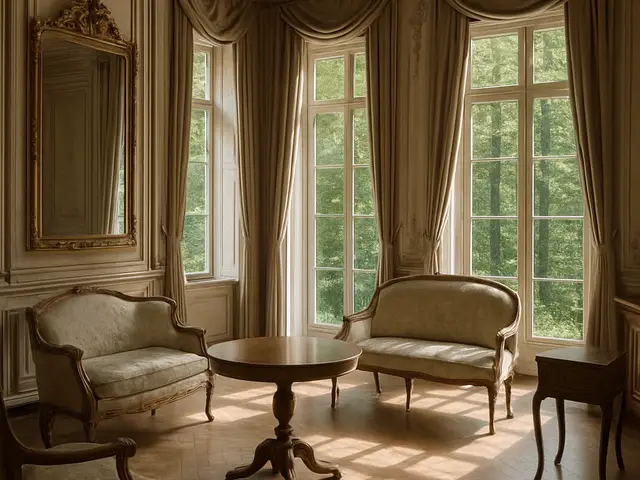
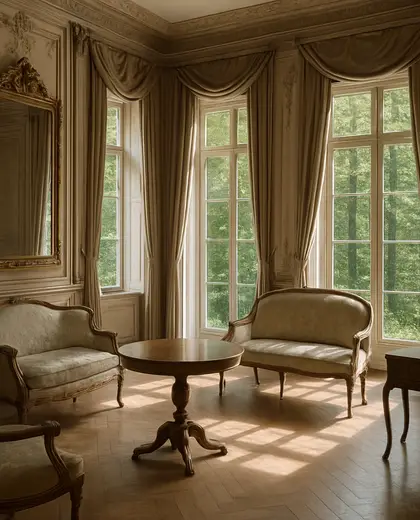
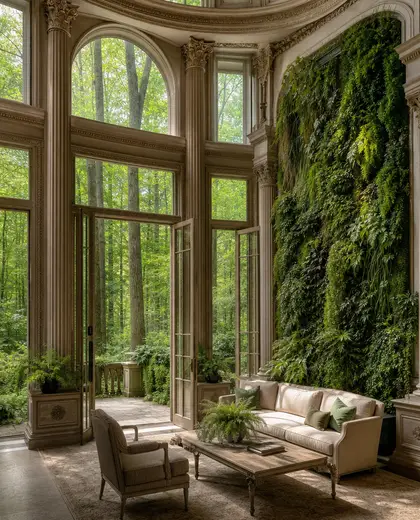
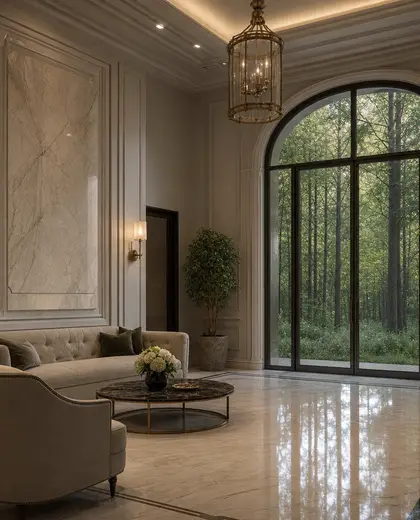
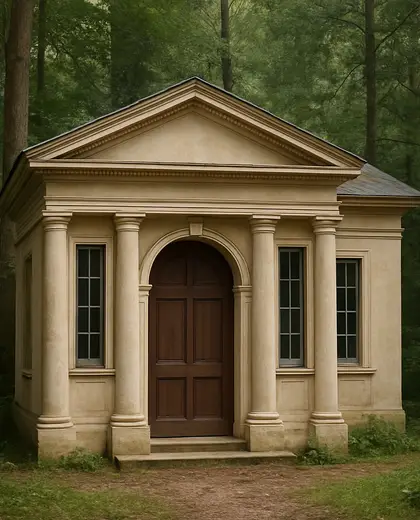
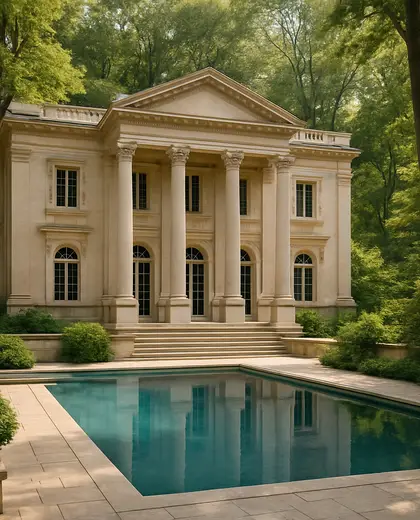
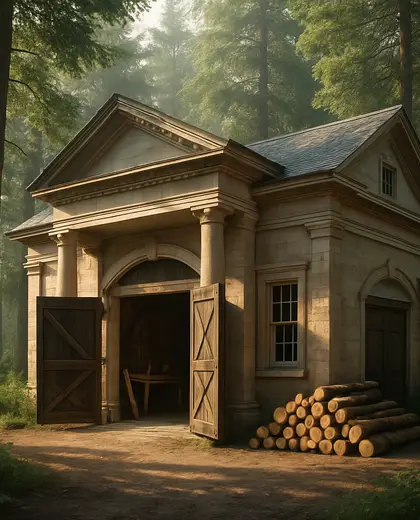
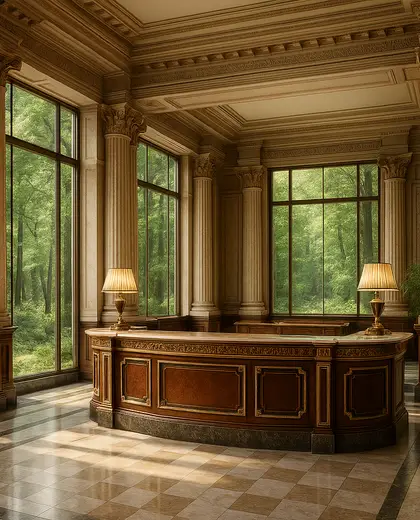
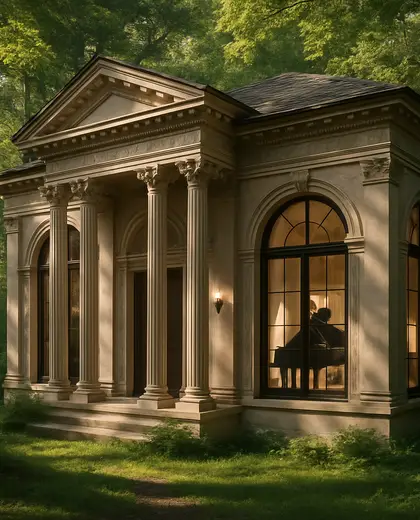
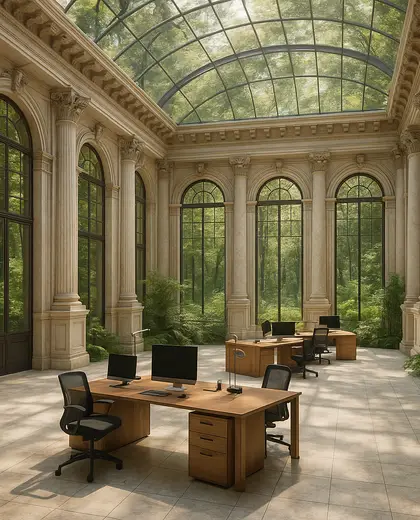
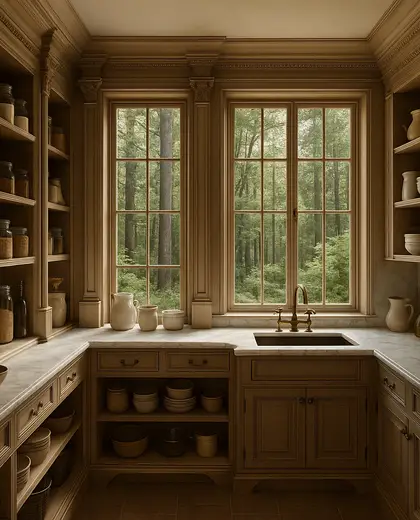
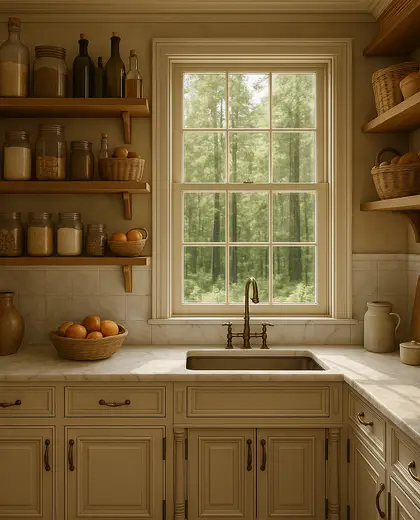
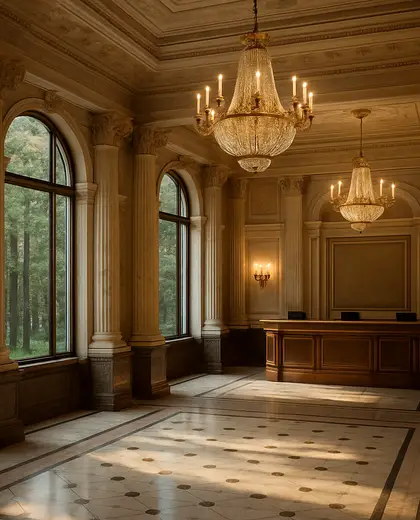
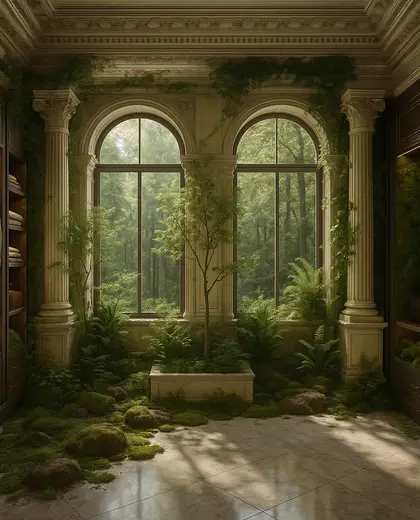
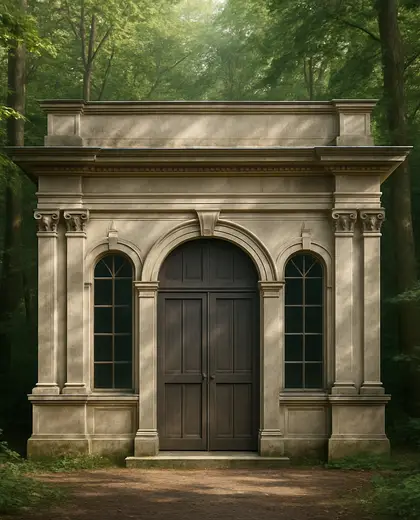
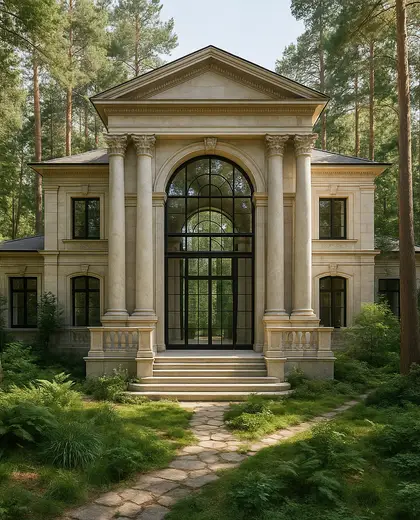
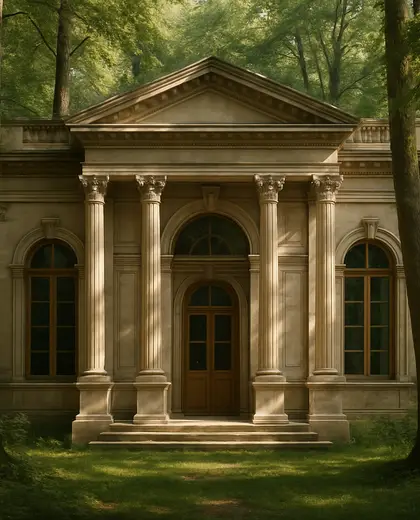
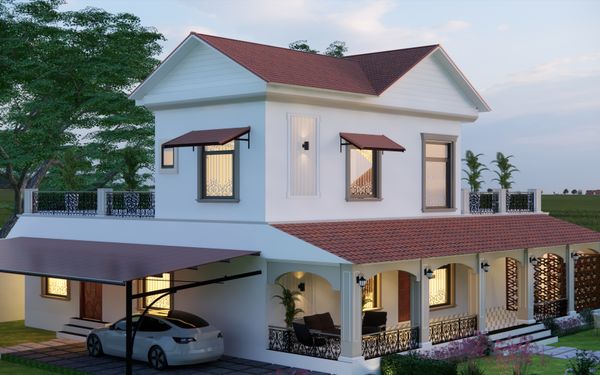
This composition pairs neoclassical symmetry and restraint with a forest-inspired setting of deep greens, filtered light, and natural textures. Expect stone, plaster, wood, and bronze details, with columns, pilasters, cornices, and balanced proportions softened by planting and organic surfaces. The palette usually stays grounded in ivory, taupe, moss, and dark evergreen, with muted metal accents.
- neoclassical
- forest
— References
References to explore
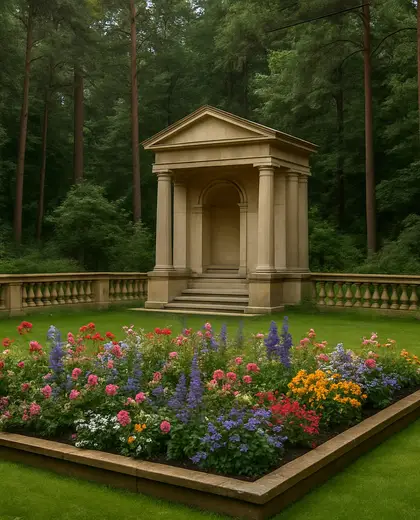
How do you keep neoclassical design from feeling too formal in a forest setting?
Use simpler classical detailing, lighter trim, and more natural finishes so the architecture feels composed but not overly ornate. Planting, stone paths, and shaded outdoor rooms help it sit comfortably in the landscape.
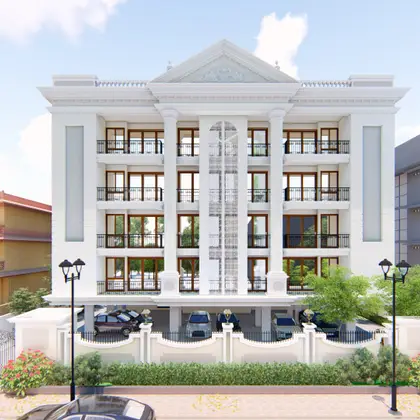
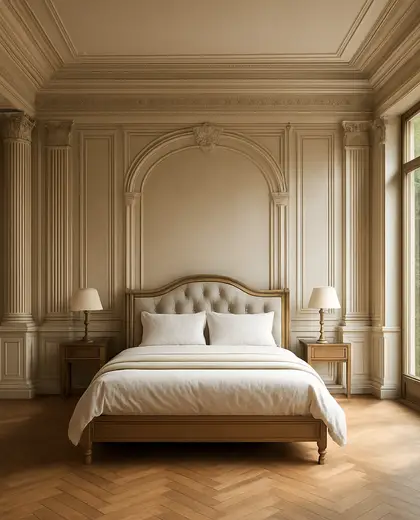
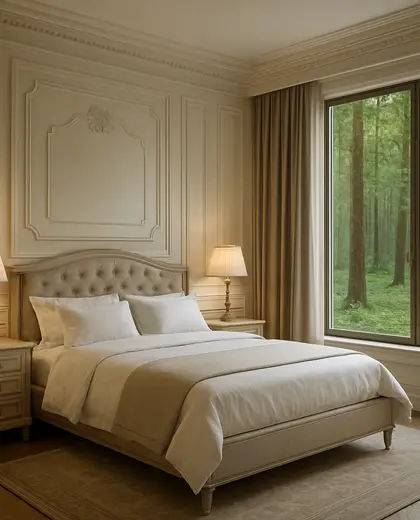
What exterior materials work best for this style?
Stone or limestone, smooth plaster, wood, and dark metal details work well because they feel grounded and durable. They also age nicely alongside trees and moisture-rich surroundings.
Can this composition work on a modern home?
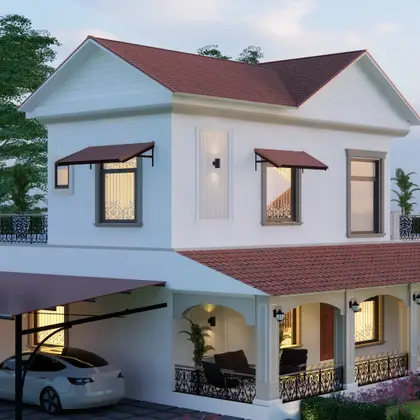
Yes, if the classical elements are simplified and the forest influence comes through in materials, color, and landscape rather than heavy ornament. The result is usually more serene than strictly traditional.
— The style
What defines it
Limestone, plaster, timber, bronze, and textured stone are common, often paired with glass and dense planting.
Ivory, warm gray, taupe, moss green, deep pine, and dark bronze create a calm, shaded atmosphere.
Formal classical lines, symmetrical facades, and refined moldings are softened by trees, understory planting, and natural groundcover.
— Professionals
Who has already built it
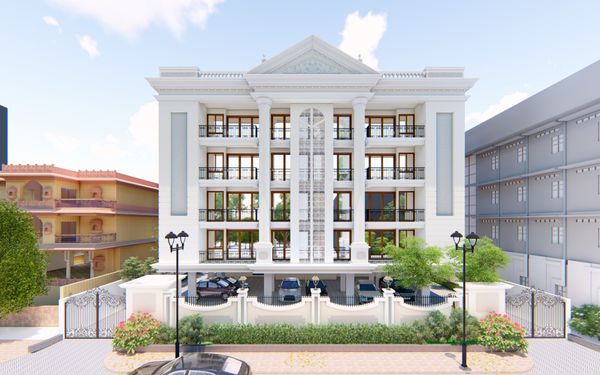

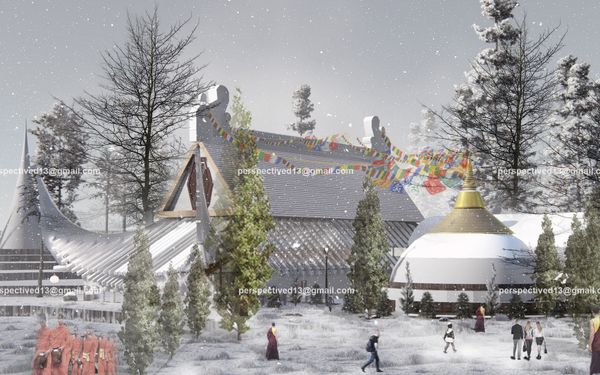


- ar ravina lohararchitects · Pune · 3 projectsView profile →
- mawar electrical serviceselectricians · Bengaluru · 1 projectsView profile →
- the achievers archsmart home professionals · Delhi · 1 projectsView profile →
- home interior decoratorscarpenters · Rampur · 3 projectsView profile →
— Explore
Keep exploring
— Questions
Frequently asked questions
How do you keep neoclassical design from feeling too formal in a forest setting?
Use simpler classical detailing, lighter trim, and more natural finishes so the architecture feels composed but not overly ornate. Planting, stone paths, and shaded outdoor rooms help it sit comfortably in the landscape.
What exterior materials work best for this style?
Stone or limestone, smooth plaster, wood, and dark metal details work well because they feel grounded and durable. They also age nicely alongside trees and moisture-rich surroundings.
Can this composition work on a modern home?
Yes, if the classical elements are simplified and the forest influence comes through in materials, color, and landscape rather than heavy ornament. The result is usually more serene than strictly traditional.