— Ideas & inspiration
Neoclassical lines in a desert light
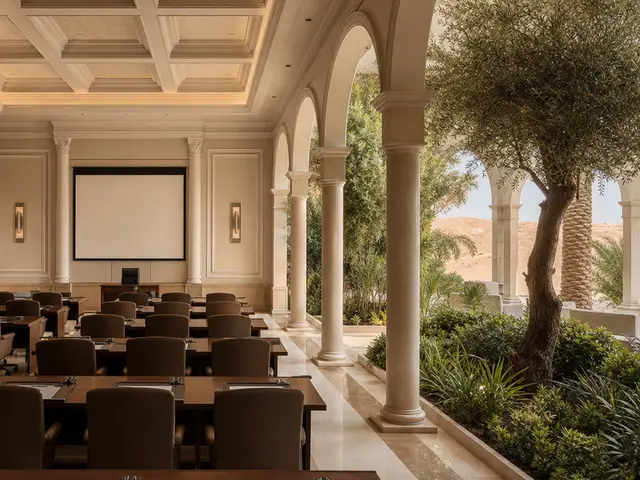
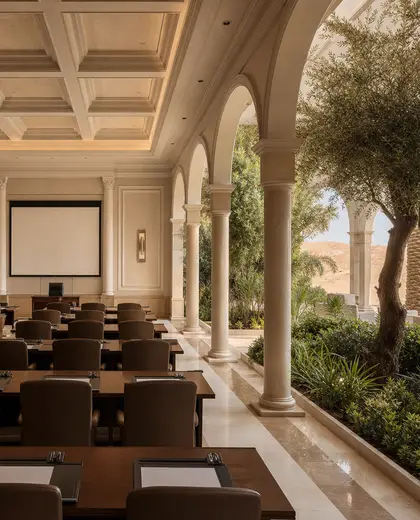
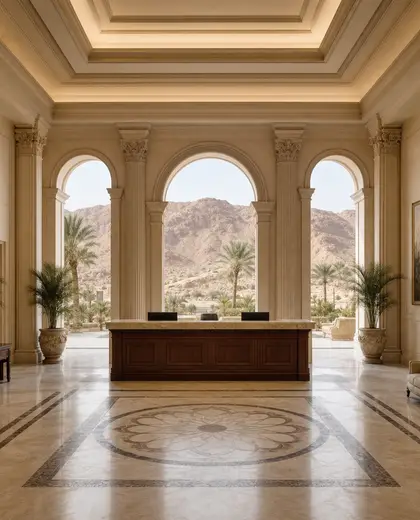
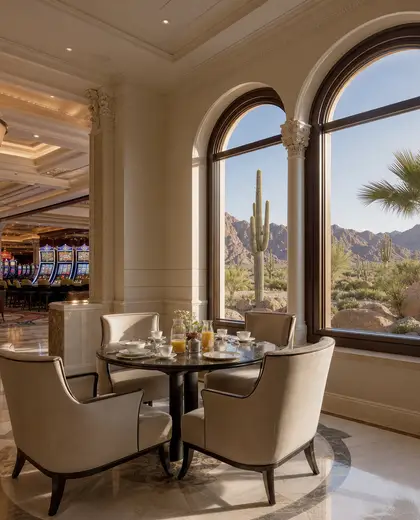
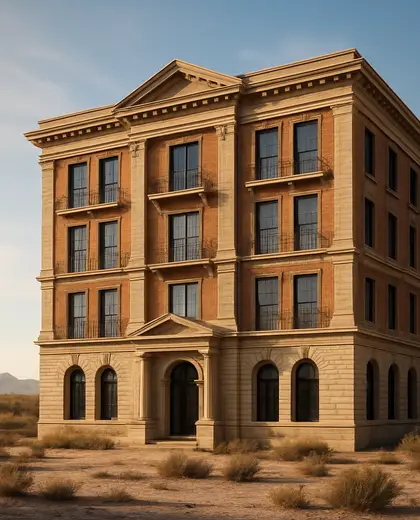
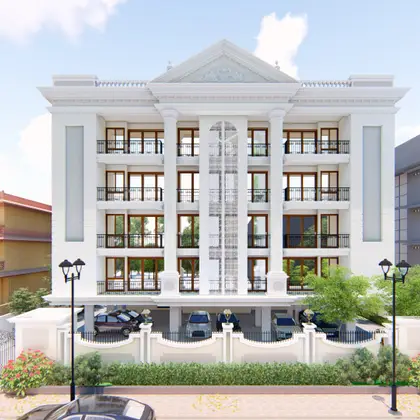
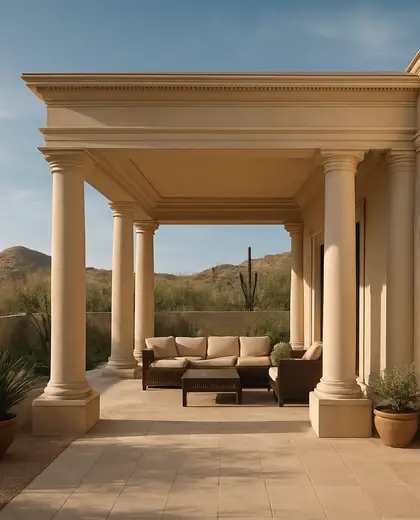
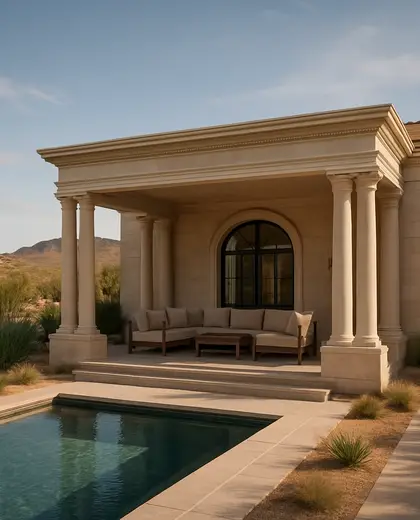
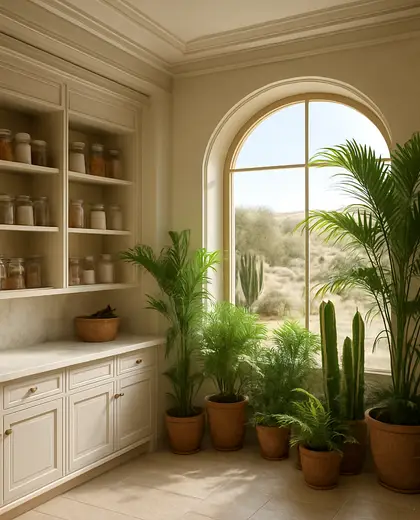
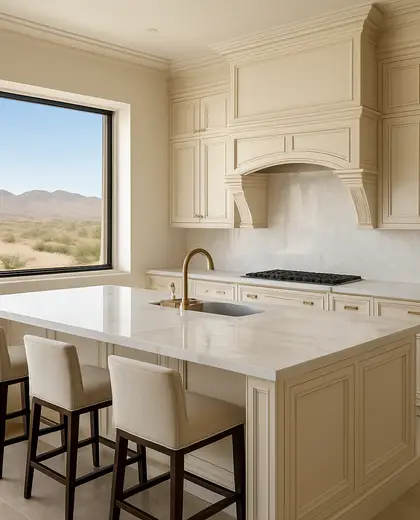
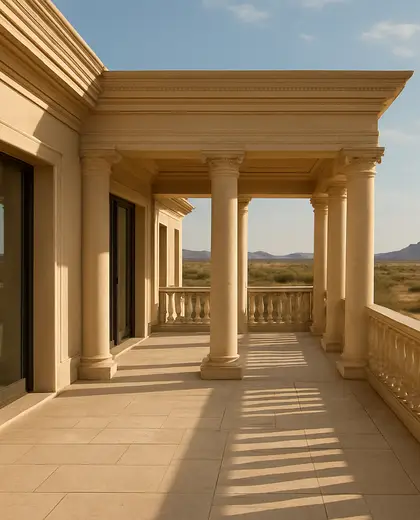
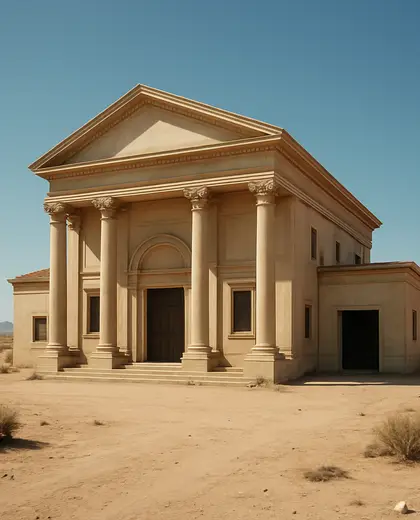
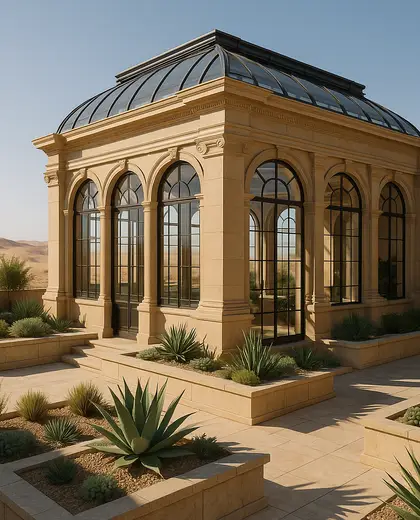
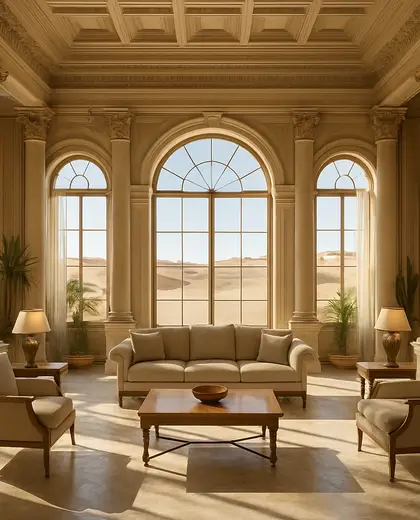
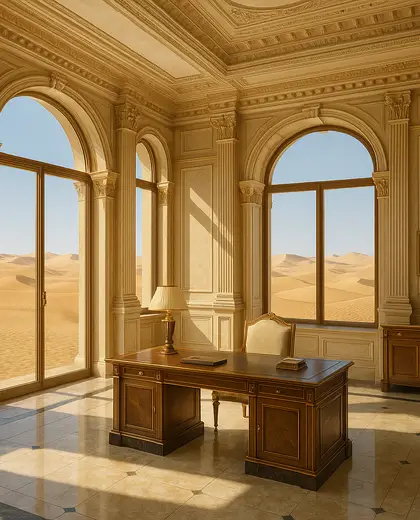
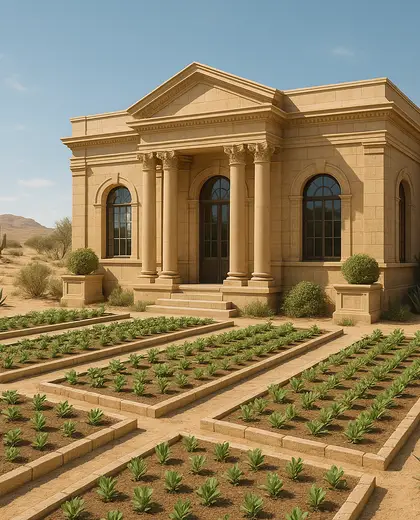
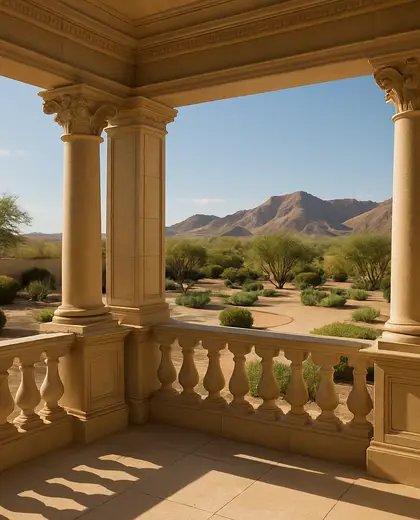
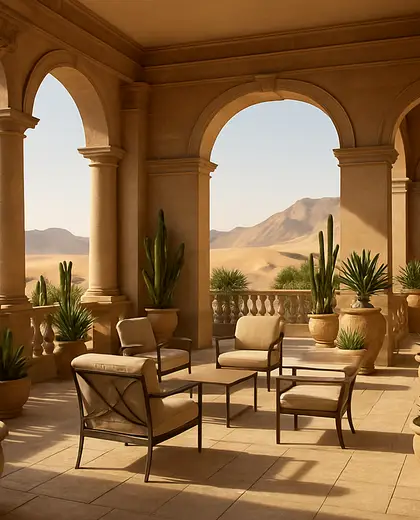
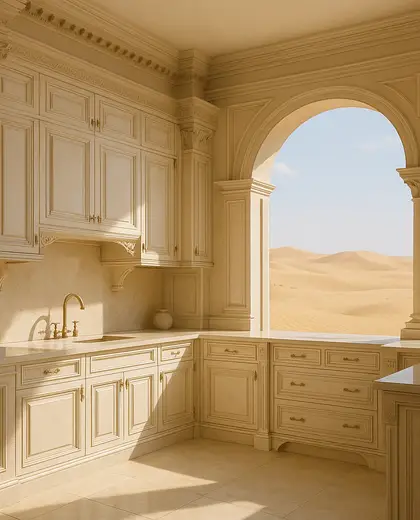
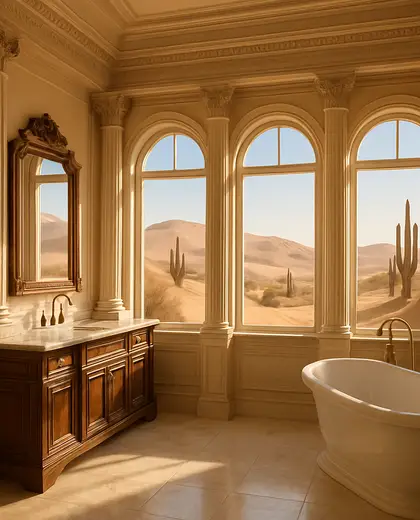
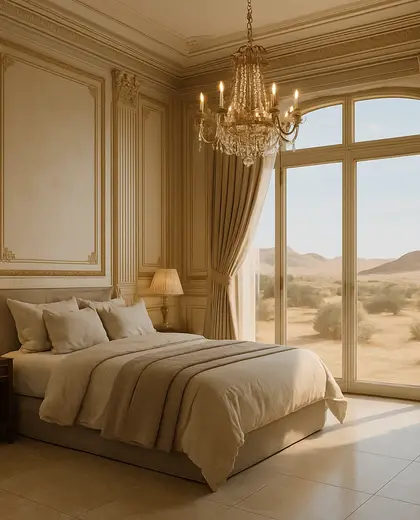
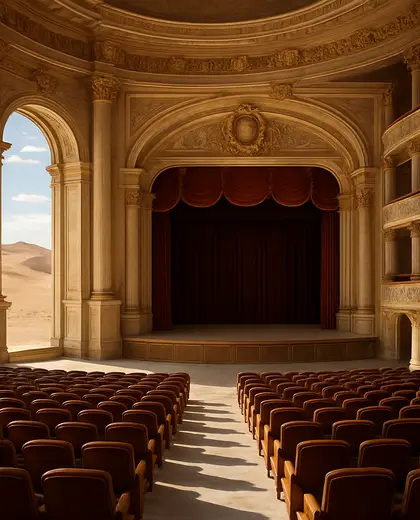
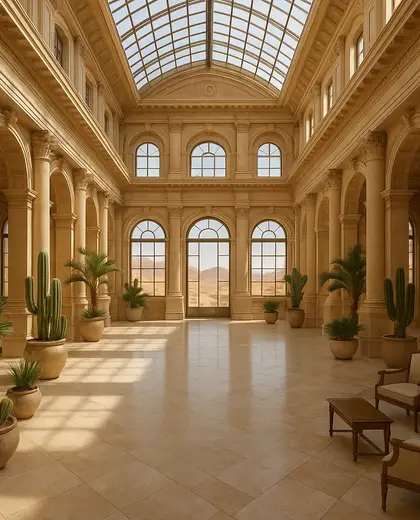
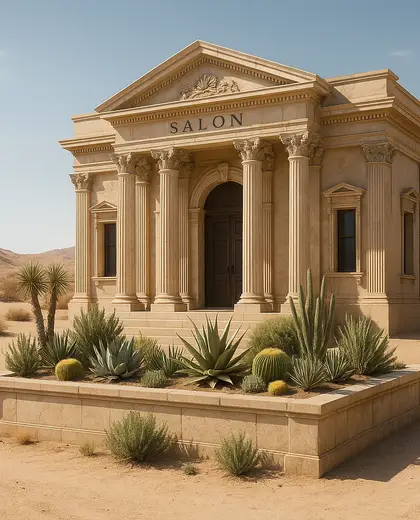
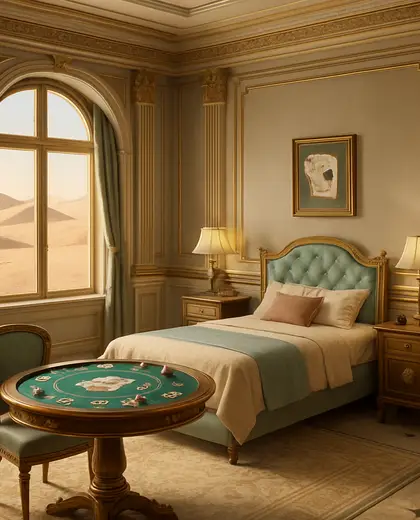
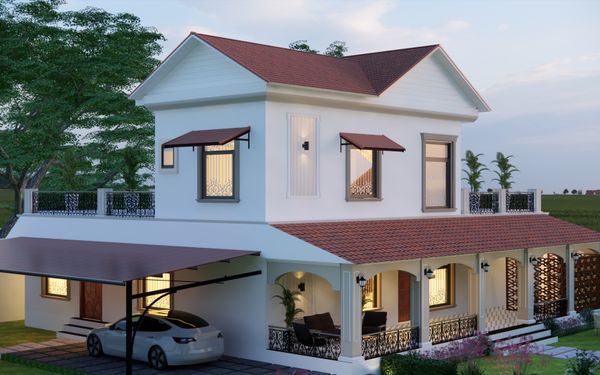
This composition pairs neoclassical symmetry and ornament with the restraint of desert architecture. It typically uses pale stone, lime plaster, travertine, wood, and bronze details, softened by arched openings, pilasters, and measured detailing. The palette stays sun-washed and grounded: sand, ivory, clay, beige, and warm gray.
- neoclassical
- desert
— References
References to explore
How is this different from a purely classical interior?
It keeps the formal balance of neoclassical design, but strips away excess decoration and replaces it with simpler surfaces, warmer textures, and a more climate-aware feel.
Does this style work in a modern home?
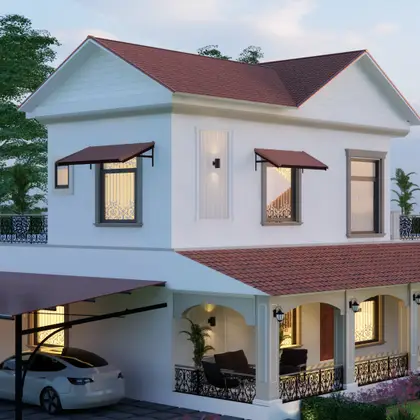
Yes. It can be adapted to contemporary plans by using classical proportions in openings, millwork, and furniture, while keeping finishes quiet and minimal.

What should I avoid if I want the look to feel authentic?
Avoid glossy finishes, overly ornate detailing, and sharp color contrasts. The style works best when materials feel natural, muted, and slightly sun-aged.
— The style
What defines it
Travertine, limestone, plaster, stucco, oak, and brushed metal are common, with stone or plaster used to keep the look grounded and cool.
Think sand, ivory, bone, camel, muted terracotta, and soft gray, with darker bronze or charcoal accents for contrast.
It combines classical proportions, columns, cornices, and symmetry with desert forms such as thick walls, shaded openings, and tactile, earthy finishes.
— Professionals
Who has already built it
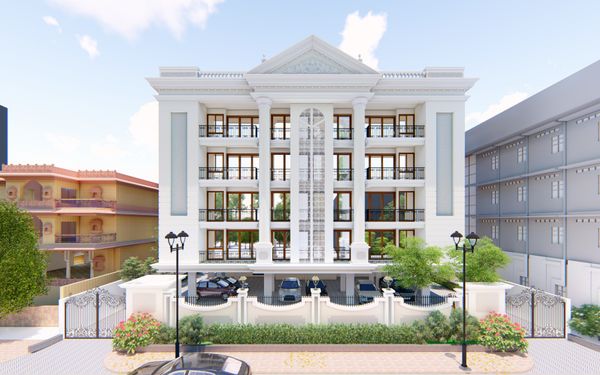

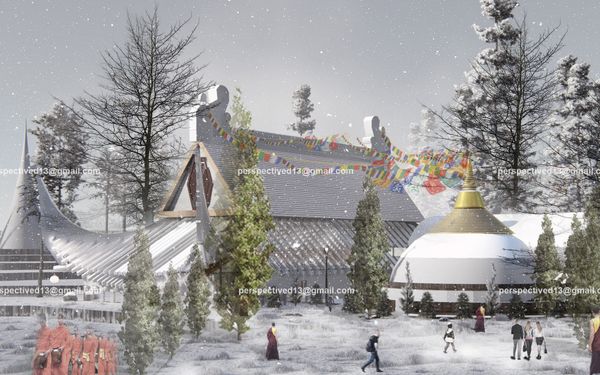


- mohammad yasir siddiquiarchitects · 2 projectsView profile →
- mawar electrical serviceselectricians · Bengaluru · 1 projectsView profile →
- the achievers archsmart home professionals · Delhi · 1 projectsView profile →
- home interior decoratorscarpenters · Rampur · 3 projectsView profile →
— Explore
Keep exploring
— Questions
Frequently asked questions
How is this different from a purely classical interior?
It keeps the formal balance of neoclassical design, but strips away excess decoration and replaces it with simpler surfaces, warmer textures, and a more climate-aware feel.
Does this style work in a modern home?
Yes. It can be adapted to contemporary plans by using classical proportions in openings, millwork, and furniture, while keeping finishes quiet and minimal.
What should I avoid if I want the look to feel authentic?
Avoid glossy finishes, overly ornate detailing, and sharp color contrasts. The style works best when materials feel natural, muted, and slightly sun-aged.