— Blog · 18 August 2026 · 3 min read
Contemporary atrium ideas for a bright, airy Indian home
A practical guide to styling a contemporary atrium with clean lines, daylight-first planning, durable materials, and polished details that suit Indian homes.
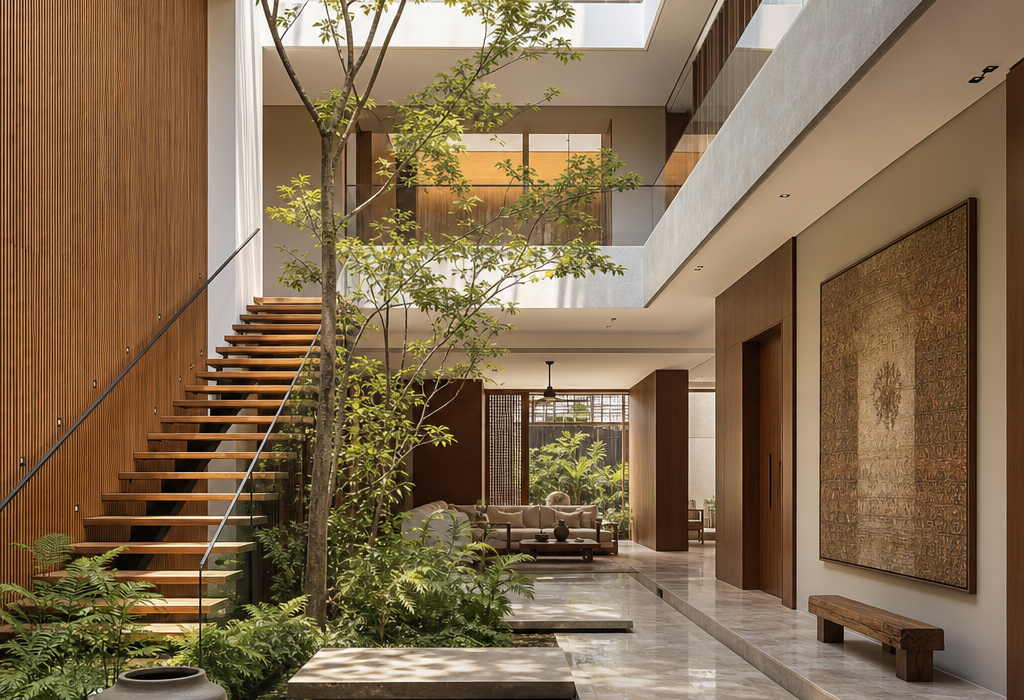
Keep the atrium visually open
A contemporary atrium works best when it feels light, uncluttered, and easy to read at a glance. Use a simple spatial layout with clear walking paths, low-profile seating, and uninterrupted sightlines up to the skylight or upper floors. If the atrium sits at the centre of the home, treat it like a calm pause point rather than a busy corridor. In Indian homes, this means resisting the urge to overfill it with decor; let the height, daylight, and volume do most of the work.
Choose a clean, layered material palette
For a contemporary look, combine smooth natural stone, microtopping, polished concrete, matte vitrified tiles, or large-format porcelain for the floor. Warm it up with wood veneer, fluted timber panels, or powder-coated metal in black, bronze, or graphite. A restrained palette of off-white, soft grey, taupe, and charcoal keeps the atrium feeling current, while one accent such as deep green, terracotta, or muted indigo can add character without visual noise. If you want a more India-friendly finish, kota stone or locally sourced sandstone can work beautifully when detailed in a crisp, minimal way.
Use furniture that feels low, light, and intentional
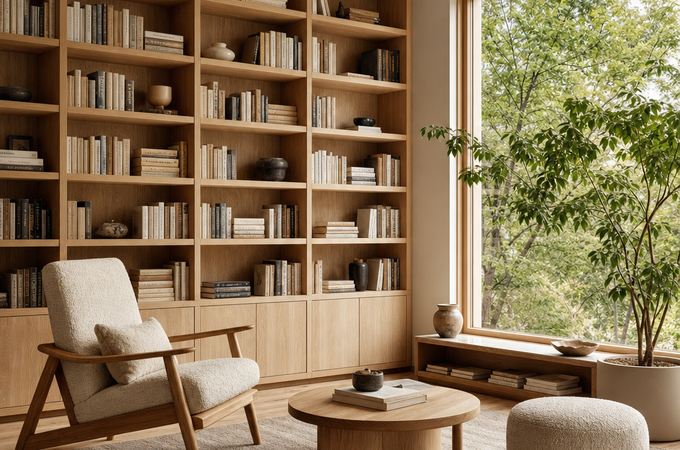
Furniture in an atrium should support the architecture, not compete with it. Pick a slim bench, a pair of lounge chairs, or a compact floating console in simple forms and clean edges. Upholstery in textured neutral fabric, leatherette, or performance fabric is practical for Indian dust and humidity, especially if the atrium is open to the rest of the house. Keep proportions modest so circulation stays comfortable; a small centre table in stone, wood, or metal can be enough. Built-in seating along one edge can also make the space feel tailored without crowding it.
Design lighting for day and night
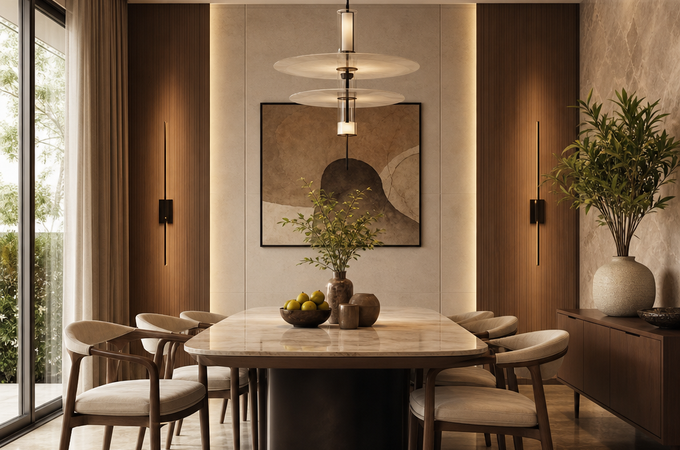
Since an atrium is usually daylight-rich, lighting should feel subtle during the day and atmospheric after dark. Use concealed LED strips along ledges, handrails, or planter edges to highlight the architecture, and add warm downlights only where needed. A single pendant can work if the ceiling is high, but it should have a sculptural yet restrained silhouette. Choose a warm-white colour temperature to keep the space inviting in the evening, especially in Indian homes where the atrium often acts as a family gathering zone after sunset. If there is a tree or planter feature, uplighting can add depth without looking theatrical.
Finish with details that make the look believable
The final layer is what makes the contemporary atrium feel lived-in rather than showroom-like. Use oversized planters in fibre cement, stone, or matte ceramic, and keep plant choices architectural: fiddle leaf fig, areca palm, bird of paradise, or bamboo in well-controlled clusters. A water feature can be elegant if it is very simple, with a still basin or thin sheet of water rather than ornament. Add a discreet rug only if the area is fully enclosed and dry, and keep accessories to a minimum: one large artwork, a sculptural vase, or a refined tray is enough. Good joinery, concealed drainage for planters, and easy-to-clean surfaces are the small practical details that make a contemporary atrium work well in everyday Indian life.
Find the best architects and designers for your atrium project
Free, no commitment / Less than 5 minutes
Are you an architect or designer? Sign up for free! »