— Blog · 6 October 2026 · 5 min read
Budgeting a dining room makeover: what it really costs in India
A practical Indian budget guide for renovating a dining room, covering typical costs, smart splurges, sensible savings, and hidden expenses to watch for.
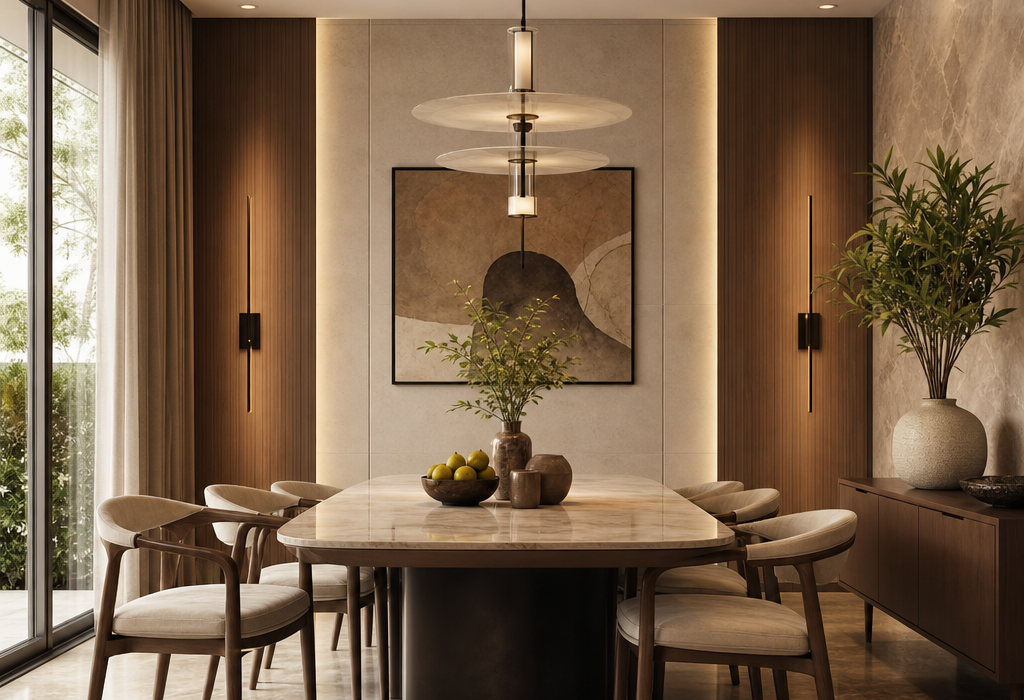
How much a dining room renovation usually costs
For a typical dining room in India, a basic refresh can start around ₹40,000–₹90,000 if you are mostly repainting, changing lights, and updating a few furnishings. A mid-range renovation usually falls between ₹1.2 lakh–₹3.5 lakh when you add new flooring, false ceiling details, better lighting, a storage unit, and a dining table set that lasts. If you are going for a full contemporary upgrade with custom carpentry, premium finishes, and designer lighting, the budget can move beyond ₹5 lakh depending on size and specification.
The biggest cost swing comes from whether you are keeping the existing room layout or changing it. A simple contemporary dining room that uses clean lines, smooth paint, warm wood tones, and uncluttered storage is generally more economical than a heavily detailed space with veneer panelling, concealed lighting, or marble-topped furniture. In Indian homes, the difference between a rented-apartment style refresh and a full civil renovation is often the difference between a few weekends of work and a full project timeline.
What pushes the budget up or down
Size is the first driver: a compact 8 ft by 10 ft dining nook needs far less money than a separate 12 ft by 16 ft dining room. Material choice is the next big factor. Laminates and machine-finished paint are budget-friendly, while veneer, natural stone, fluted panels, and premium hardware raise costs quickly. Even lighting can shift the bill: a simple pendant with downlights costs much less than a layered scheme with dimmers, cove lights, and decorative wall washers.
Labour also varies by city and by finish level. In metros like Mumbai, Bengaluru, Delhi NCR, and Pune, skilled carpentry and finishing work tends to cost more than in smaller cities. The shape of the room matters too. Irregular corners, beam drops, old flooring that needs breaking, or walls that require damp treatment all add time and money. If you are keeping the contemporary look, remember that clean detailing is not the same as cheap work; straight lines, neat joints, and good alignment need a capable carpenter and mason.
Where it makes sense to spend
Spend first on the pieces that affect daily use: the dining table, chairs, lighting over the table, and a durable floor finish. A solid wood or well-made engineered wood table with enough circulation space can serve for years, while flimsy furniture often needs replacing sooner. As a practical rule, leave at least 36 inches of clearance around the table for easy movement, especially in Indian homes where the dining area often connects to the living room or kitchen.
Good lighting is worth the money because the dining room works for family meals, homework, festivals, and guests. Use warm white light for a comfortable feel, and consider a dimmable pendant or a pair of centred fixtures if the table is long. If you are adding storage for crockery, pooja items, table linen, or serveware, invest in smooth drawer channels and moisture-resistant boards; in humid Indian weather, cheaper fittings can swell or warp. For a contemporary dining room, a restrained colour palette and one strong feature wall often look more expensive than piling on multiple finishes.
Where you can save without compromising the look
You can save on decorative extras. A dramatic false ceiling, for example, is not essential if the room already has good proportions and ceiling height. A neat repaint in an off-white, greige, soft sage, or muted taupe can do more for the space than costly cladding. Likewise, you do not need an entire custom furniture set if your existing table is structurally sound; sometimes changing the chairs, upholstery, and lamp is enough to reset the room.
Laminate finishes are a sensible saving point for sideboards and display units, especially in a contemporary scheme where simplicity is the style language. Prefabricated dining chairs, local woodwork, and ready-made curtains or blinds can also help control cost. If the room opens into the living area, using the same flooring across both spaces reduces wastage and keeps the home visually larger, which is a smart money-saving move in Indian apartments.
Hidden costs people often forget
Many budgets miss the small-but-real expenses that show up late. These include shifting and re-fixing electrical points, extra paint for touch-ups after carpentry, transportation charges for furniture, and packaging disposal. If your dining room renovation includes a new floor, you may also need skirting, levelling work, and threshold finishing at the doorway. Curtain rods, wall hooks, switch plates, and upholstery foam often seem minor individually, but together they can add a noticeable amount.
There are also practical hidden costs linked to Indian living patterns. If the dining room is used during festivals, you may end up adding extra seating, storage for serveware, or a foldable console for guests. If there is a wash basin nearby or the room is close to the kitchen, moisture-proof finishes become important. Keep a contingency of around 10%–15% of the total budget for such surprises, because once work begins, small changes almost always come up.
A simple budget split for a contemporary dining room
A balanced way to plan the money is to put the largest share into the table, chairs, storage, and lighting, then keep the remaining portion for finishes and styling. For a contemporary dining room, think of the room as a mix of function and calm visual order: one focal light, one durable surface, one storage element, and a restrained palette. That approach usually gives better value than spreading the budget across too many decorative items.
If the budget is tight, start with paint, lighting, and seating upgrades first, then add carpentry later. If the budget is comfortable, invest in long-life items such as a quality tabletop, sturdy chair frames, and moisture-resistant cabinetry. The best dining room renovation budgets in India are the ones that suit everyday family use, survive regular cleaning, and still feel inviting when guests come over.
Find the best architects and designers for your dining room project
Free, no commitment / Less than 5 minutes
Are you an architect or designer? Sign up for free! »