— Blog · 4 September 2026 · 4 min read
Ambala: A Strategic North Indian City with Strong Potential for Home and Design Projects
Discover Ambala’s architectural character, estimated population, construction-cost ranges, and why the city is a practical, well-connected place for new homes, renovations, and design-led projects.
Welcome to Ambala
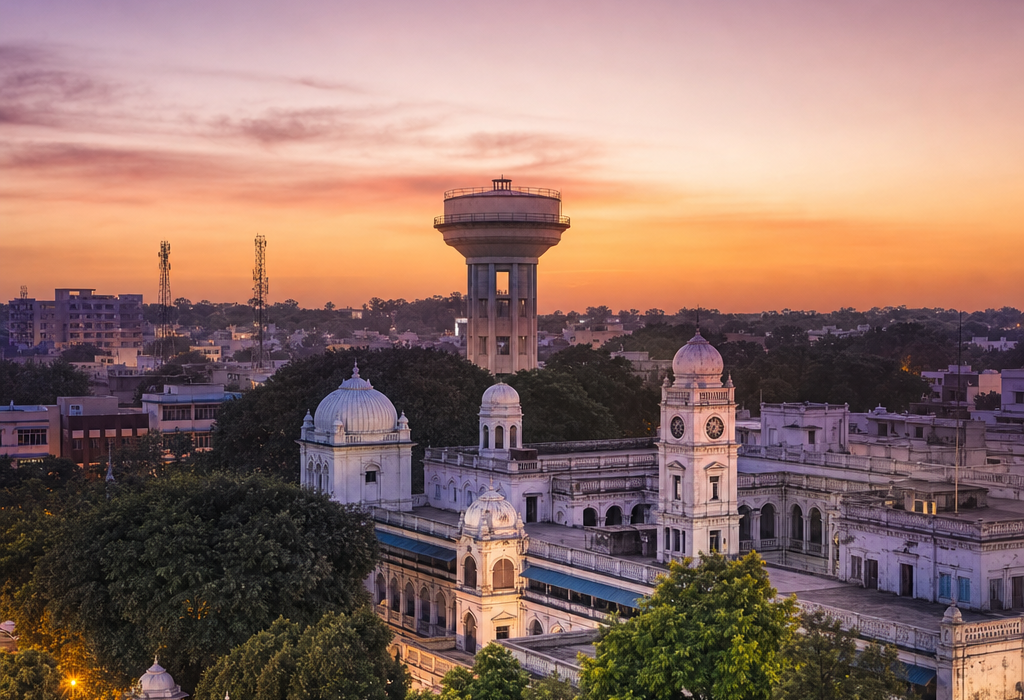
Ambala, in Haryana, is one of North India’s most strategically placed cities, sitting close to the Punjab border and acting as a major junction for road and rail movement across the region. The city’s population is commonly estimated at around 5.5 lakh to 6 lakh when considering the urban area, making it large enough to support a wide range of services while still retaining a more manageable scale than a metro. For people planning a project, Ambala is interesting because it combines practical connectivity with a growing appetite for better homes, smarter commercial spaces, and more considered planning. Whether you are looking at a new residence, a shopfront, or an upgrade to an existing property, the city has a healthy base of architects, interior designers, and 3d renderers who can help translate ideas into workable plans. Ambala’s character is shaped by movement, trade, defence activity, and a long urban history, which gives it a practical but evolving design culture.
Architectural Highlights
Ambala’s architecture is best understood as a mix of heritage, civic utility, and newer private development. One of the city’s best-known historic landmarks is the Ambala Cantonment railway heritage, which reflects the city’s colonial-era importance as a transport and military hub. The cantonment itself is a key part of Ambala’s urban identity, with orderly streets, institutional buildings, and a layout that differs from the more crowded bazaar-led fabric of older Indian towns. In the older city areas, the built environment is shaped by traditional North Indian commercial streets, narrow plots, and active market edges, while newer colonies and road-facing developments show the shift towards larger homes, apartment blocks, and mixed-use structures. A notable historical fact is that Ambala’s urban development was strongly influenced by its cantonment status under the British, which helped shape road alignment, public infrastructure, and zoning patterns in ways that still affect the city today. In recent years, contemporary residential buildings, showrooms, hospitals, coaching centres, and hospitality spaces have added a more modern layer to the city’s architectural identity, making it a place where practical design matters as much as visual appeal.
Construction Costs & Trends
For a typical mid-range residential project in Ambala, a reasonable construction-cost estimate is about ₹2,200 to ₹3,500 per sq m for standard finish levels, with higher-end specifications rising further depending on structure, materials, labour, and design complexity. If you are planning premium interiors, custom façades, or energy-efficient features, the budget can move up noticeably. Like many North Indian cities, Ambala is seeing a steady preference for better-planned plotted homes, redevelopment of older properties, and improved interiors in both residential and commercial spaces. There is also a visible trend towards more functional frontages, modular kitchens, smarter space planning, and visual renderings before construction begins, which is why services such as 3d renderers have become increasingly useful for project clarity. In parallel, better road connectivity and the city’s location on important travel routes continue to support demand in housing and commercial real estate, especially in areas where people want both convenience and long-term livability.
Why Ambala is Perfect for Your Project
Ambala is attractive for building, renovating, or designing because it offers a rare combination of location advantage, practical demand, and manageable scale. It is well connected to major regional destinations, which makes material movement, contractor coordination, and site access comparatively easier than in many congested urban centres. The city has a strong base of family homes, trading activity, educational use, and service-sector growth, so there is genuine demand for thoughtful spaces rather than just speculative construction. That creates opportunities for well-planned layouts, efficient storage, climate-conscious design, and interiors that balance durability with comfort. For homeowners, Ambala offers the chance to improve older structures with smarter planning and better aesthetics; for investors and business owners, it offers a market where visibility, usability, and lasting value matter. With support from experienced architects and interior designers, projects here can be tailored to local needs, weather, and lifestyle patterns. In short, Ambala is not just a transit city; it is a place where good design can make a real difference to everyday living and business performance.
Find the best architects and designers in Ambala for your project
Free, no commitment / Less than 5 minutes
Are you an architect or designer? Sign up for free! »