— Ideas & inspiration
Minimalist calm in the yard
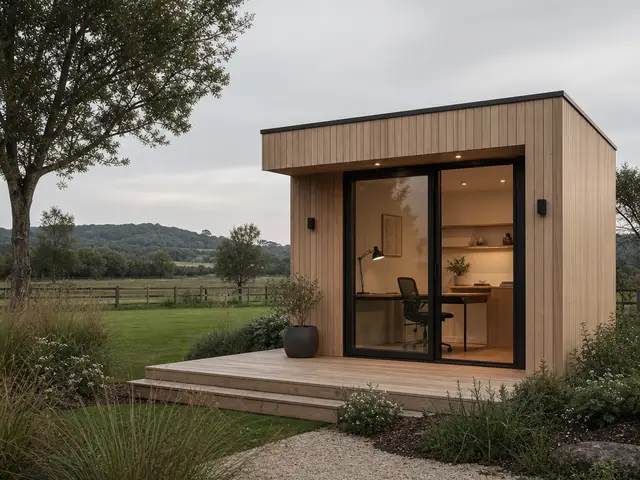
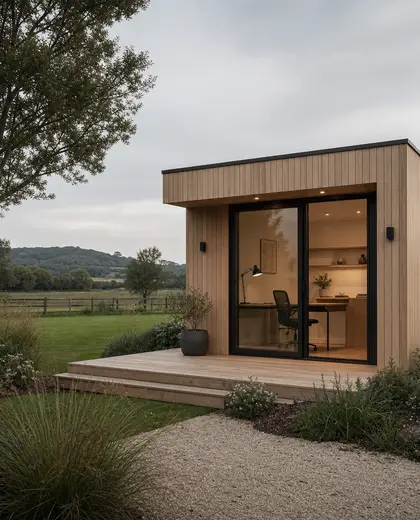
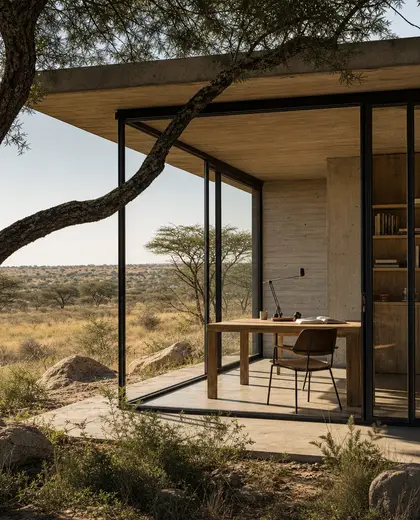
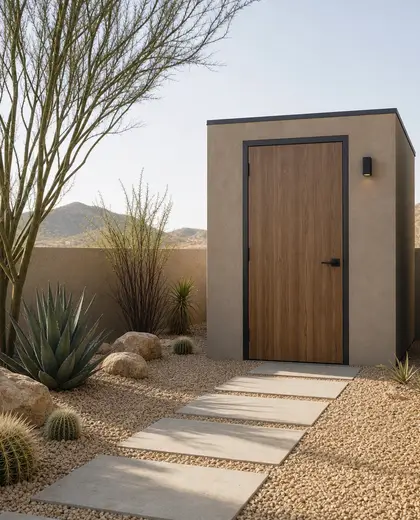
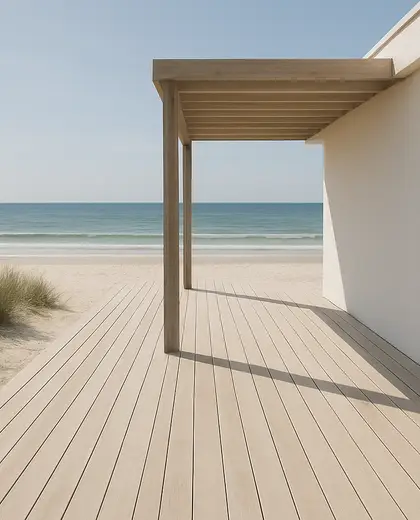
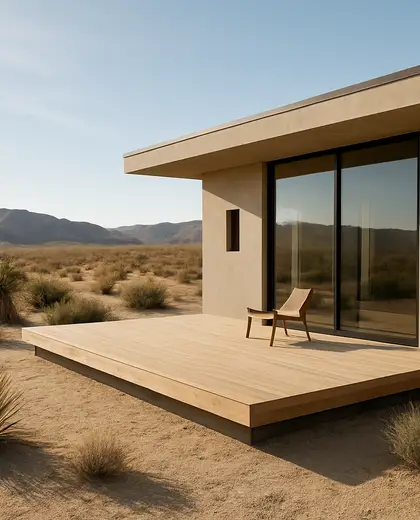
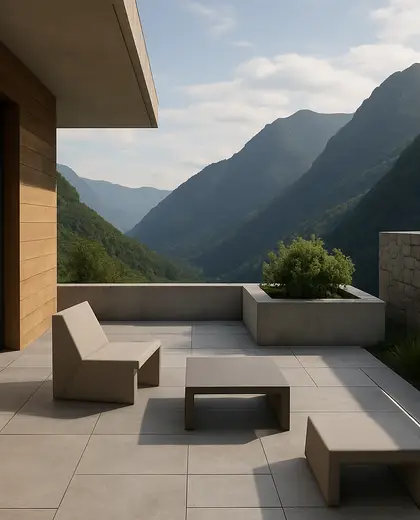
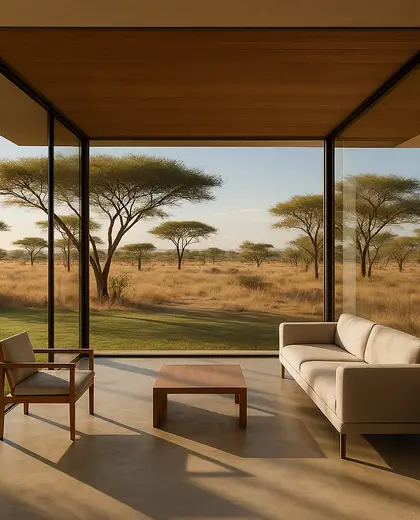
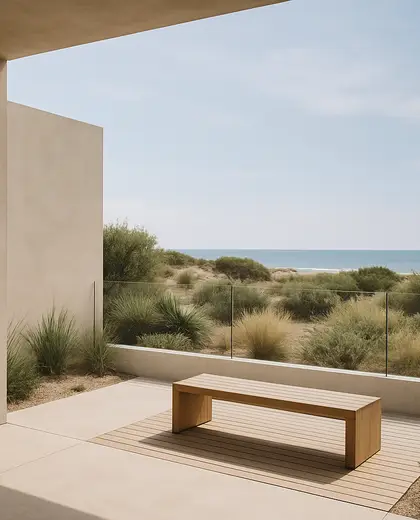
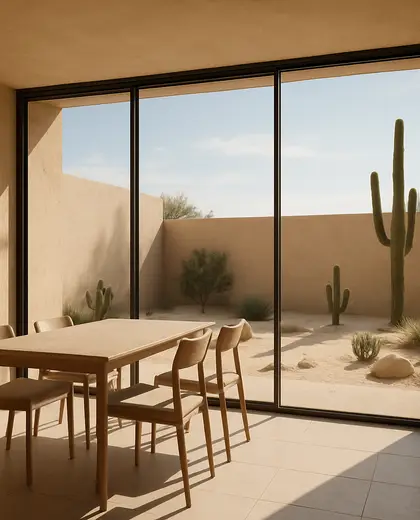
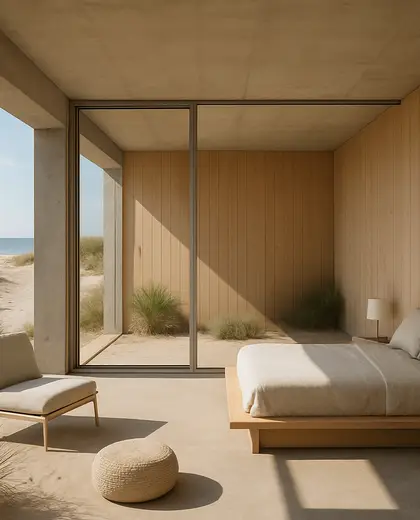
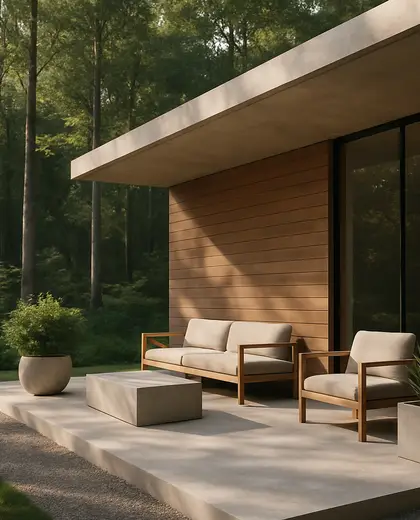
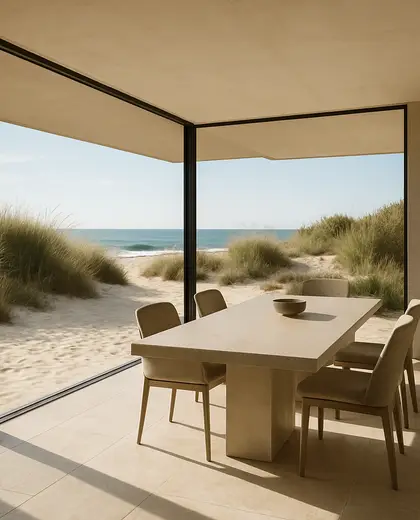
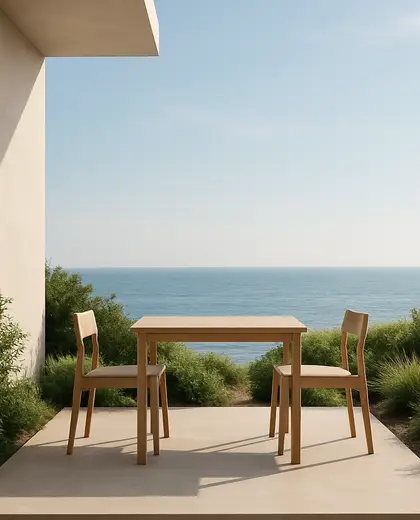
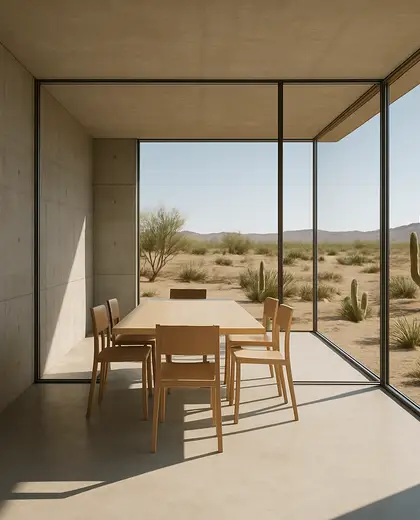
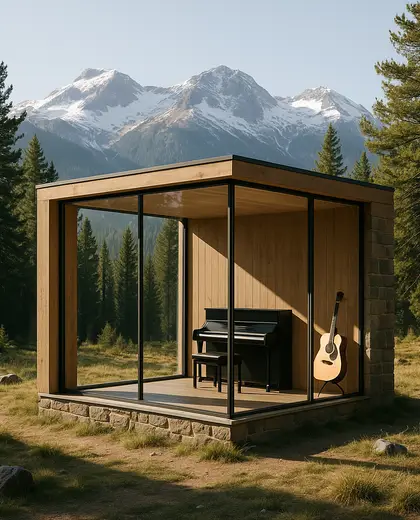
This composition is defined by clean geometry, open planting beds, and very few materials used with discipline. Concrete, gravel, timber, and restrained metal detailing are common, with planted areas kept sparse and structured. The palette stays muted, relying on whites, greys, charcoals, soft greens, and natural wood tones.
- yard
- minimalist
— References
References to explore
How do I keep a minimalist yard from feeling empty?
Use a few well-placed elements: one strong path, grouped planting, and one focal feature like a bench, tree, or water bowl.


What plants suit a minimalist yard?
Choose plants with clear shapes and repetitive forms, such as grasses, clipped shrubs, architectural evergreens, or a single tree species repeated in groups.

Is this style hard to maintain?
It can be low-maintenance if the layout is simple and the planting is limited, but gravel, edges, and crisp lines still need regular upkeep.


— The style
What defines it
Concrete pavers, gravel, timber slats, simple steel edging, and low-maintenance planting are typical.
Neutral and quiet: warm white, stone grey, matte black, soft green, and light wood.
Works well with modern facades, large glazing, flat roofs, and uncluttered outdoor furniture.
— Professionals
Who has already built it






- home interior decoratorscarpenters · Rampur · 3 projectsView profile →
- gaurav chawlaarchitects · 4 projectsView profile →
- swayam eppakayalainterior designers · Mumbai · 5 projectsView profile →
- pavit ceramics pvt ltdceramic manufacturers · Ahmedabad · 2 projectsView profile →
— Explore
Keep exploring
— Questions
Frequently asked questions
How do I keep a minimalist yard from feeling empty?
Use a few well-placed elements: one strong path, grouped planting, and one focal feature like a bench, tree, or water bowl.
What plants suit a minimalist yard?
Choose plants with clear shapes and repetitive forms, such as grasses, clipped shrubs, architectural evergreens, or a single tree species repeated in groups.
Is this style hard to maintain?
It can be low-maintenance if the layout is simple and the planting is limited, but gravel, edges, and crisp lines still need regular upkeep.