— Blog · 11 August 2026 · 3 min read
5 courtyard mistakes that spoil a beautiful outdoor room
Avoid the most common courtyard planning errors with practical, India-friendly tips for shade, drainage, paving, planting and low-maintenance comfort.
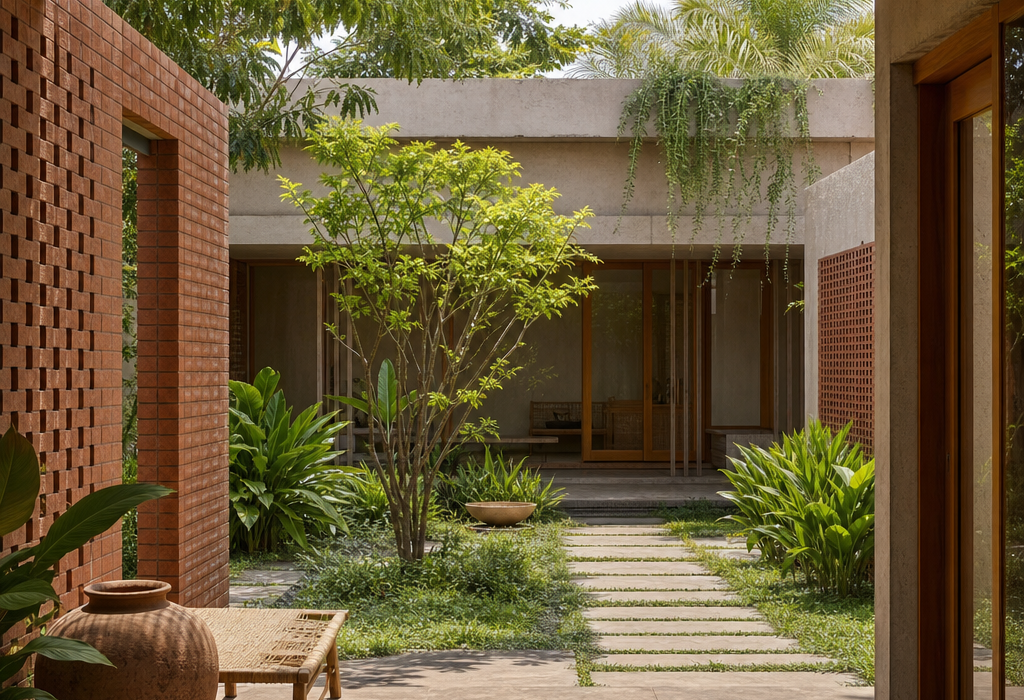
A well-planned courtyard can become the coolest and most useful part of a home, especially in Indian weather. The trick is to avoid design choices that look good on paper but turn uncomfortable, slippery or high-maintenance in daily use.
1. Ignoring sun, shade and wind
A courtyard without proper shade can become harsh by midday, especially in cities like Delhi, Nagpur or Ahmedabad. If the space gets strong western sun, use a pergola, a neem tree, a fabric sail or even a deep overhang; if it is windy, add screened planting or a jaali wall to soften the draft. A comfortable courtyard should have at least one shaded sitting edge and one open patch for light.
2. Choosing the wrong flooring
Highly polished stone may look elegant, but in a courtyard it can become slippery during monsoon and too hot in peak summer. Avoid glossy tiles and opt for outdoor-friendly materials such as Kota stone, textured sandstone, rough granite or terracotta pavers with proper anti-skid finish. Keep joint lines neat and allow for slight slopes so water does not stand near seating or entry points.
3. Forgetting drainage and slope
Many courtyards fail because water has nowhere to go. Even a small rain shower can leave puddles if the floor is flat or if the drain is hidden under planters. Build a gentle slope towards a drain or channel, use a grated outlet that is easy to clean, and make sure planters sit on stands or plinths so water can move freely underneath. Good drainage protects the surface, walls and plants alike.
4. Overcrowding the space
It is tempting to fill every corner with pots, furniture, lights and decor, but a crowded courtyard loses its calm. Leave enough open floor area to walk comfortably, and choose fewer, stronger elements: one bench, one focal planter, and one or two feature lights usually work better than many small items. For compact Indian homes, built-in seating and wall-mounted planters can save space without making the courtyard feel busy.
5. Using plants that demand too much care
Exotic plants that need constant misting or delicate pruning can become a burden in a real household. A sustainable courtyard works best with hardy, climate-appropriate planting such as frangipani, areca palm, bougainvillea, vetiver, money plant, jasmine or native grasses, depending on sun and shade. Group plants by water need, use drip irrigation where possible, and choose large containers with proper drainage so maintenance stays simple.
If a courtyard is designed with comfort, drainage, shade and low-maintenance planting in mind, it becomes an everyday retreat rather than a decorative afterthought. The best ones feel effortless, cool and genuinely usable through most Indian seasons.
Find the best architects and designers for your courtyard project
Free, no commitment / Less than 5 minutes
Are you an architect or designer? Sign up for free! »