— Blog · 17 September 2026 · 2 min read
Three Architects Recast the Everyday: Compact Living, Urban Infill and Micro-Regeneration
From a tightly composed corner villa to a layered house on a hill and a street-scale renewal in the city, these projects show how intelligent design can work at very different scales. Together, they offer practical lessons in spatial efficiency, context-sensitive planning and the quiet power of regeneration.
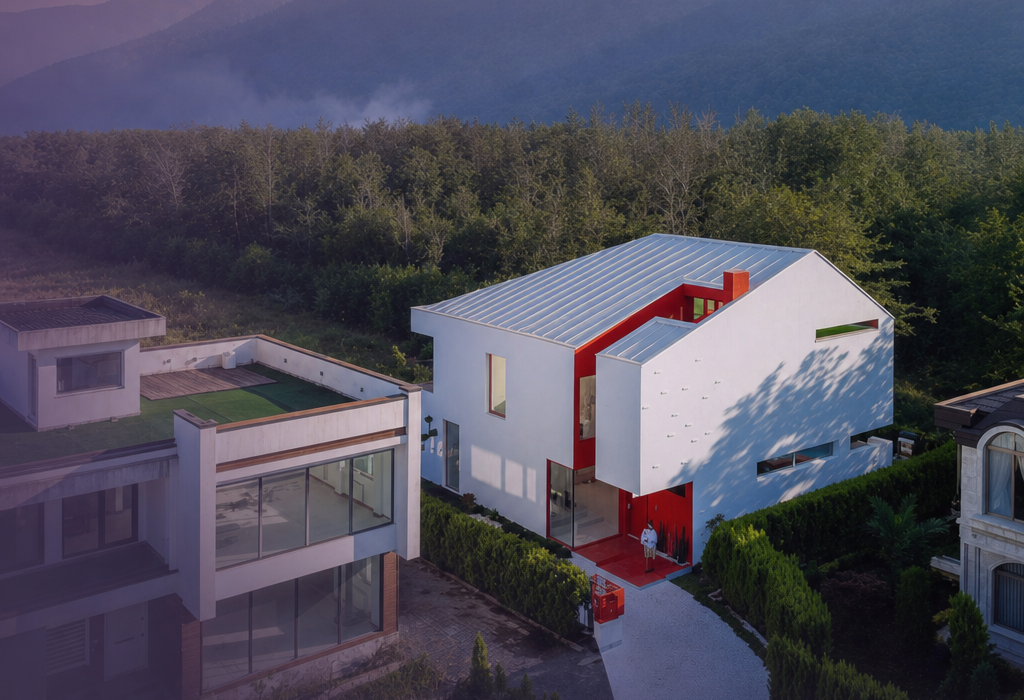
Corner Villa by Super Void Space rethinks the edge plot
Corner Villa turns a difficult urban site into an opportunity for openness, light and identity. By working carefully with the boundaries of a corner plot, Super Void Space appears to have shaped a home that balances privacy with presence, showing architects how small-site constraints can become the starting point for a clear spatial concept. The project is a reminder that good residential design is often about precision: controlling views, admitting daylight and giving a compact footprint a sense of generosity.
Hagidong House 2 by Hyunjoon Yoo + Partners layers domestic life into the landscape
Hagidong House 2 reflects a more contextual approach, where the house is shaped by terrain, movement and lived routines. Hyunjoon Yoo + Partners seem to have used section, sequence and material restraint to create a dwelling that feels both grounded and adaptable, offering valuable lessons for architects working on homes in sensitive or uneven settings. The project highlights how a residence can be more than a container for rooms—it can become a carefully choreographed experience of arrival, pause and outlook.
Micro-regeneration on Ouyang Road by Scenic Architecture Office shows the impact of small urban interventions
Micro-regeneration on Ouyang Road demonstrates how modest interventions can strengthen the public realm without resorting to large-scale redevelopment. Scenic Architecture Office focuses on stitching together the everyday fabric of the street, suggesting that targeted upgrades can improve usability, character and social value in ways that are both economical and replicable. For practitioners, the project underlines an important urban lesson: regeneration does not always need to be dramatic to be effective; sometimes the most meaningful change is incremental, local and carefully tuned to place.
Join the Archsplace community
For architects and design professionals in India and beyond, these projects are a strong reminder that thoughtful architecture can influence experience at every scale—from a single home to an entire street. Join the Archsplace community and share your work with a wider professional audience: Create your architect profile on Archsplace