— Ideas & inspiration
Lush vertical gardens meet desert calm
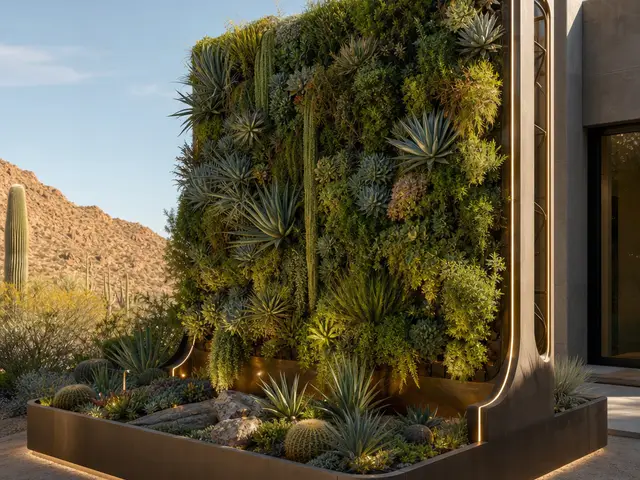
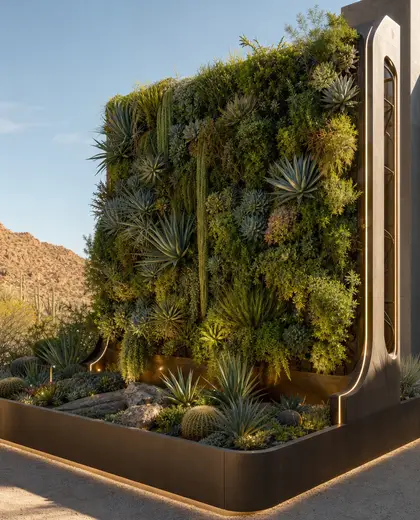
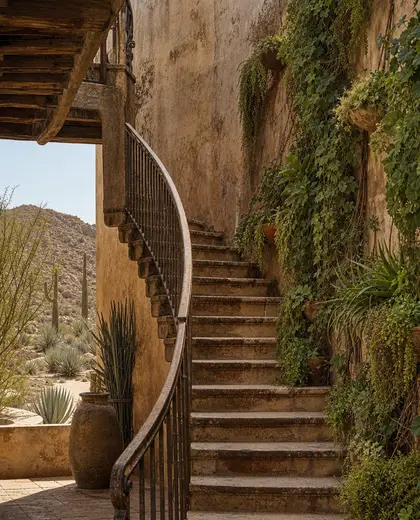
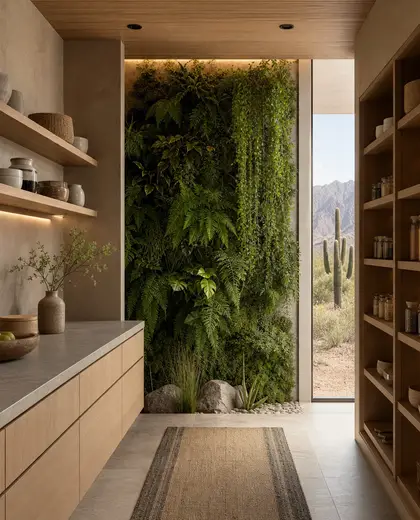
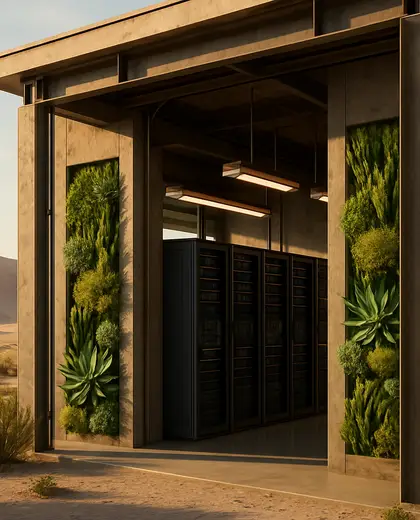
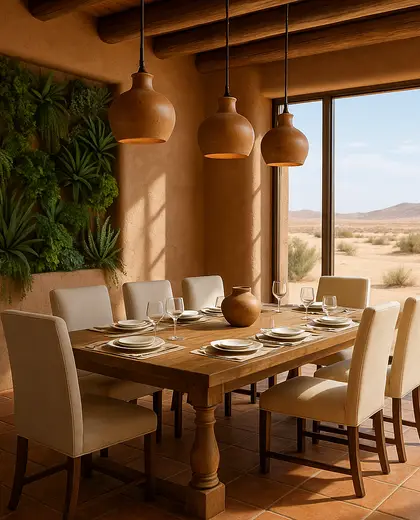
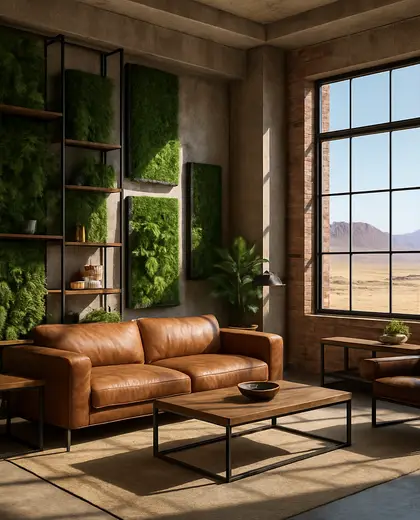
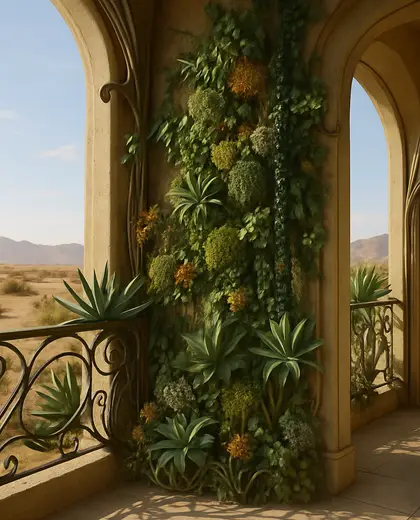
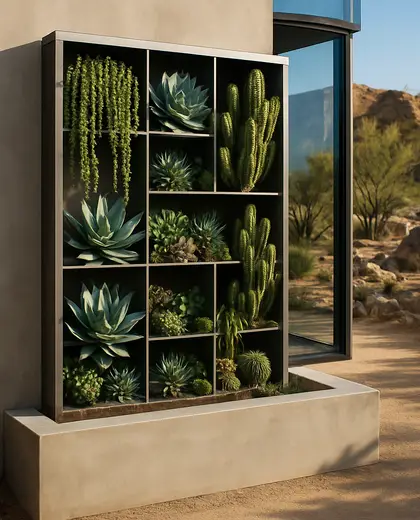
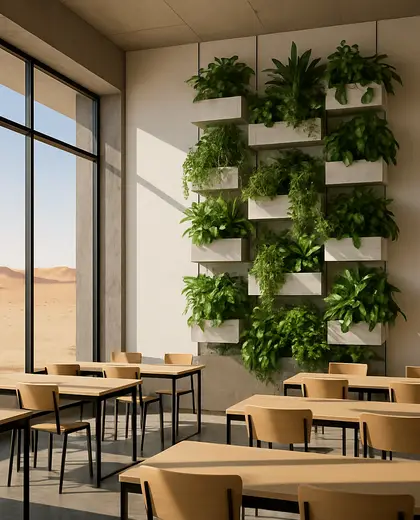
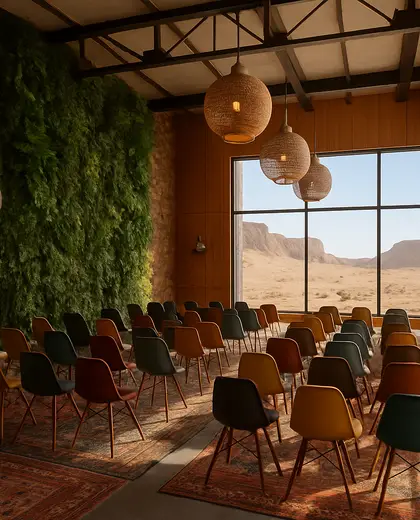
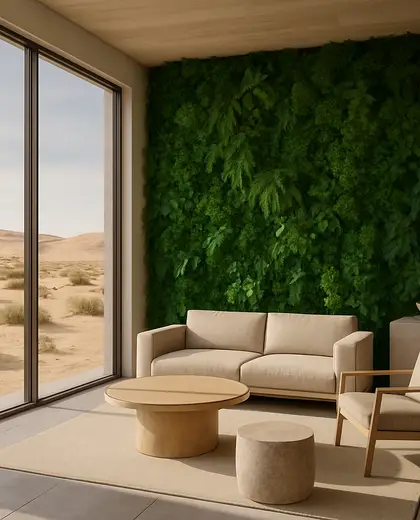
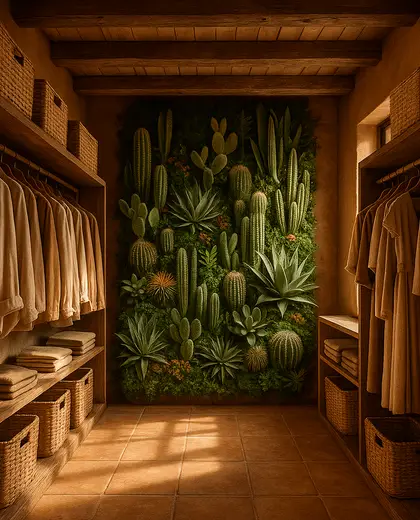
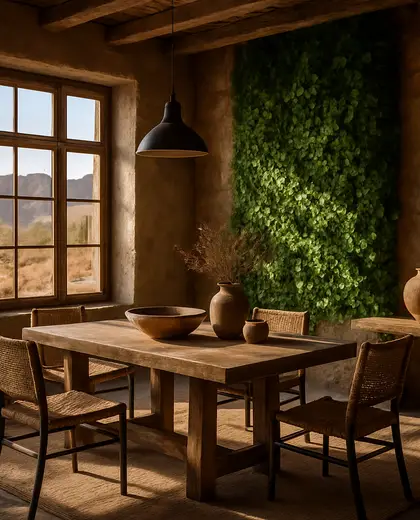
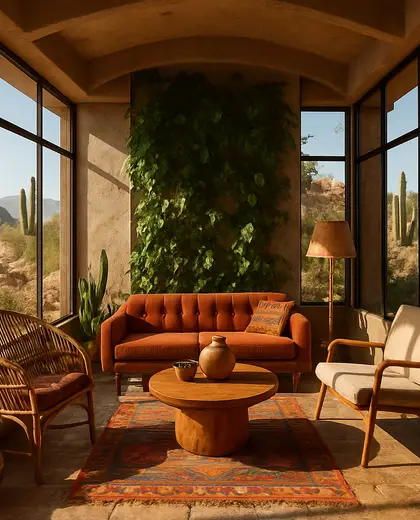
This composition pairs drought-tolerant planting with warm, mineral surfaces and a vertical planting structure. Expect weathered stone, terracotta, pale stucco, and metal trellises supporting layered greenery against a dry, sunlit palette. The contrast comes from dense vegetation set into an otherwise sparse, arid setting.
- vertical garden
- desert
— References
References to explore
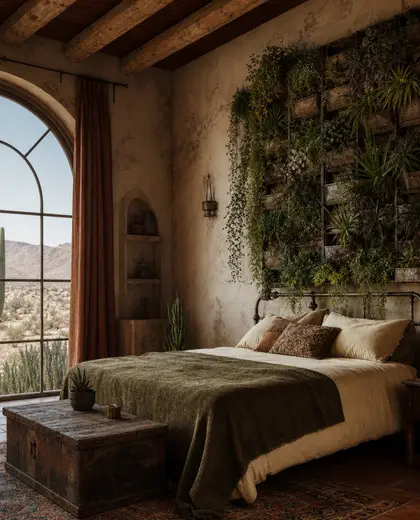
Can a vertical garden work in a desert climate?
Yes, but it should use drought-tolerant species, efficient irrigation, and good drainage. The structure also needs protection from extreme sun and wind.
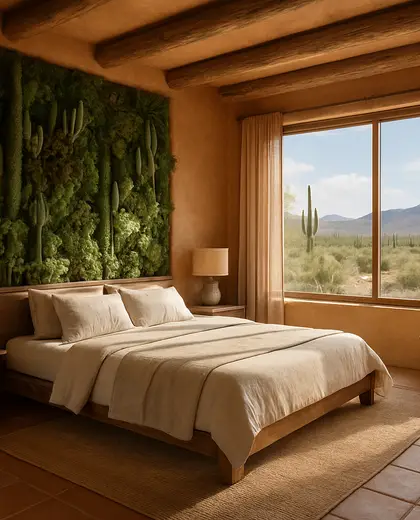
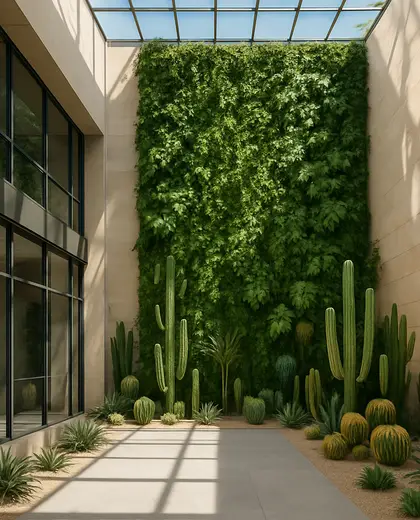
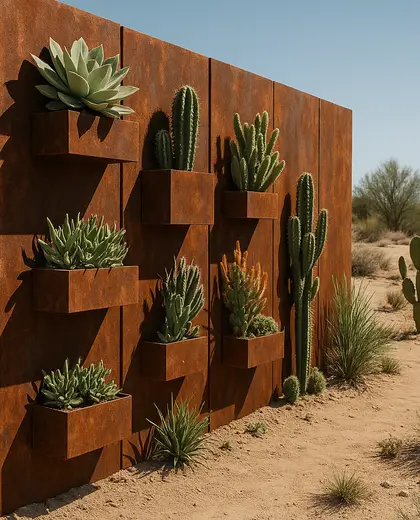
What plants fit this look?
Succulents, hardy vines, native grasses, sedums, and other low-water plants work well. In hotter areas, choose species suited to reflected heat and shallow soil pockets.
What should the hardscape look like?
Keep it simple and mineral: stone paving, gravel, plaster, and warm-toned masonry. The hardscape should support the greenery without making the space feel heavy.
— The style
What defines it
Terracotta, textured stucco, natural stone, steel trellises, and planting pockets or modular green-wall systems.
Sandy beige, clay, taupe, sun-bleached white, muted olive, and deeper green accents.
A desert landscape, xeric planting, gravel beds, cacti, succulents, and vertical garden panels or climbers.
— Professionals
Who has already built it
- arunava dattaarchitects · 6 projectsView profile →
- the achievers archsmart home professionals · Delhi · 1 projectsView profile →
- home interior decoratorscarpenters · Rampur · 3 projectsView profile →
- pavit ceramics pvt ltdceramic manufacturers · Ahmedabad · 2 projectsView profile →
— Explore
Keep exploring
— Questions
Frequently asked questions
Can a vertical garden work in a desert climate?
Yes, but it should use drought-tolerant species, efficient irrigation, and good drainage. The structure also needs protection from extreme sun and wind.
What plants fit this look?
Succulents, hardy vines, native grasses, sedums, and other low-water plants work well. In hotter areas, choose species suited to reflected heat and shallow soil pockets.
What should the hardscape look like?
Keep it simple and mineral: stone paving, gravel, plaster, and warm-toned masonry. The hardscape should support the greenery without making the space feel heavy.