— Ideas & inspiration
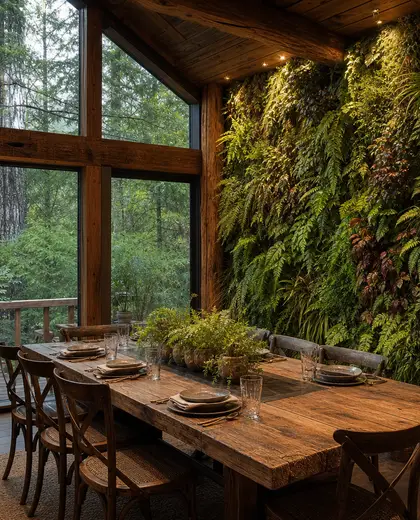
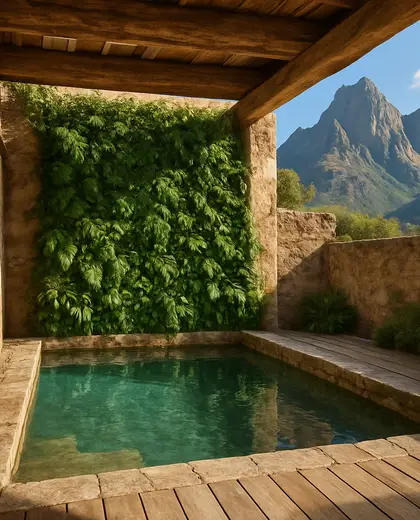
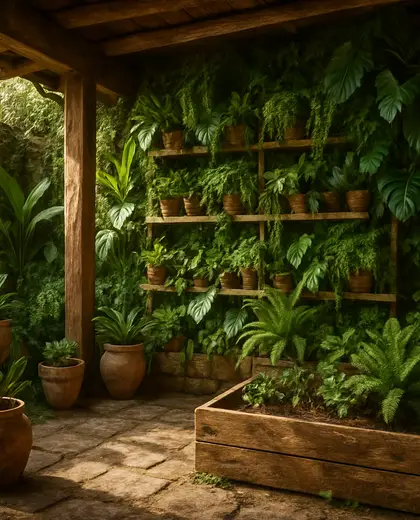
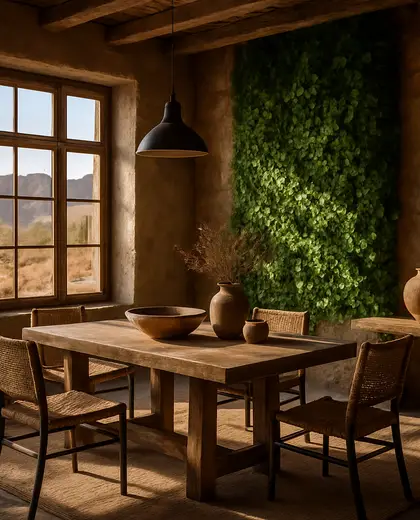
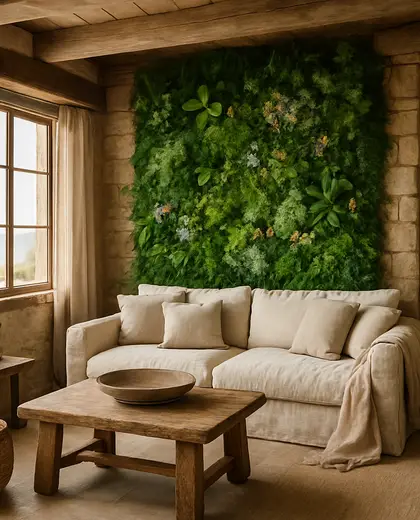
Rustic walls softened by vertical greenery
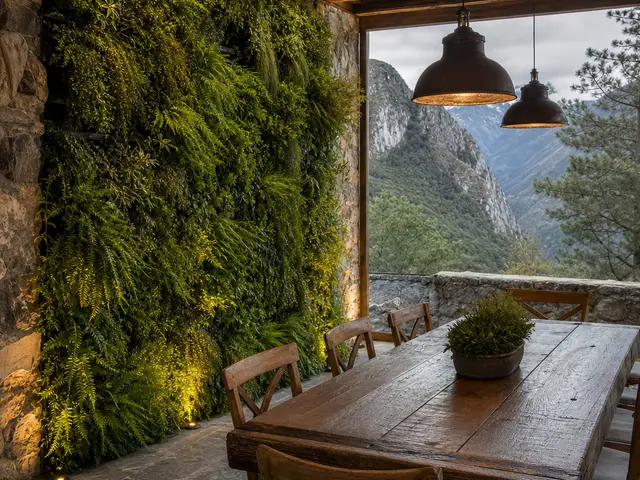
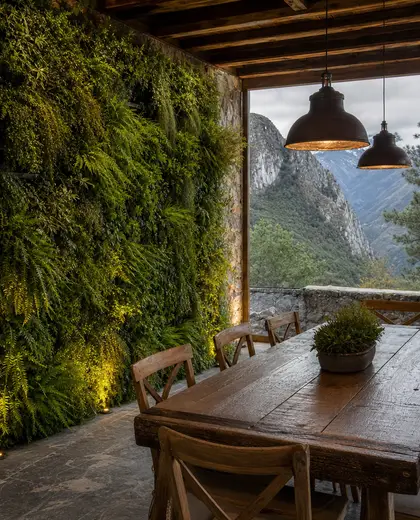
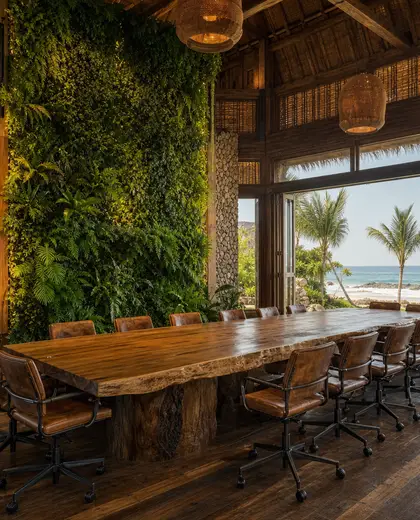
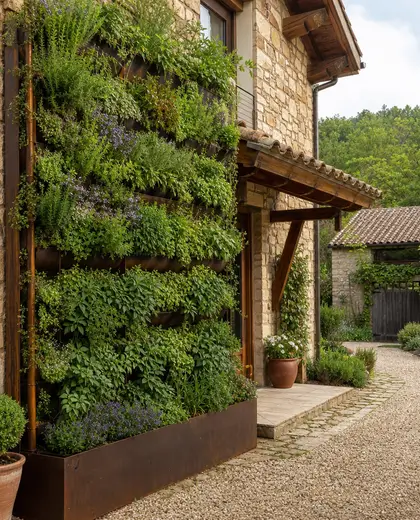
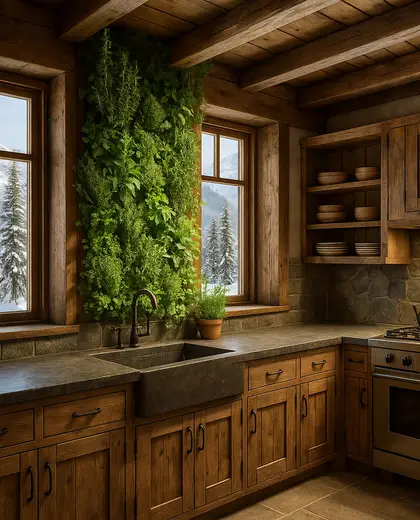
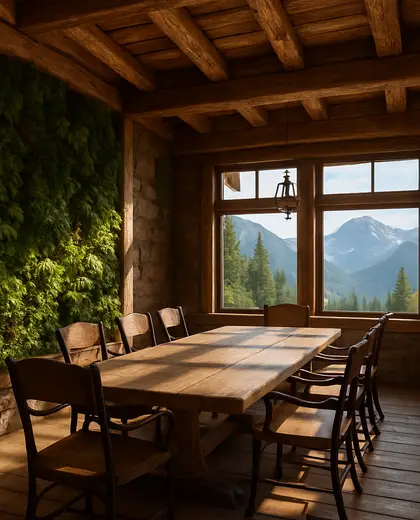
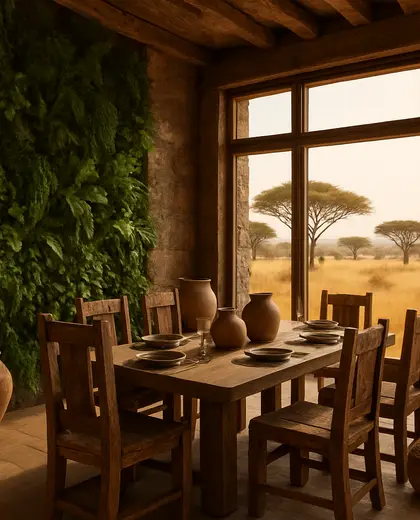
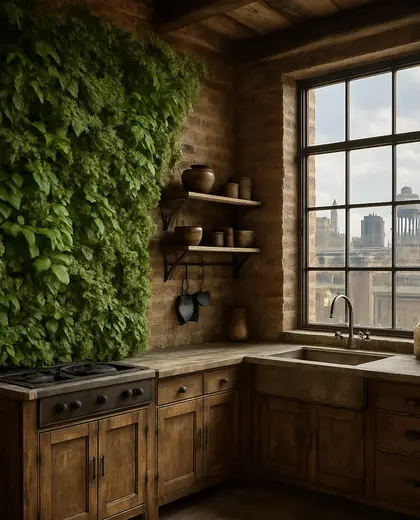
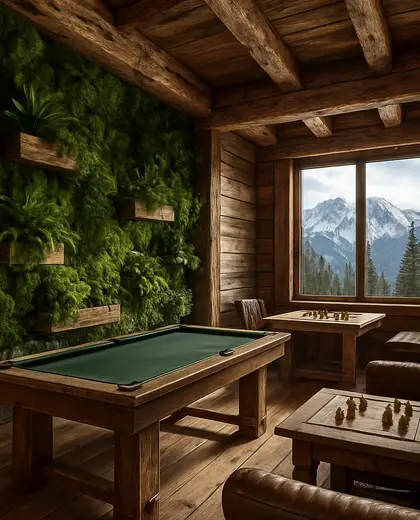
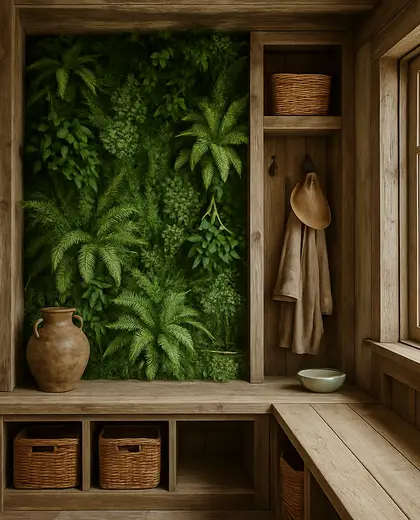
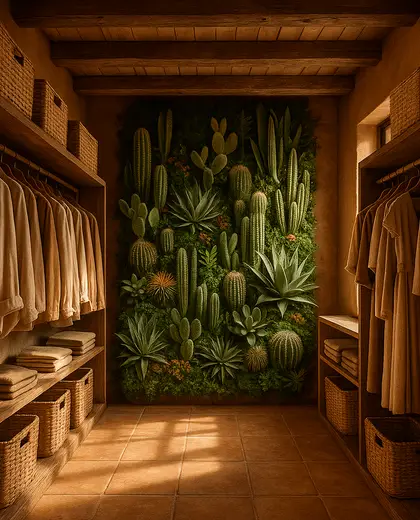
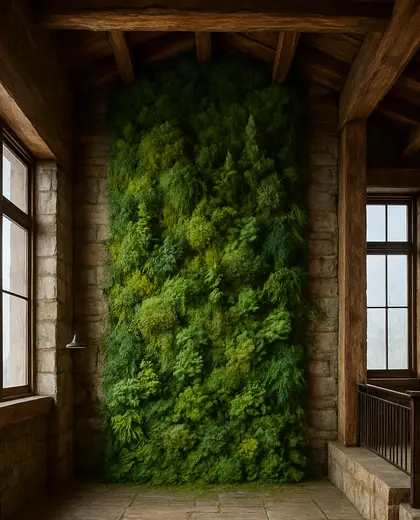
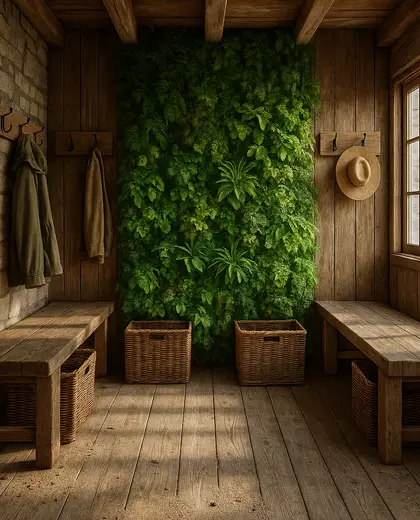
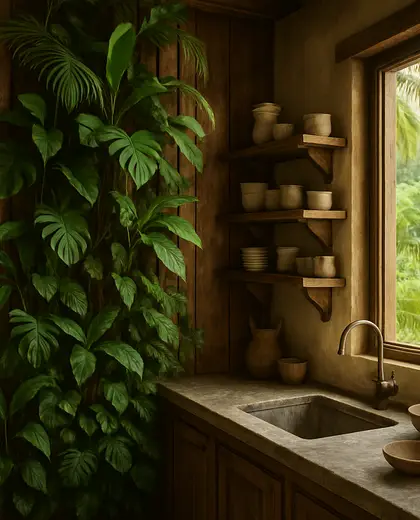
This composition pairs weathered natural materials with planted vertical surfaces. Think reclaimed wood, rough stone, aged metal, and terracotta set against living walls of ferns, herbs, moss, or trailing vines. The look is grounded and textural, with earthy finishes and greenery acting as the main visual softener.
- vertical garden
- rustic
— References
References to explore
Does a rustic vertical garden need direct sun?
Not always. Many rustic vertical gardens work well in bright shade or filtered light using shade-tolerant plants like ferns, ivy, pothos, or moss, while sunnier walls suit herbs and drought-tolerant species.
What materials make the look feel rustic rather than modern?
Use visibly aged or natural finishes: reclaimed timber, handmade brick, rough stone, patinated metal, and matte planters. Avoid overly glossy surfaces and highly polished frames.
Can this style work indoors?
Yes. It fits entry halls, kitchen walls, and covered courtyards if you can manage watering, drainage, and enough natural light. Indoors, the rustic side often comes from wood shelving, clay pots, and textured backing walls.
— The style
What defines it
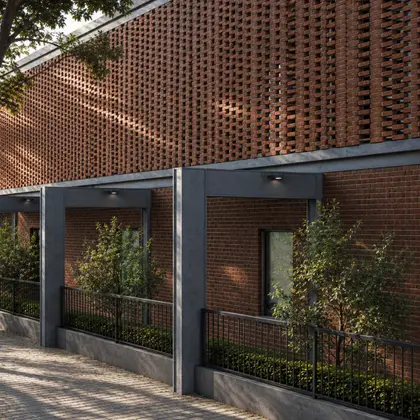
Reclaimed wood, stone, brick, wrought iron, terracotta, and planter systems that support climbing or wall-mounted plants.
Warm browns, muted greens, clay, charcoal, sand, and weathered neutrals with low-gloss, natural finishes.
Courtyards, entry walls, patios, kitchens, and sheltered exteriors where greenery can climb, cascade, or be built into the wall surface.
— Professionals
Who has already built it




- pavit ceramics pvt ltdceramic manufacturers · Ahmedabad · 2 projectsView profile →
- breathing design studiosarchitects · Mumbai · 2 projectsView profile →
- chaitanya anvekarinterior designers · Mumbai · 1 projectsView profile →
- ar rini jariwalalandscape designers · Surat · 1 projectsView profile →
— Explore
Keep exploring
— Questions
Frequently asked questions
Does a rustic vertical garden need direct sun?
Not always. Many rustic vertical gardens work well in bright shade or filtered light using shade-tolerant plants like ferns, ivy, pothos, or moss, while sunnier walls suit herbs and drought-tolerant species.
What materials make the look feel rustic rather than modern?
Use visibly aged or natural finishes: reclaimed timber, handmade brick, rough stone, patinated metal, and matte planters. Avoid overly glossy surfaces and highly polished frames.
Can this style work indoors?
Yes. It fits entry halls, kitchen walls, and covered courtyards if you can manage watering, drainage, and enough natural light. Indoors, the rustic side often comes from wood shelving, clay pots, and textured backing walls.