— Ideas & inspiration
Rustic kitchen warmth with natural texture
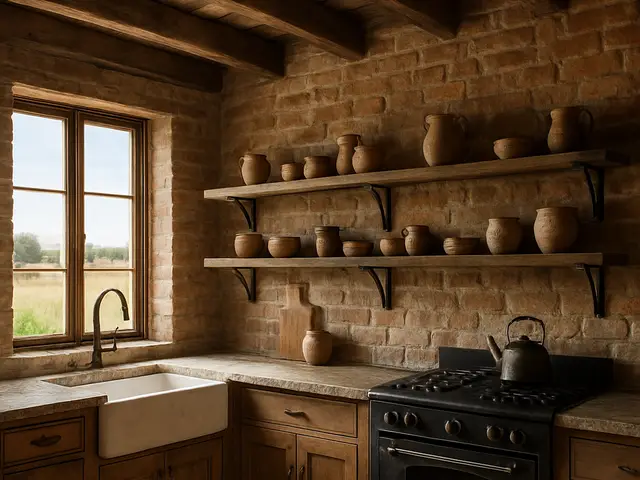
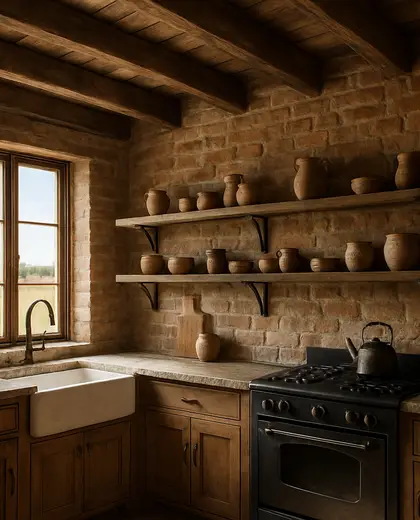
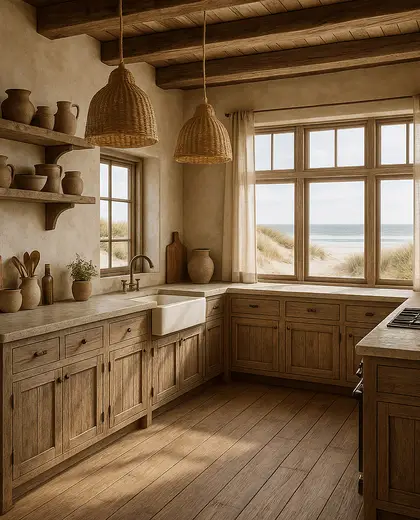
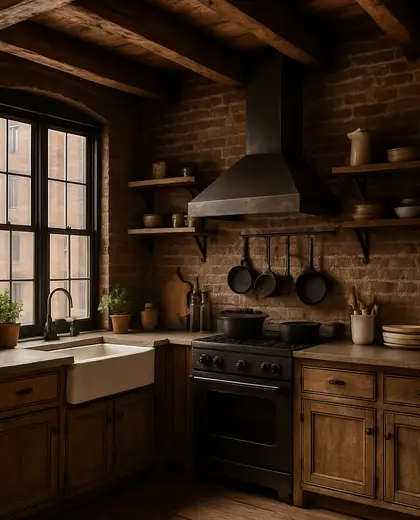
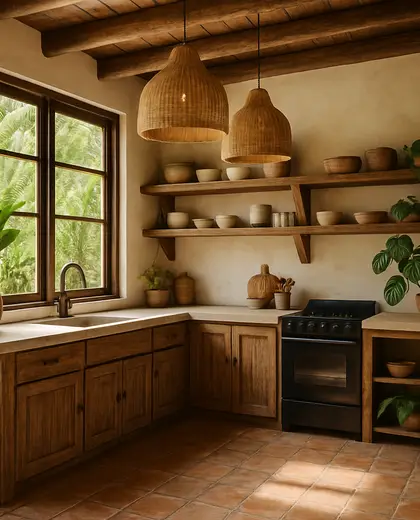
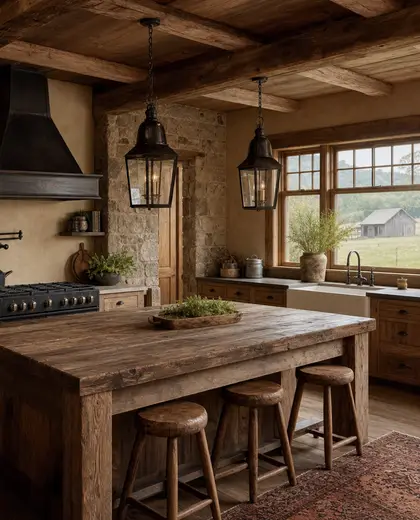
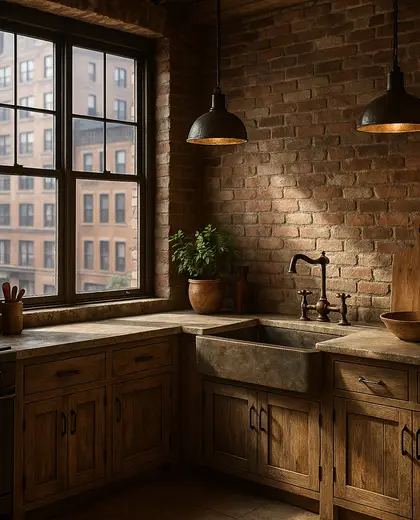
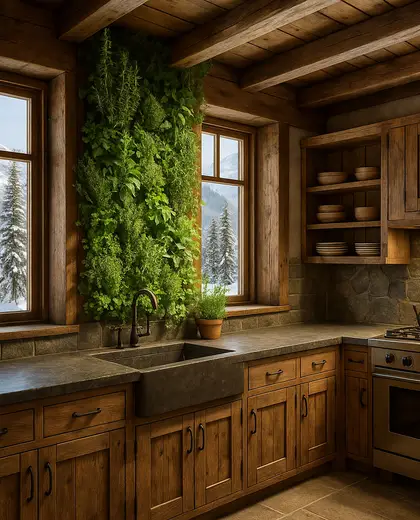
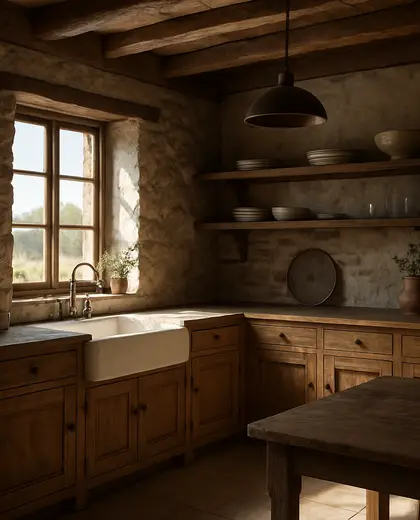
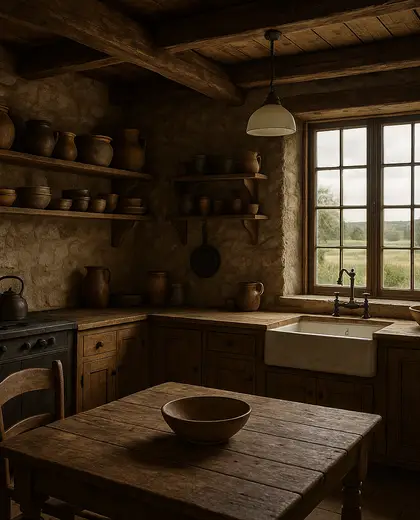
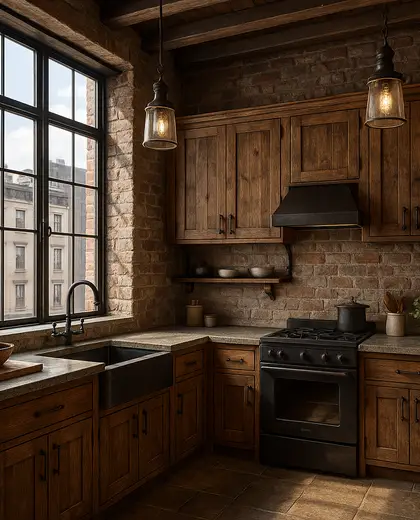
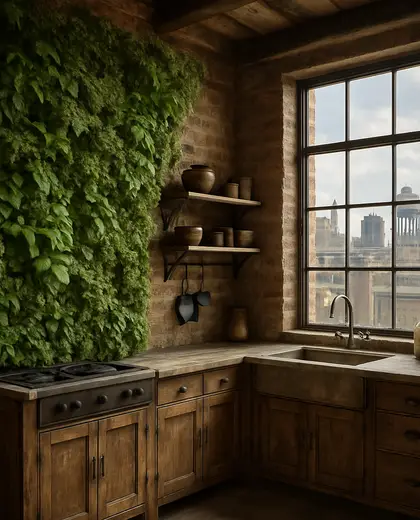
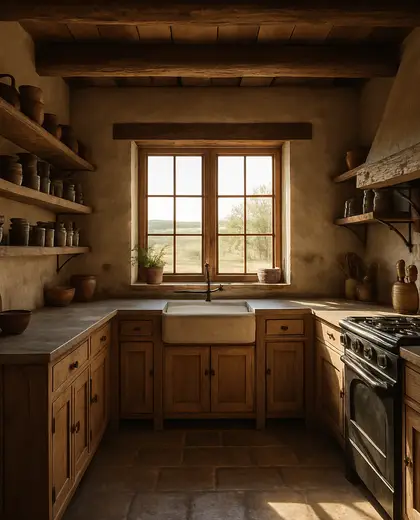
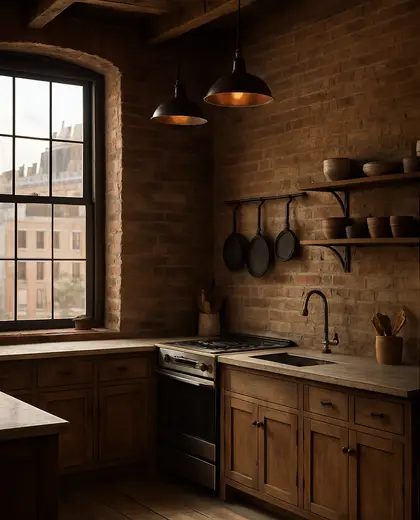
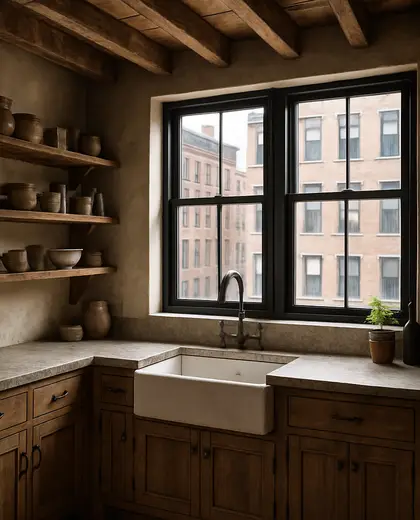
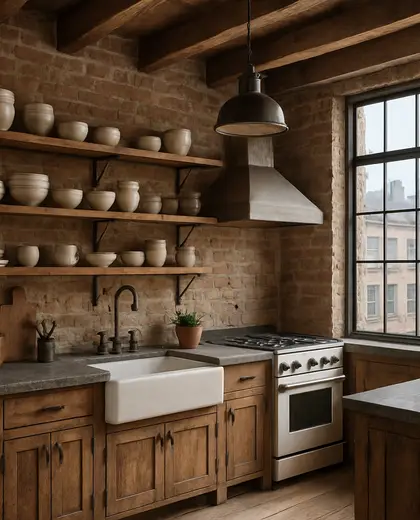
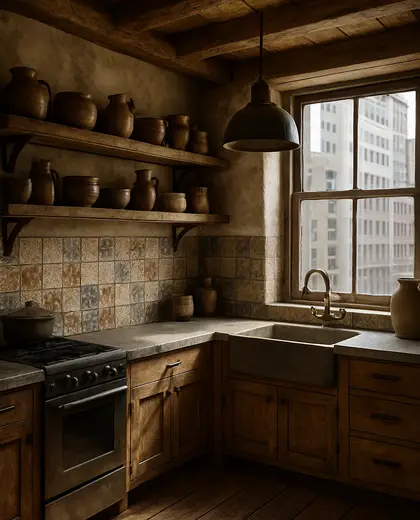
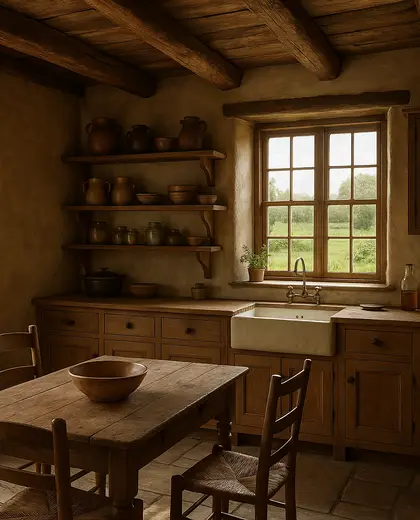
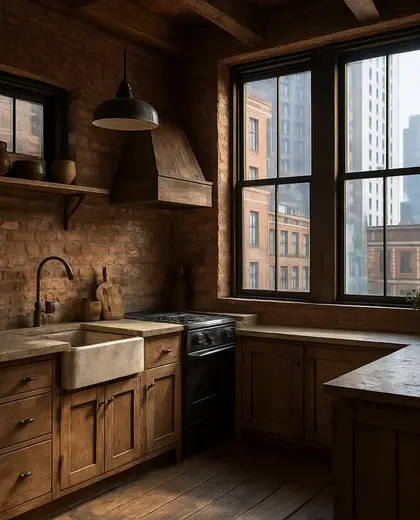
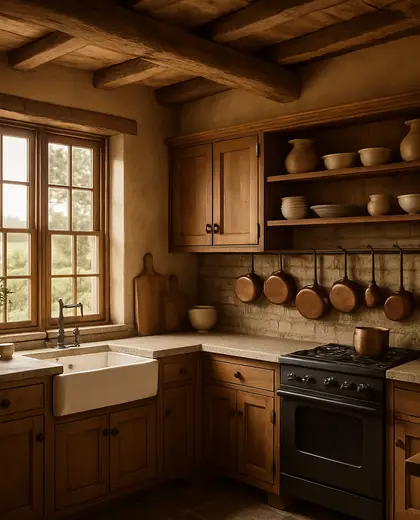
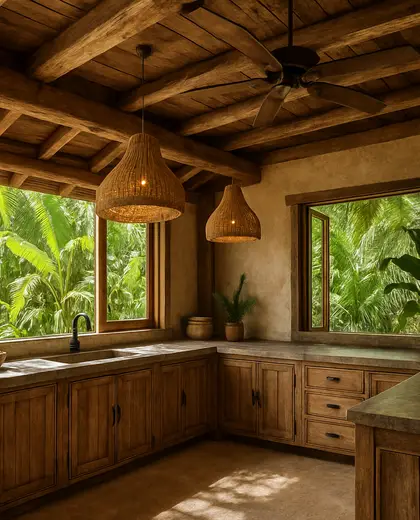
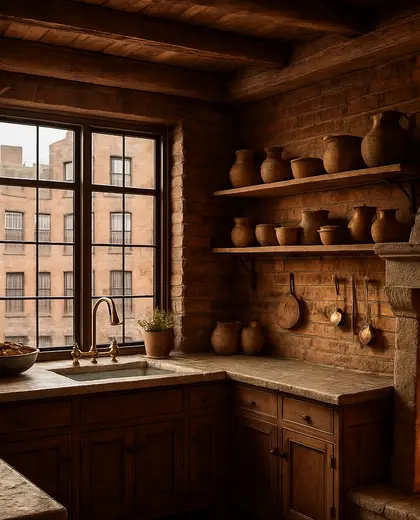
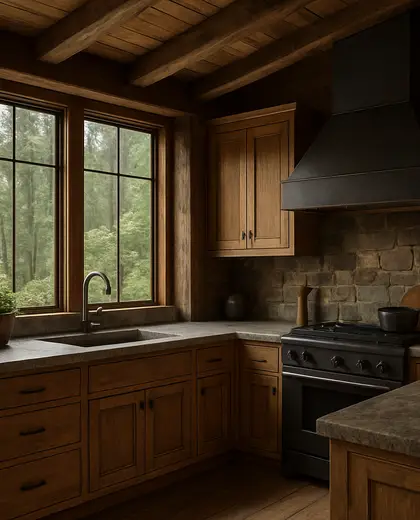
A rustic kitchen is defined by natural materials, visible grain, and a lived-in, handcrafted feel. Wood, stone, aged metal, and matte finishes create the core look, usually in warm neutrals, earthy browns, soft whites, and muted greens. Open shelving, sturdy cabinetry, apron-front sinks, and simple detailing give it a practical, timeworn character.
- kitchen
- rustic
— References
References to explore
What makes a kitchen feel rustic instead of just old-fashioned?
A rustic kitchen emphasizes natural texture, honest materials, and a handmade look rather than ornament. It can be freshly designed while still feeling weathered, simple, and warm.

Can rustic kitchens work in a modern home?
Yes. A rustic kitchen often works best when balanced with contemporary cabinetry shapes, streamlined appliances, or cleaner walls so the room feels current rather than themed.
Which finishes suit a rustic kitchen best?
Matte or low-sheen finishes usually suit the style best, along with wood that shows grain and stone or metal that looks natural rather than overly polished.
— The style
What defines it
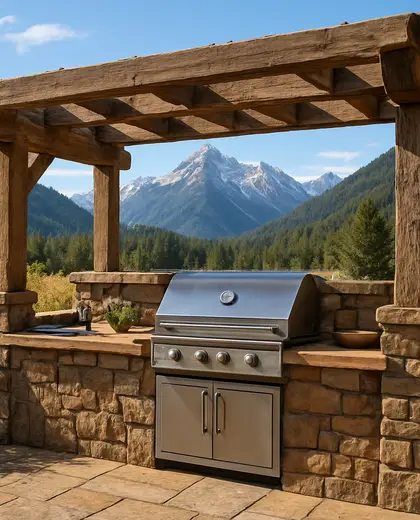
Solid wood, reclaimed timber, stone, brick, iron, and ceramics are common, often left with natural texture or a lightly weathered finish.
Warm neutrals, brown tones, cream, beige, clay, charcoal, and subdued greens or blues keep the space grounded and organic.
Rustic style pairs well with farmhouse, country, cottage, and modern-rustic interiors, especially when mixed with cleaner lines and simple layouts.
— Professionals
Who has already built it


- Bristolfurniture sellers · Bangalore · 6 projectsView profile →
- FurnitureRootsfurniture makers · Jodhpur · 6 projectsView profile →
- Bakajoiners · Chennai · 5 projectsView profile →
- Natural Veneersbuilding material distributors · Mumbai · 4 projectsView profile →
— Explore
Keep exploring
— Questions
Frequently asked questions
What makes a kitchen feel rustic instead of just old-fashioned?
A rustic kitchen emphasizes natural texture, honest materials, and a handmade look rather than ornament. It can be freshly designed while still feeling weathered, simple, and warm.
Can rustic kitchens work in a modern home?
Yes. A rustic kitchen often works best when balanced with contemporary cabinetry shapes, streamlined appliances, or cleaner walls so the room feels current rather than themed.
Which finishes suit a rustic kitchen best?
Matte or low-sheen finishes usually suit the style best, along with wood that shows grain and stone or metal that looks natural rather than overly polished.