— Ideas & inspiration
A house shaped by desert light
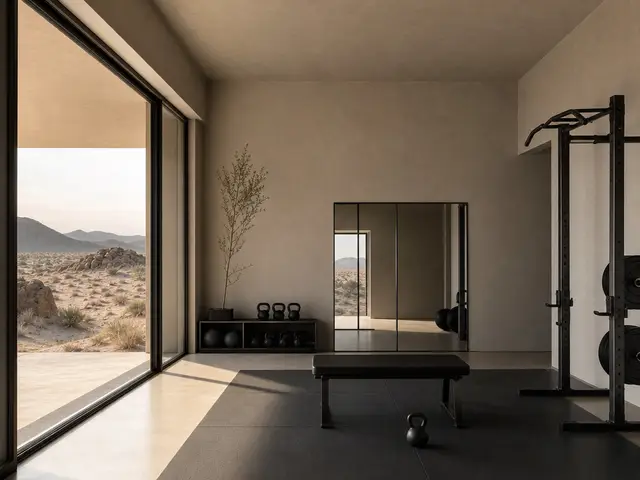
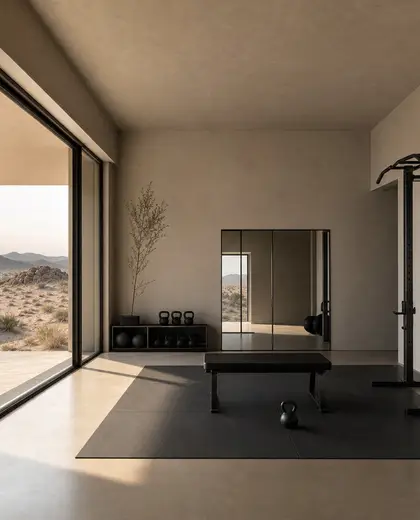
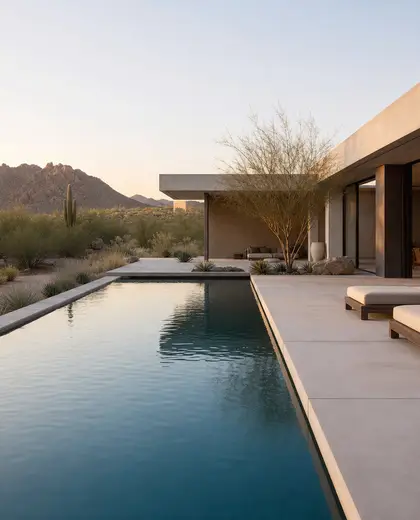
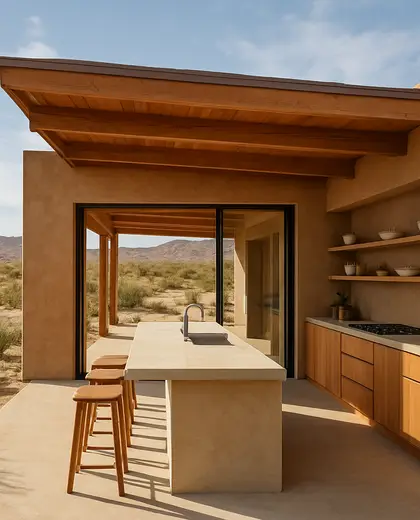
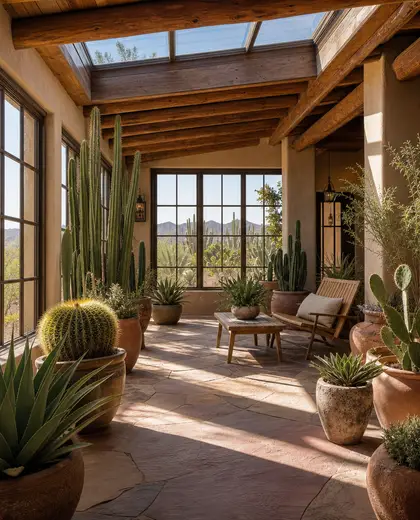
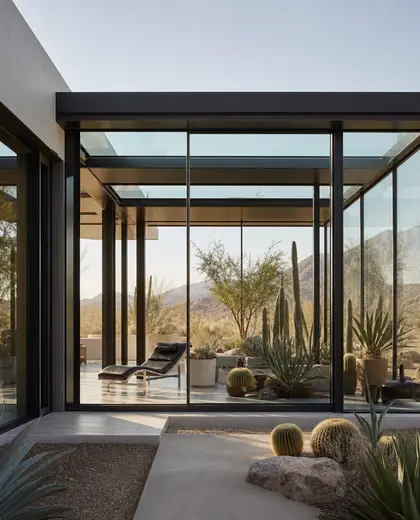
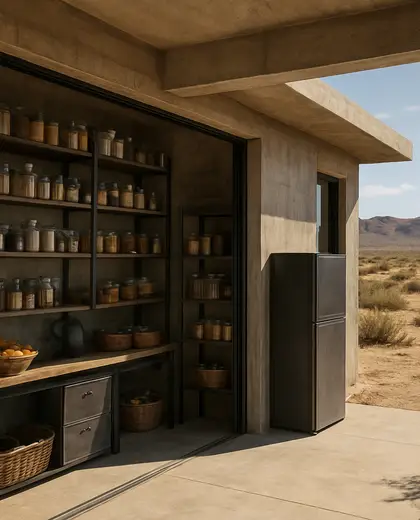
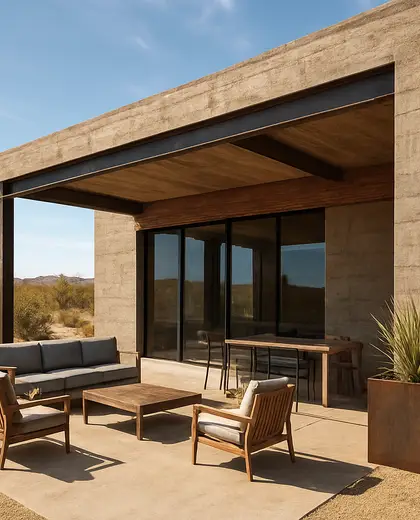
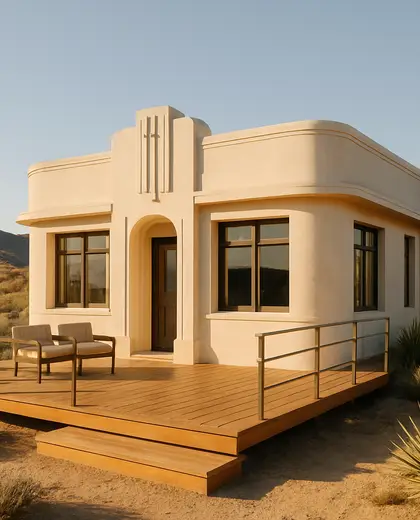
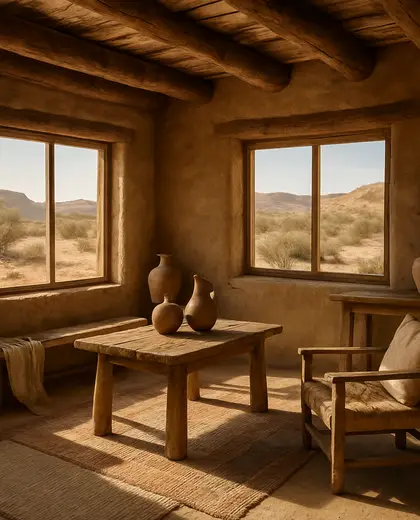
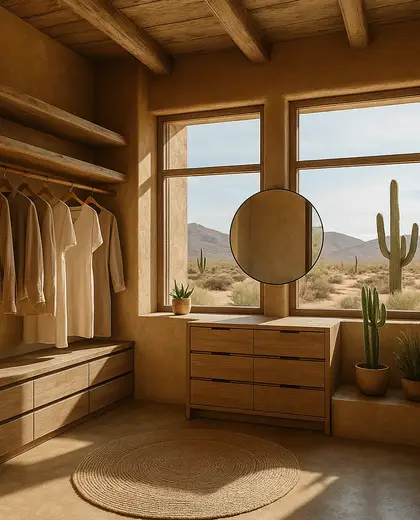
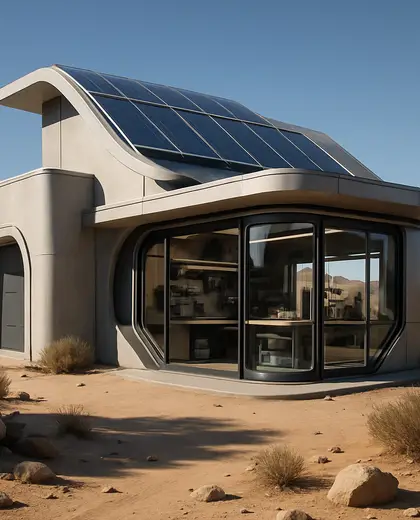
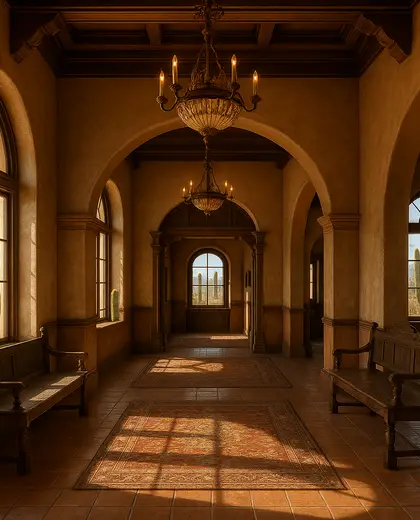
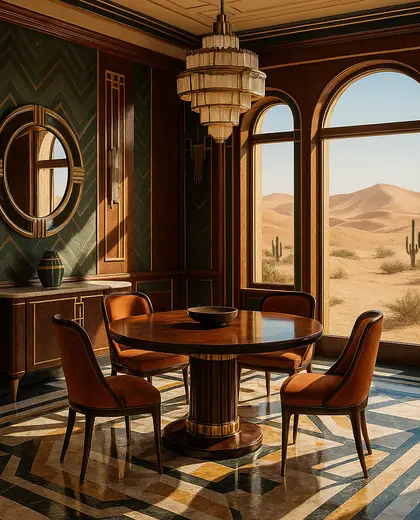
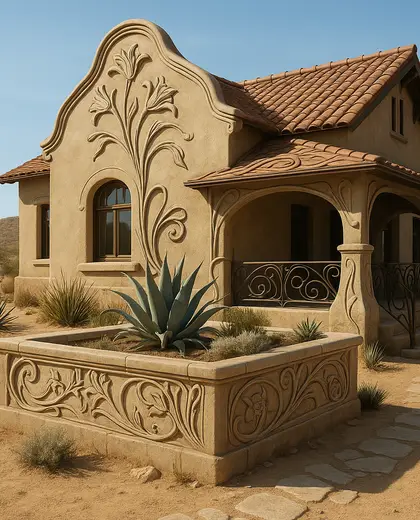
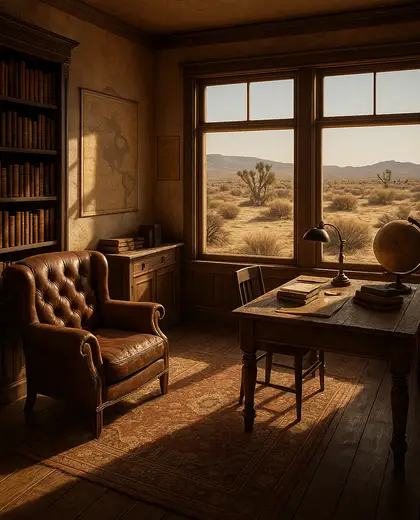
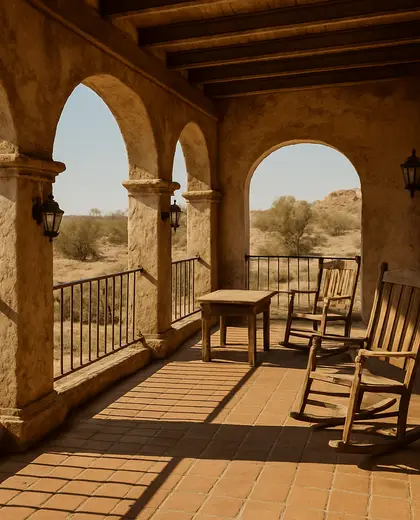
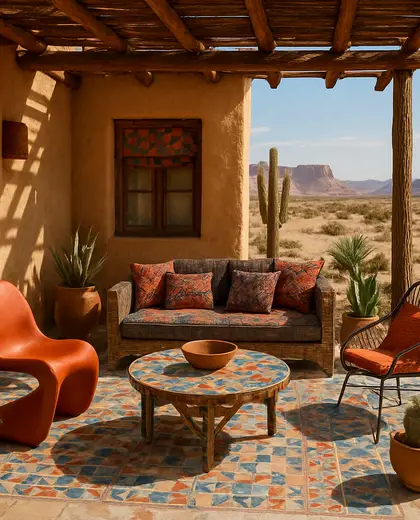
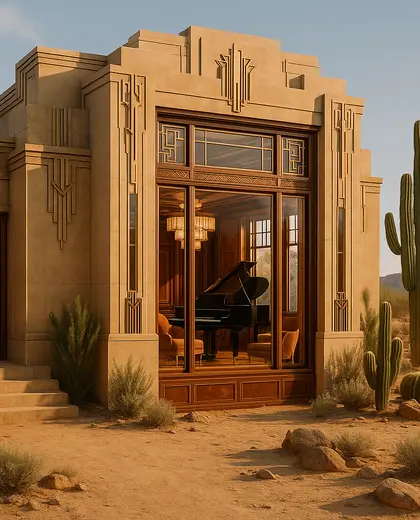
This composition is defined by thick masonry or stucco walls, shaded openings, and a compact massing that responds to heat and dryness. The palette is usually sandy, clay, and sun-bleached neutral tones, with natural textures that soften the building against the landscape. Deep overhangs, courtyards, and protected terraces are key elements that make the house feel rooted in the desert.
- house
- desert
— References
References to explore
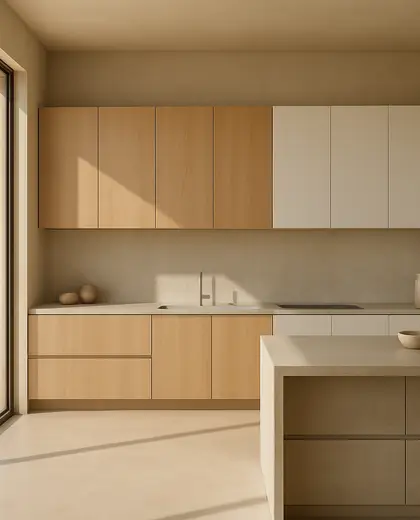
How does a desert house stay comfortable in hot weather?
It usually relies on passive strategies such as thick walls, shaded glazing, cross-ventilation, thermal mass, and covered outdoor spaces to limit direct sun and heat gain.
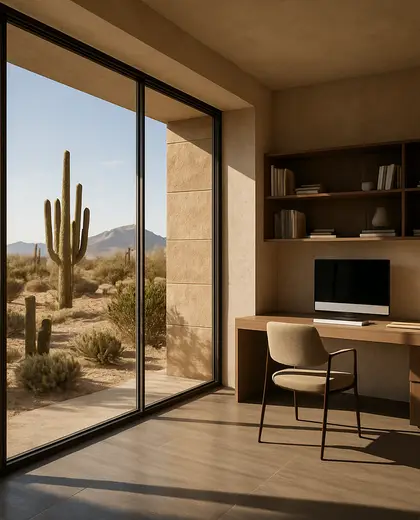
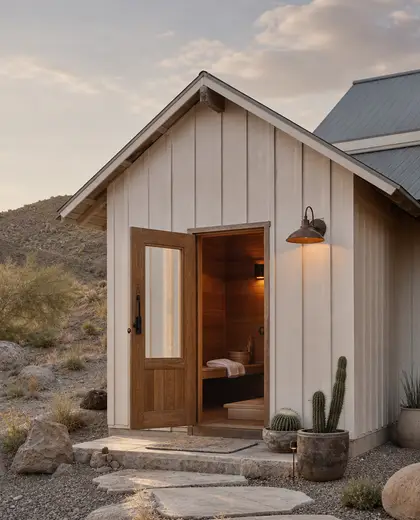
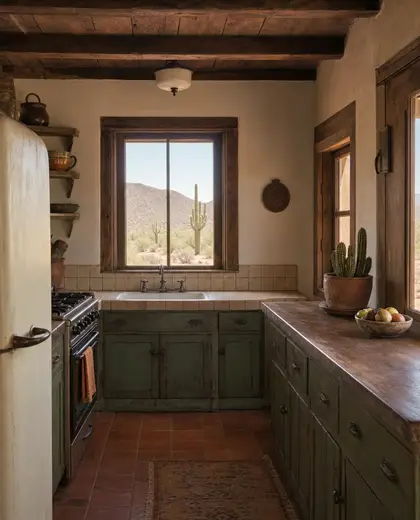
Can a desert house still feel modern?
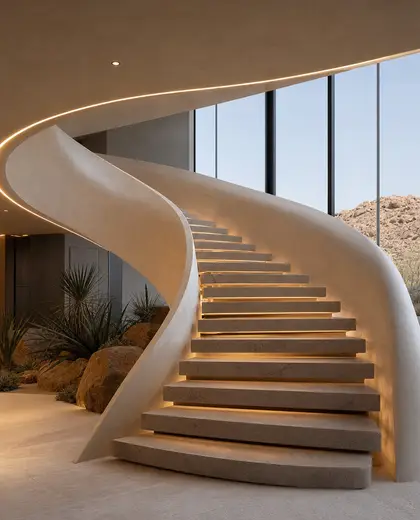
Yes. A desert house can be very contemporary when it uses clean volumes, limited openings, precise detailing, and a restrained material palette while keeping the climate response clear.
What exterior finishes work best in a desert setting?
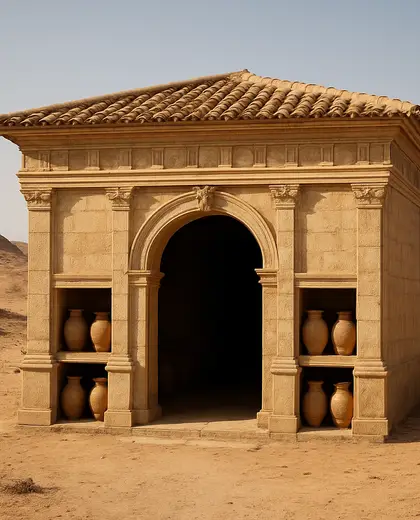
Durable, low-maintenance finishes like mineral plaster, stone, concrete, and treated metal tend to perform well, especially when the colors stay close to the surrounding terrain.
— The style
What defines it
Stucco, adobe-inspired plaster, stone, rammed earth, timber, and weathered metal are common choices for durable desert conditions.
Warm neutrals dominate: sand, ochre, clay, beige, off-white, and muted brown, often paired with darker accents for shadow and contrast.
The house combines with sheltered outdoor rooms, courtyards, screened openings, and strong horizontal forms that reduce heat and frame views.
— Professionals
Who has already built it
- nikitha kumananinterior designers · 6 projectsView profile →
- urban arch studioarchitects · 19 projectsView profile →
- Bristolfurniture sellers · Bangalore · 6 projectsView profile →
- FurnitureRootsfurniture makers · Jodhpur · 6 projectsView profile →
— Explore
Keep exploring
— Questions
Frequently asked questions
How does a desert house stay comfortable in hot weather?
It usually relies on passive strategies such as thick walls, shaded glazing, cross-ventilation, thermal mass, and covered outdoor spaces to limit direct sun and heat gain.
Can a desert house still feel modern?
Yes. A desert house can be very contemporary when it uses clean volumes, limited openings, precise detailing, and a restrained material palette while keeping the climate response clear.
What exterior finishes work best in a desert setting?
Durable, low-maintenance finishes like mineral plaster, stone, concrete, and treated metal tend to perform well, especially when the colors stay close to the surrounding terrain.