— Ideas & inspiration
Art nouveau touches for a home
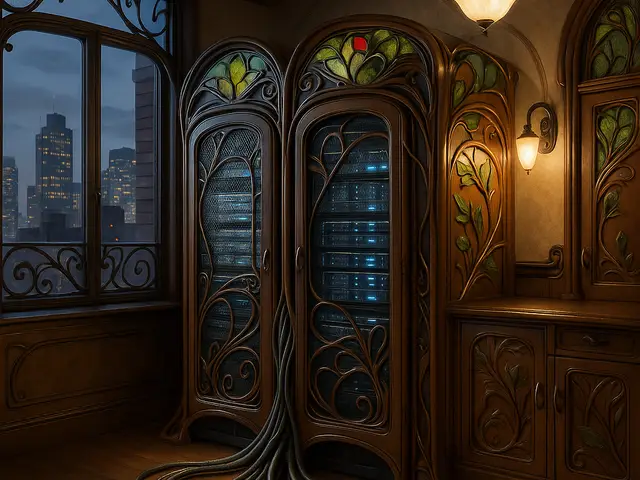
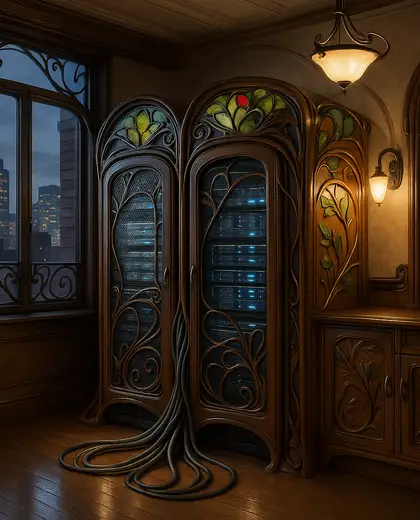
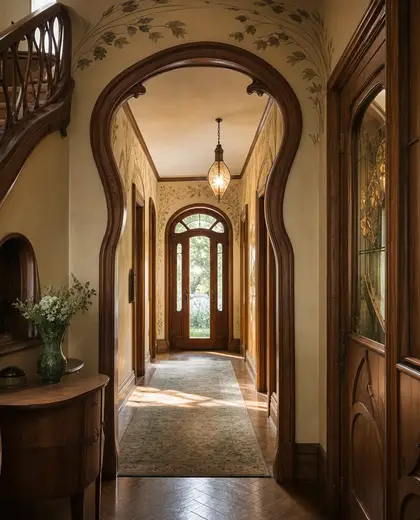
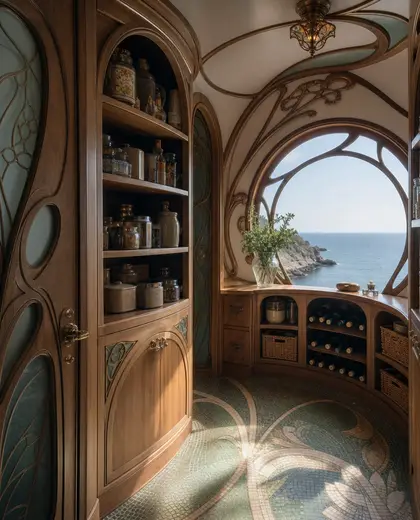
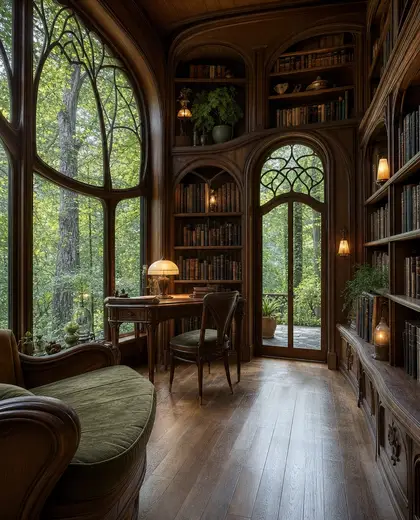
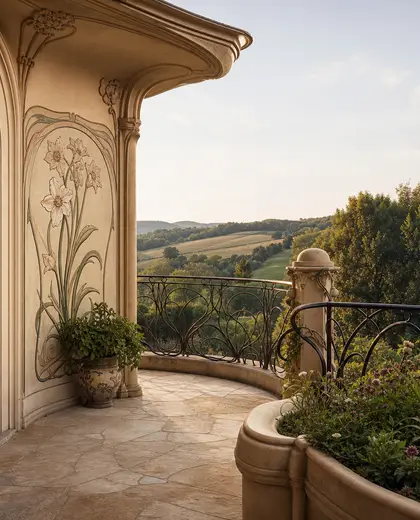
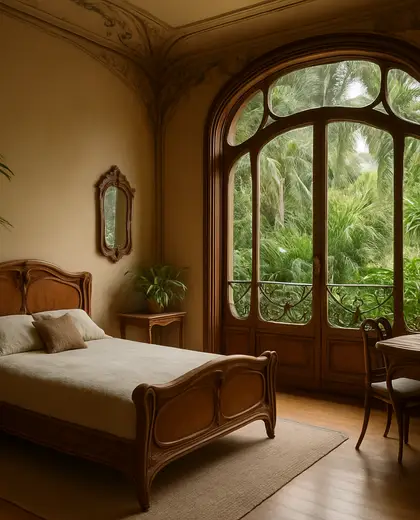
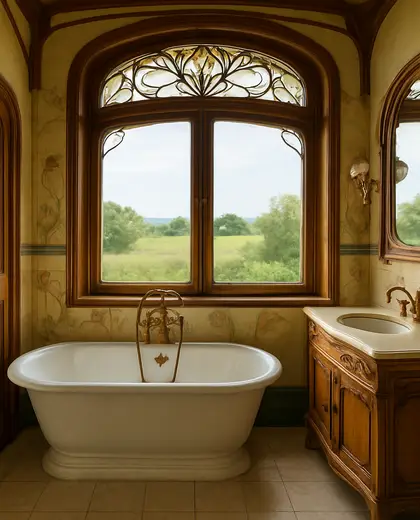
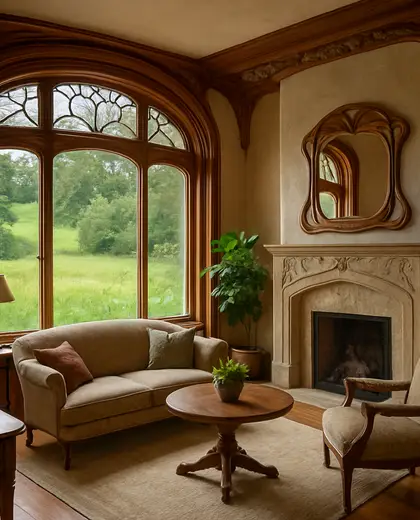
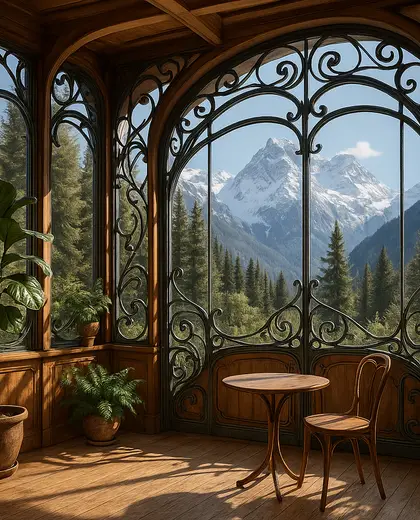
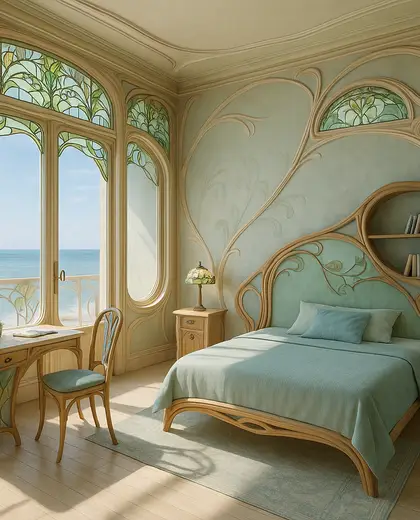
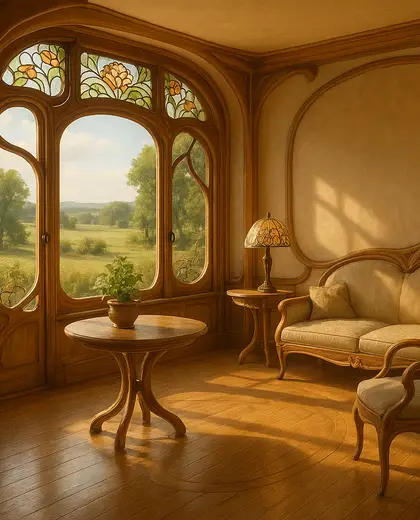
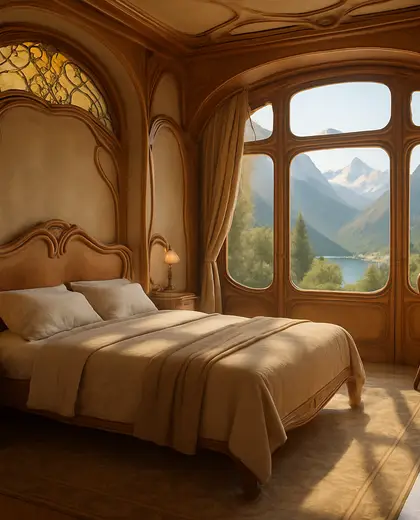
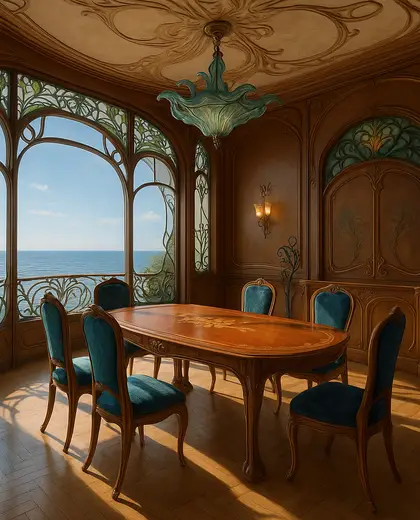
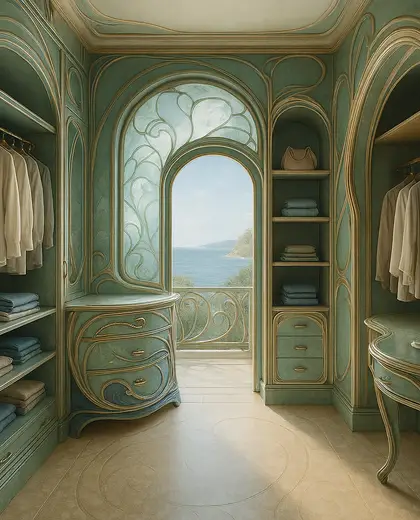
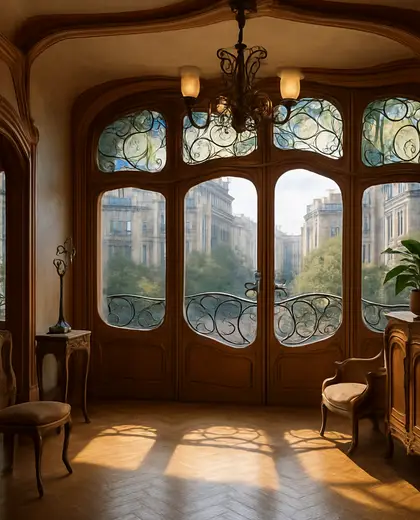
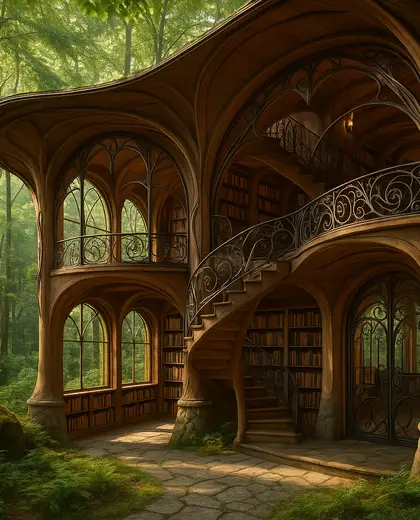
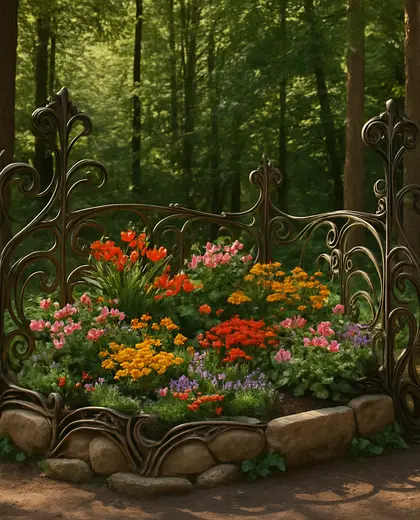
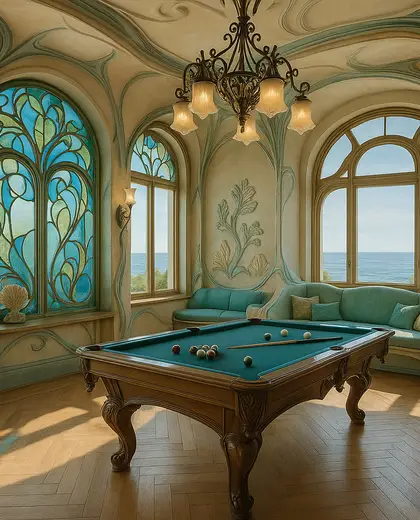
This composition pairs a residential interior or facade with art nouveau cues: curved lines, floral ornament, flowing forms, and crafted details. Common materials include carved wood, stained glass, wrought iron, ceramic tile, plaster, and brass. The palette often leans to soft creams, muted greens, warm browns, amber, and jewel-like accents.
- home
- art nouveau
— References
References to explore
How do I bring art nouveau into a home without making it feel old-fashioned?
Use art nouveau in selected elements like a staircase rail, mirror, light fixture, door glass, or wallpaper rather than covering every surface. Keeping the base finishes simple helps the ornamental details stand out.
Which rooms suit this style best?
Entryways, living rooms, dining rooms, bedrooms, and bathrooms all work well, especially where there is room for decorative detailing. Even a small apartment can use the style through lighting, panels, and accessories.
What should I avoid if I want a home that still feels livable?
Avoid overly busy patterns on every wall and mixing too many competing historical styles. A restrained palette and a few strong crafted details usually keep the look balanced.
— The style
What defines it
Carved wood, stained glass, wrought iron, ceramic tile, plaster, and brass.
Soft creams, sage and olive greens, warm browns, amber, and occasional jewel tones.
A home setting with art nouveau motifs such as organic curves, botanical decoration, and handcrafted finishes.
— Professionals
Who has already built it
- origin architectsarchitects · 6 projectsView profile →
- mawar electrical serviceselectricians · Bengaluru · 1 projectsView profile →
- anurag vermainterior designers · 6 projectsView profile →
- the achievers archsmart home professionals · Delhi · 1 projectsView profile →
— Questions
Frequently asked questions
How do I bring art nouveau into a home without making it feel old-fashioned?
Use art nouveau in selected elements like a staircase rail, mirror, light fixture, door glass, or wallpaper rather than covering every surface. Keeping the base finishes simple helps the ornamental details stand out.
Which rooms suit this style best?
Entryways, living rooms, dining rooms, bedrooms, and bathrooms all work well, especially where there is room for decorative detailing. Even a small apartment can use the style through lighting, panels, and accessories.
What should I avoid if I want a home that still feels livable?
Avoid overly busy patterns on every wall and mixing too many competing historical styles. A restrained palette and a few strong crafted details usually keep the look balanced.