— Blog · 4 August 2026 · 3 min read
Modern attic: how to make the most of every slope
A practical style guide to turning an attic into a clean, comfortable modern space with the right finishes, lighting and storage.
Keep the layout open and visually light
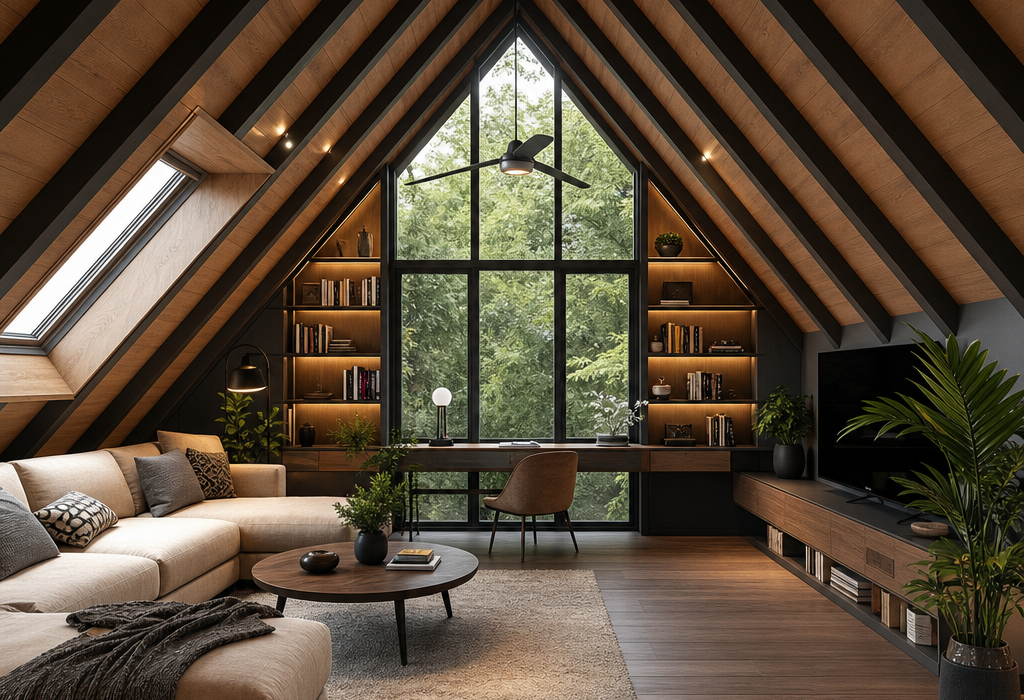
A modern attic works best when the space feels calm, uncluttered and easy to move through. Keep the tallest part of the room for the main activity, whether that is a reading corner, study desk or compact lounge. Use low-profile furniture under the sloping roof so the rake does not feel awkward, and leave the centre line open for circulation. If the attic is being used as a bedroom or home office, plan storage along the knee walls and tuck bulkier items where the ceiling is lowest.
Choose a restrained palette with contrast
Modern interiors suit attics because they make a small or irregular volume feel sharper and more intentional. Start with warm white, soft grey, greige or muted beige on the walls and ceiling to reflect daylight. Add depth through black, charcoal, walnut or deep oak accents in the window frames, handles and furniture legs. In Indian homes, this palette also helps balance strong summer sunlight, especially if the attic has west-facing openings or a skylight. Keep the colour mix simple so the architecture remains the focus.
Use the right materials for comfort and finish
A modern attic should feel clean, but not cold. Painted gypsum board, smooth plaster, matte laminate, engineered wood and powder-coated metal work well here. For the floor, choose wood-look vitrified tiles, engineered timber or laminated flooring that gives a calm, continuous surface. If the roof needs insulation, use proper thermal and acoustic layers before the final finish so the room stays usable through hot afternoons and monsoon humidity. In smaller attics, avoid too many competing textures; one or two materials repeated well will make the room look larger.
Pick furniture that follows the roofline
Modern furniture for an attic should be low, simple and slightly architectural. Think straight-edged beds, a slim sofa, a compact study table with a clean silhouette, and built-in benches under eaves. Floating shelves, handle-less cabinetry and wall-mounted side tables help reduce visual bulk. If you are planning a reading nook, a single lounge chair with an ottoman can be enough, provided it sits where headroom is generous. Keep upholstery in solid colours or subtle textures like linen-look fabric, boucle or plain cotton-blend materials suited to Indian living.
Layer lighting and finish with crisp details
An attic often needs more than one type of light, especially if the roof creates pockets of shadow. Use recessed ceiling lights or slim surface-mounted fixtures for overall illumination, then add task lighting for a desk, bedside or reading zone. A wall sconce, linear LED under shelving or a small floor lamp can make the room feel finished without clutter. Window treatments should stay simple: roller blinds, sheer curtains or plantation-style shutters work better than heavy drapes. Complete the look with minimal hardware, neat skirting, a few framed prints and concealed storage so the attic feels intentional, modern and easy to live with.
Find the best architects and designers for your attic project
Free, no commitment / Less than 5 minutes
Are you an architect or designer? Sign up for free! »