— Ideas & inspiration
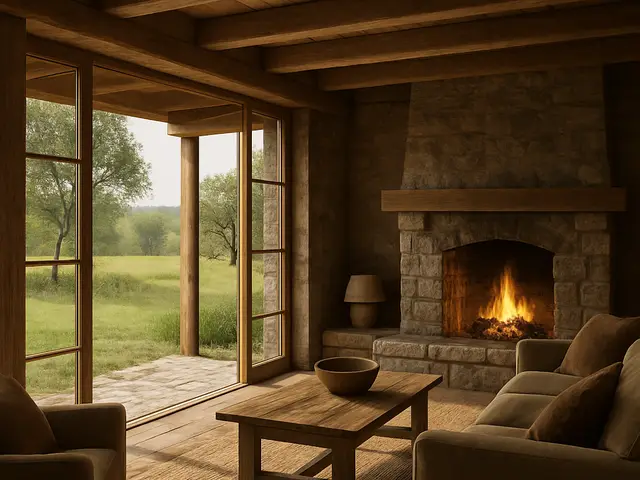
Rustic warmth in the living room
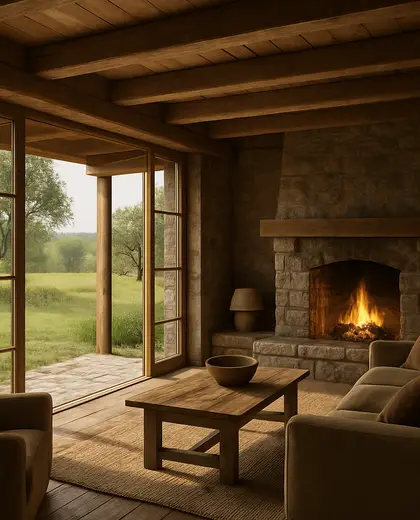
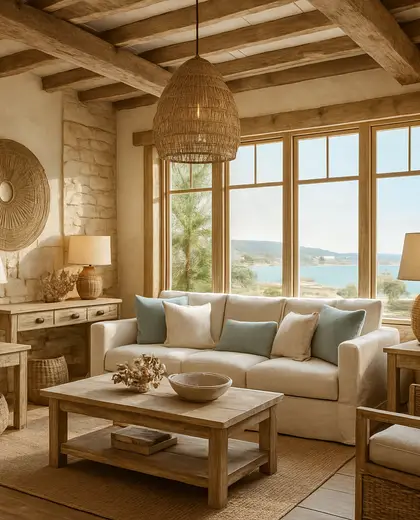
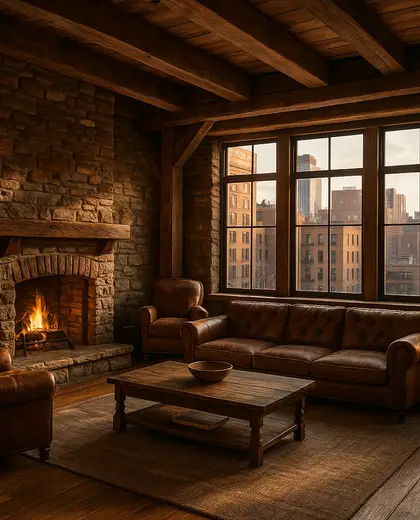
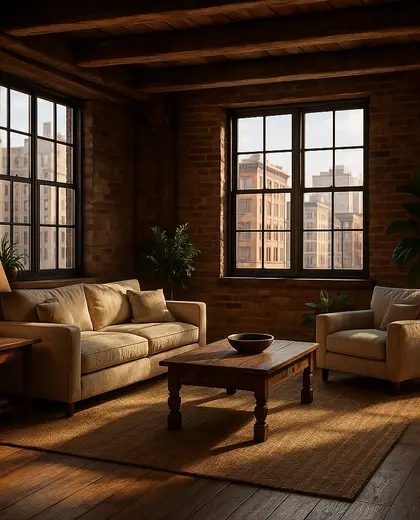
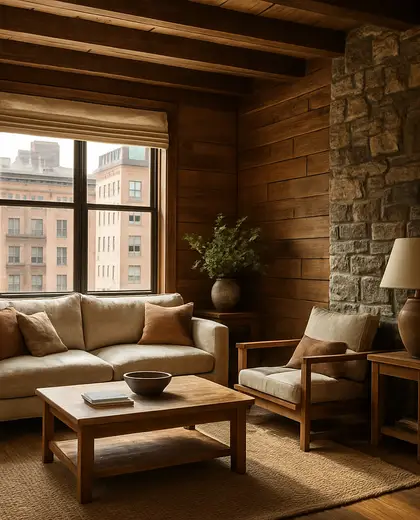
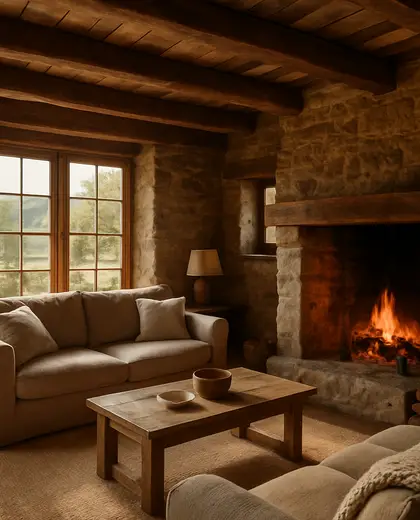
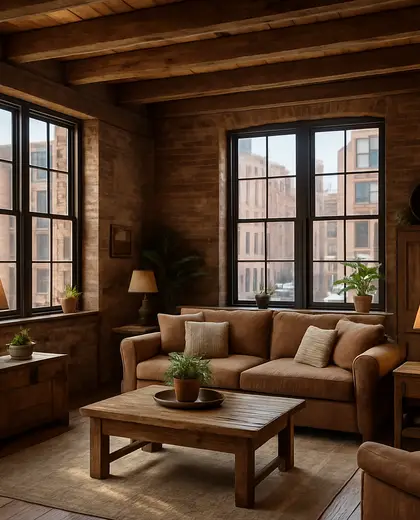
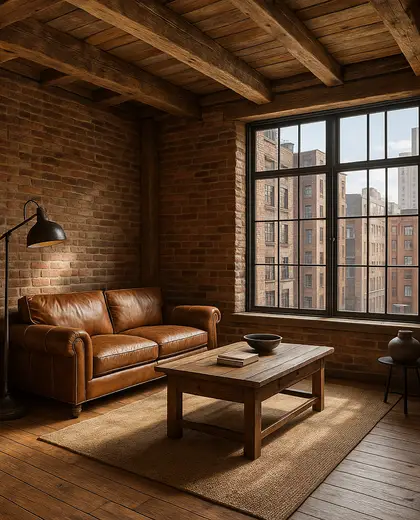
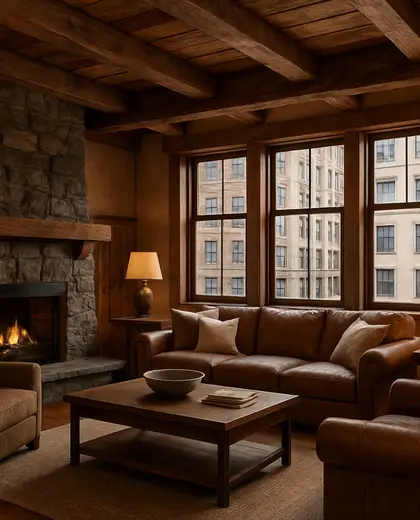
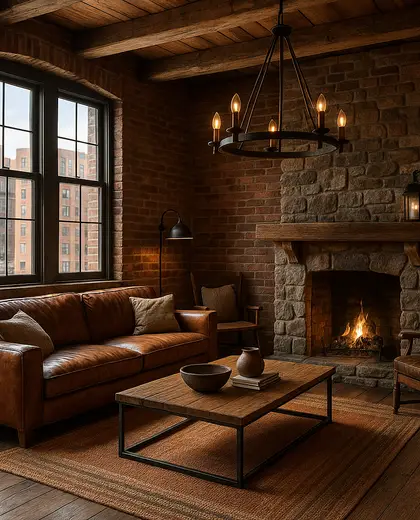
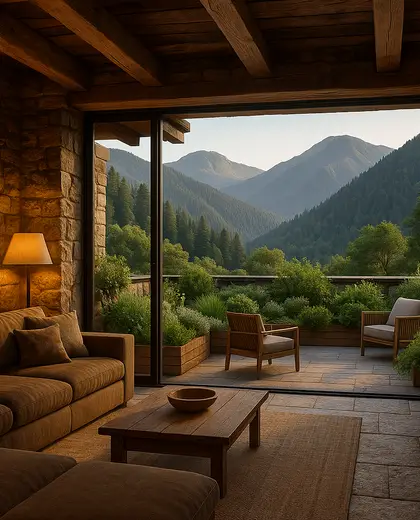
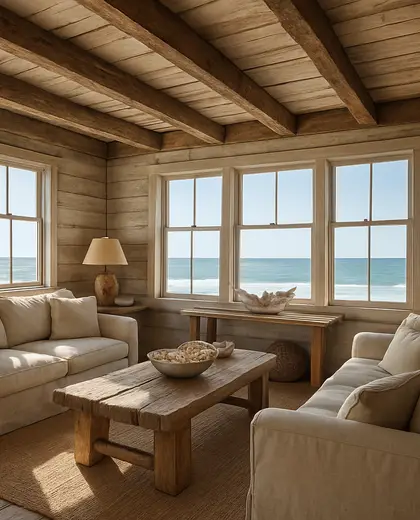
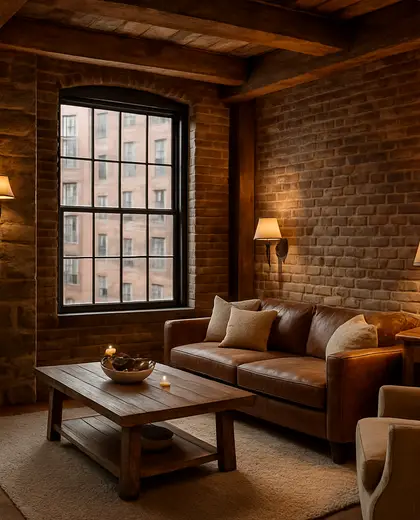
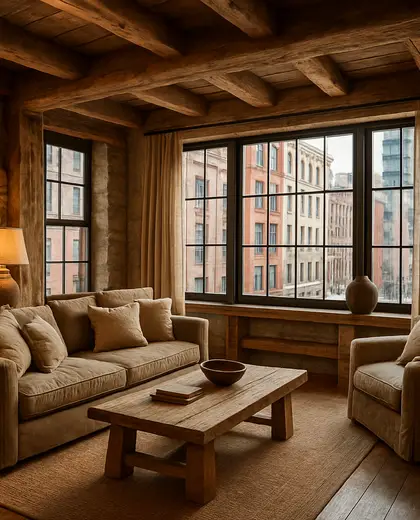
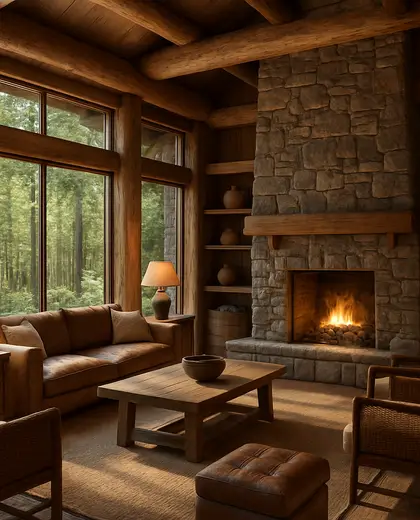
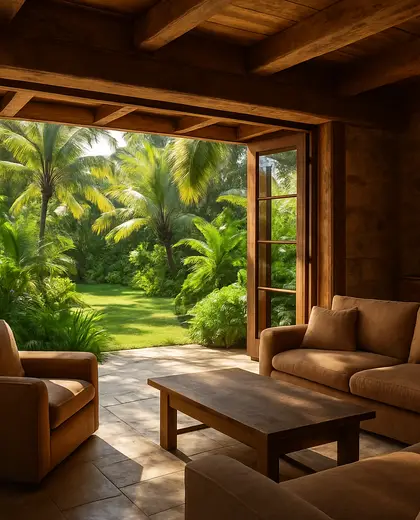
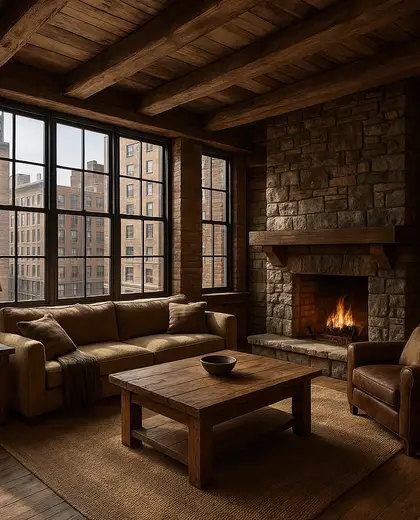
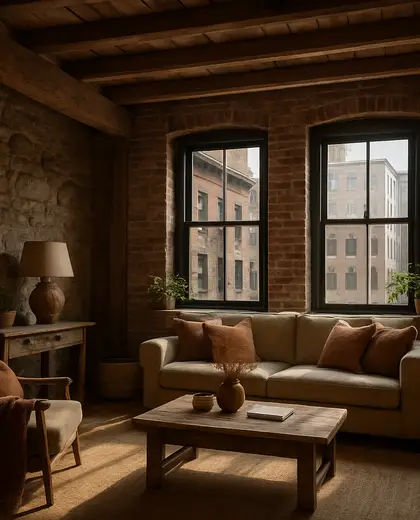
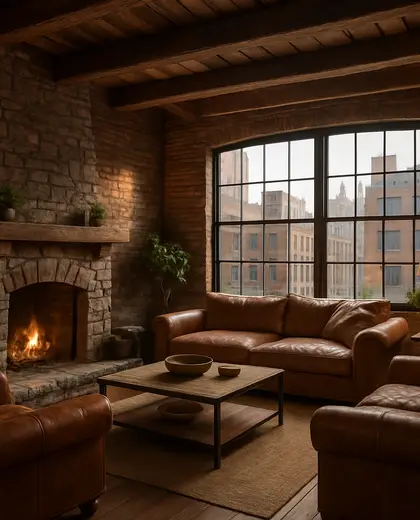
A rustic living room is defined by natural, timeworn materials such as wood, stone, leather, and textured textiles. The palette usually stays warm and earthy, with browns, beige, cream, muted green, and charcoal. Exposed beams, rough-hewn finishes, and handcrafted details give the room its grounded character.
- living room
- rustic
— References
References to explore
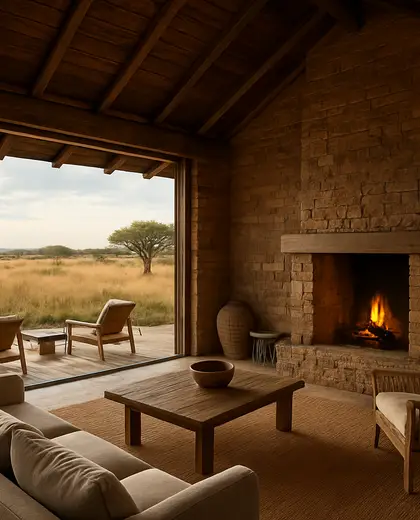
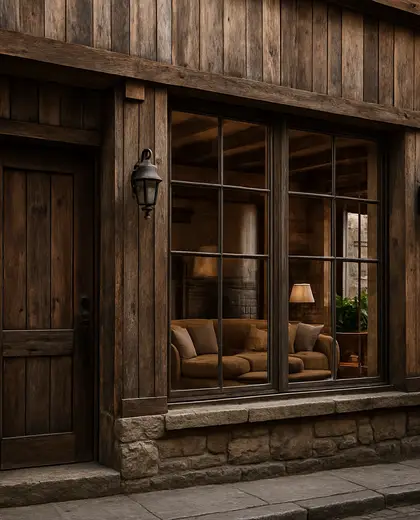
What makes a living room feel rustic instead of just traditional?
Rustic spaces emphasize raw or weathered materials, visible texture, and a more natural, imperfect finish. Traditional rooms can feel polished and formal, while rustic rooms usually feel more tactile and grounded.
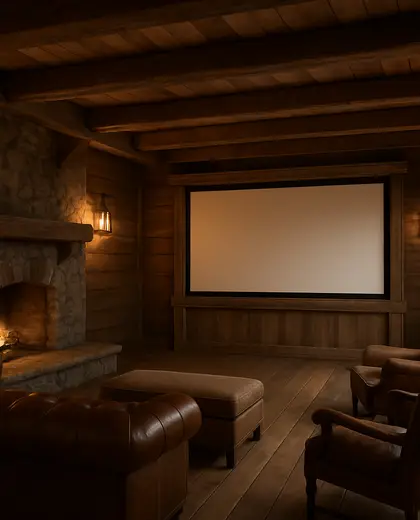
Can a rustic living room still look clean and modern?
Yes. Using simpler furniture shapes, fewer decorative objects, and a restrained palette can keep the room from feeling heavy. Pairing rustic wood with smooth surfaces or black metal is a common way to balance it.
Which pieces usually define the look?
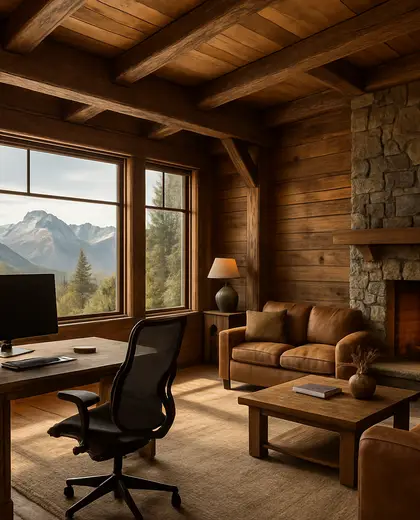
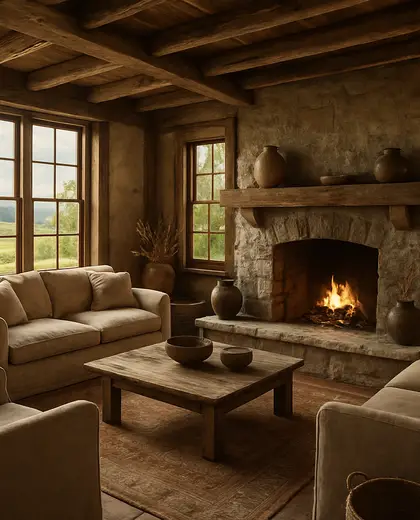
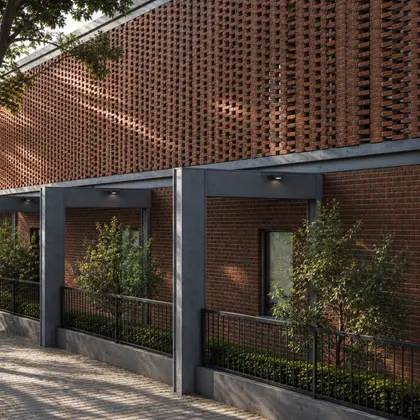
A sturdy wood coffee table, a sofa in linen or leather, a textured rug, and details like a stone fireplace or timber beams often set the tone. Lighting and accessories in natural materials help reinforce the style.
— The style
What defines it
Weathered wood, stone, leather, linen, wool, iron, and clay are common.
Warm neutrals and earthy tones, often with soft contrast from black or deep green.
Works well with farmhouse, cabin, industrial, and modern natural interiors.
— Professionals
Who has already built it
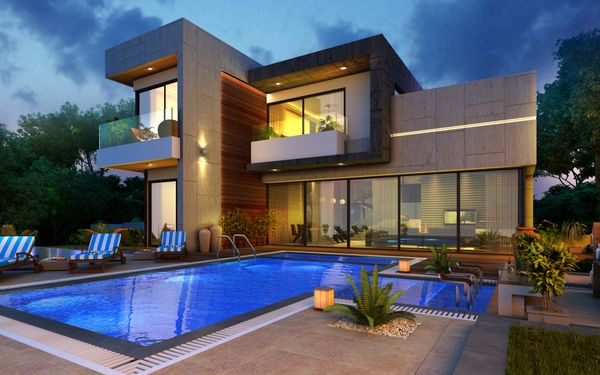



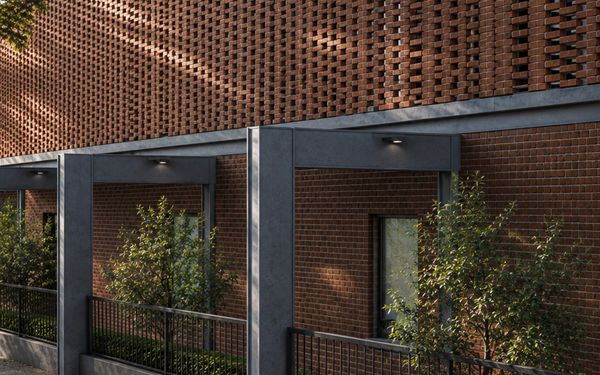

- ar ameer khanarchitects · 3 projectsView profile →
- home interior decoratorscarpenters · Rampur · 3 projectsView profile →
- pavit ceramics pvt ltdceramic manufacturers · Ahmedabad · 2 projectsView profile →
- chaitanya anvekarinterior designers · Mumbai · 1 projectsView profile →
— Explore
Keep exploring
— Questions
Frequently asked questions
What makes a living room feel rustic instead of just traditional?
Rustic spaces emphasize raw or weathered materials, visible texture, and a more natural, imperfect finish. Traditional rooms can feel polished and formal, while rustic rooms usually feel more tactile and grounded.
Can a rustic living room still look clean and modern?
Yes. Using simpler furniture shapes, fewer decorative objects, and a restrained palette can keep the room from feeling heavy. Pairing rustic wood with smooth surfaces or black metal is a common way to balance it.
Which pieces usually define the look?
A sturdy wood coffee table, a sofa in linen or leather, a textured rug, and details like a stone fireplace or timber beams often set the tone. Lighting and accessories in natural materials help reinforce the style.