— Ideas & inspiration
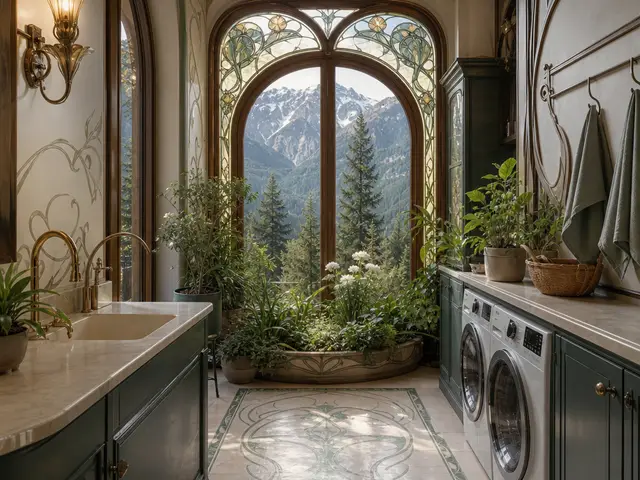
Art Nouveau lines in a mountain setting
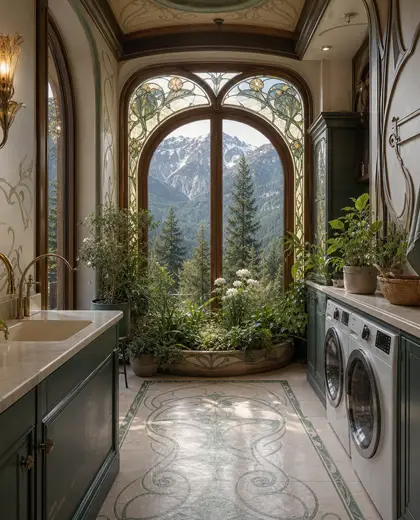
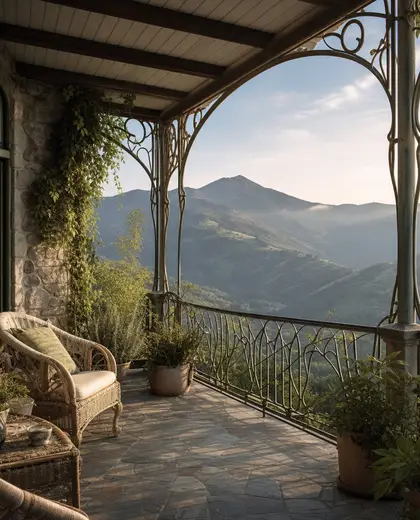
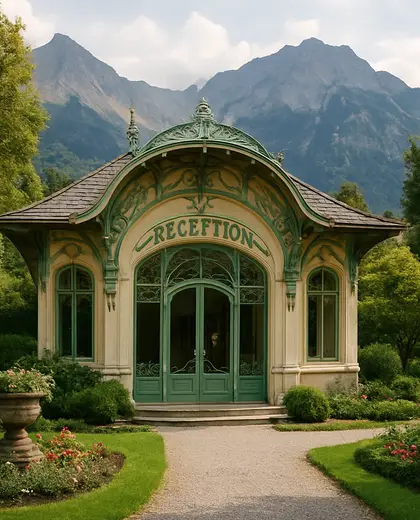
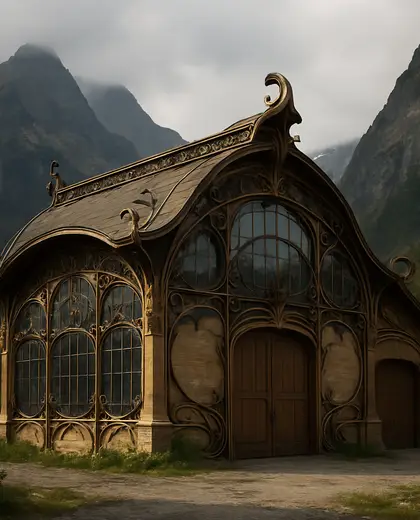
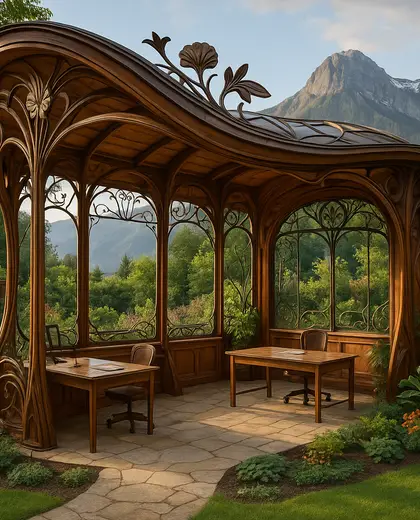
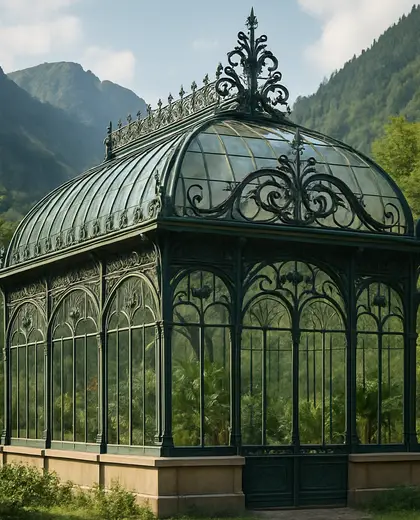
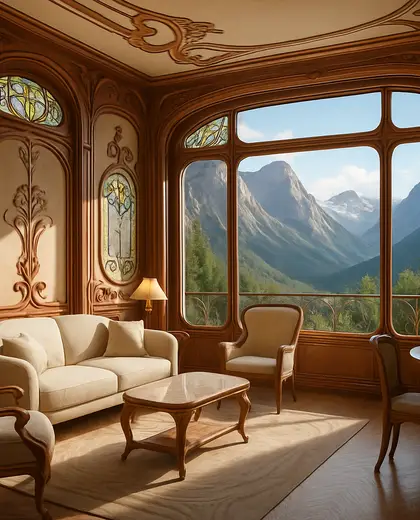
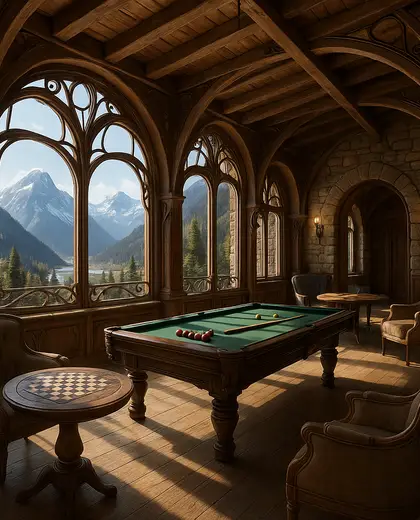
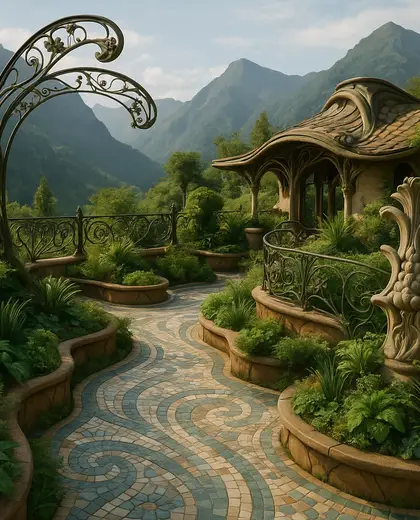
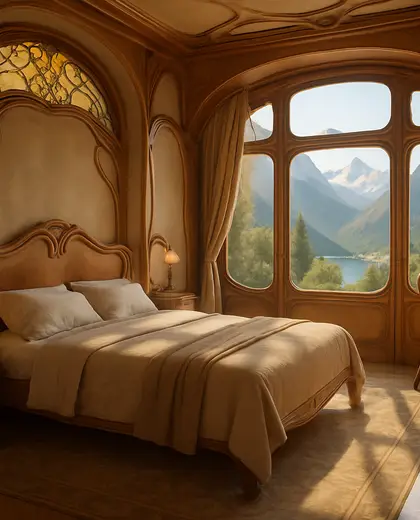
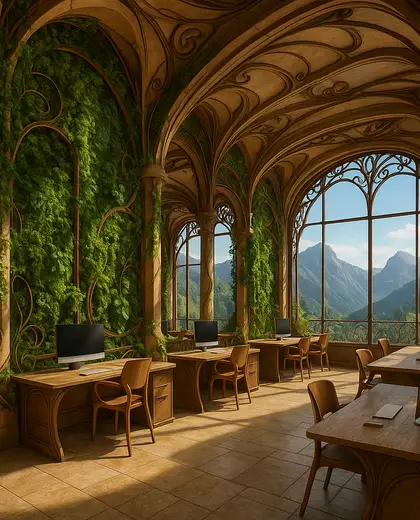
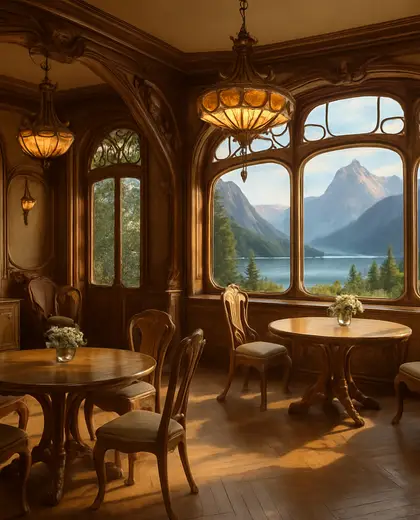
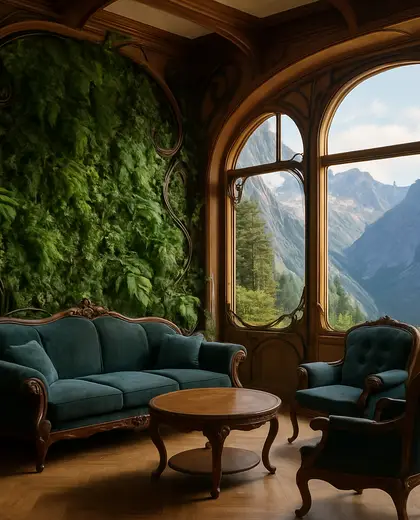
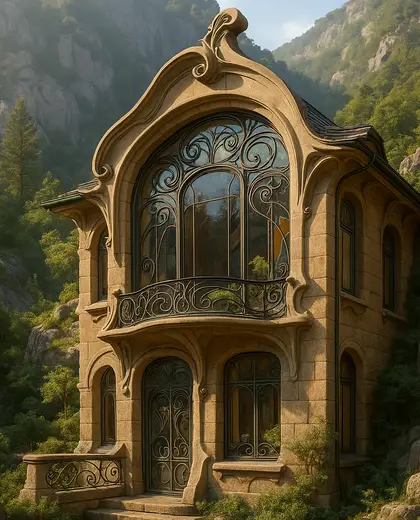
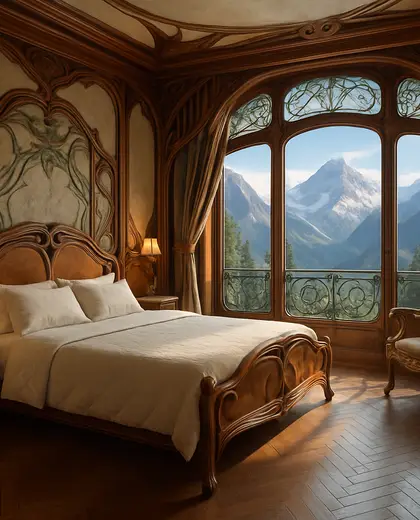
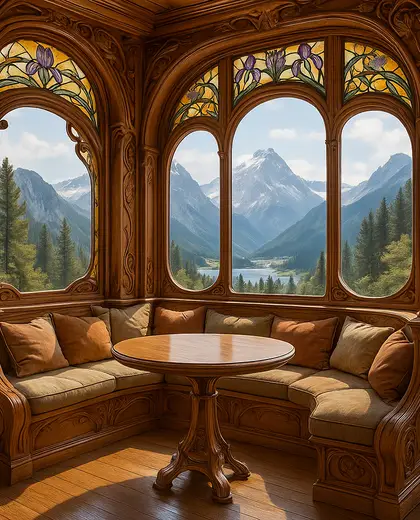
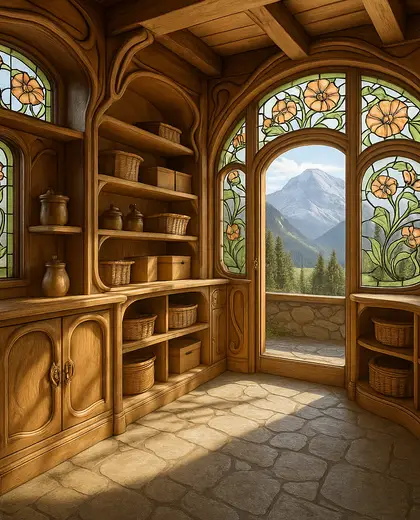
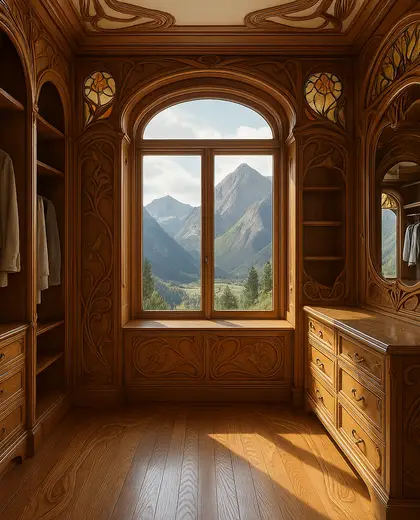
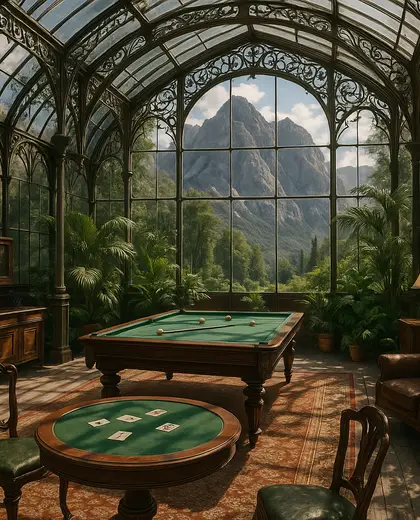
This composition pairs Art Nouveau’s flowing, organic forms with the solid presence of mountain architecture. It often uses carved wood, stone, wrought iron, stained glass, and curving details inspired by plants and vines. The palette leans to earthy browns, deep greens, muted golds, slate, and off-white, balanced against rugged natural textures.
- art nouveau
- mountain
— References
References to explore
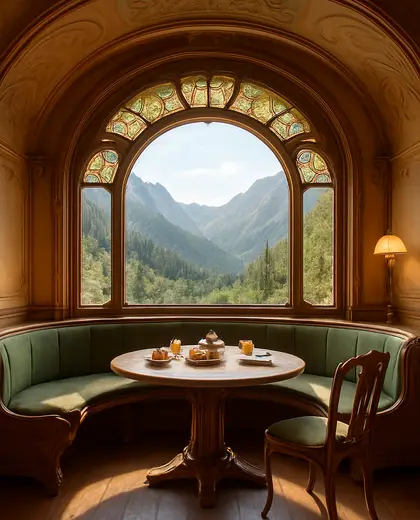
Does Art Nouveau work in a mountain home without feeling too ornate?
Yes, if the detailing is kept focused. Use the style in railings, joinery, windows, and decorative panels, while letting the overall building stay simple and rugged.
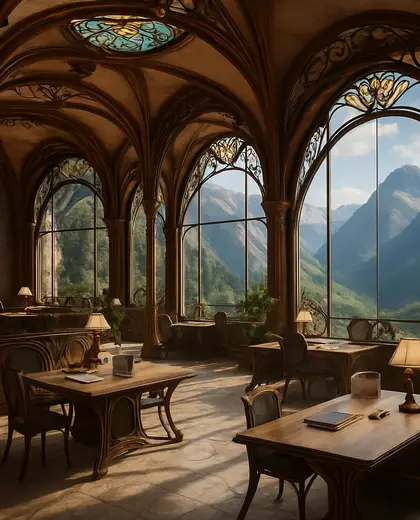
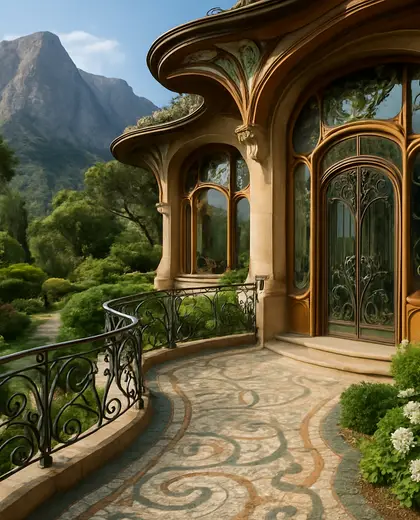
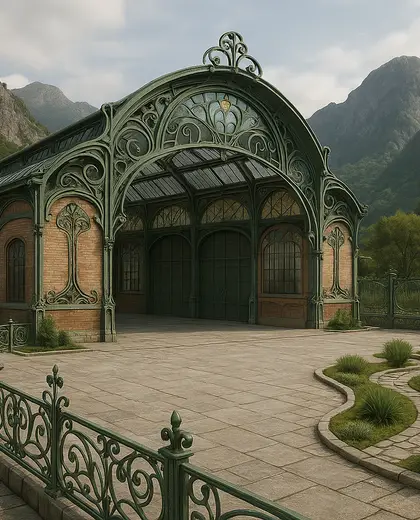
What materials suit this look best in a mountain setting?
Natural materials work best: stone for the base, timber for structure and interiors, and metal or glass for fine decorative elements. These materials help the curved Art Nouveau details feel grounded.
How can I keep the design practical for a cold climate?
Prioritize insulation, durable finishes, sheltered entries, and window placement that captures views without losing heat. The decorative style should sit on top of a solid, climate-responsive building form.
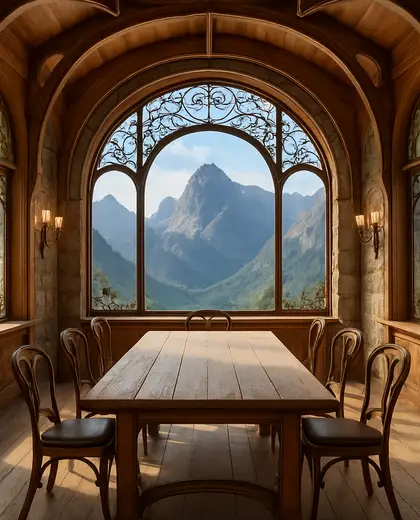
— The style
What defines it
Carved timber, local stone, wrought iron, glass panels, ceramic details, and sometimes copper or brass accents.
Earth tones, forest greens, muted ochres, charcoal, slate, and warm neutrals softened by natural light.
Steep roofs, exposed structure, rustic masonry, wide openings, and landscape-driven layouts suited to alpine or hillside sites.
— Professionals
Who has already built it
- nikitha kumananinterior designers · 6 projectsView profile →
- urban arch studioarchitects · 19 projectsView profile →
- Bristolfurniture sellers · Bangalore · 6 projectsView profile →
- FurnitureRootsfurniture makers · Jodhpur · 6 projectsView profile →
— Questions
Frequently asked questions
Does Art Nouveau work in a mountain home without feeling too ornate?
Yes, if the detailing is kept focused. Use the style in railings, joinery, windows, and decorative panels, while letting the overall building stay simple and rugged.
What materials suit this look best in a mountain setting?
Natural materials work best: stone for the base, timber for structure and interiors, and metal or glass for fine decorative elements. These materials help the curved Art Nouveau details feel grounded.
How can I keep the design practical for a cold climate?
Prioritize insulation, durable finishes, sheltered entries, and window placement that captures views without losing heat. The decorative style should sit on top of a solid, climate-responsive building form.