— Ideas & inspiration
A house with a quiet home office
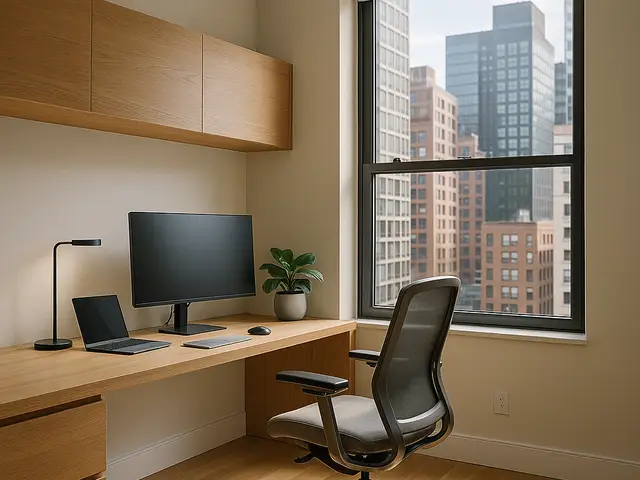
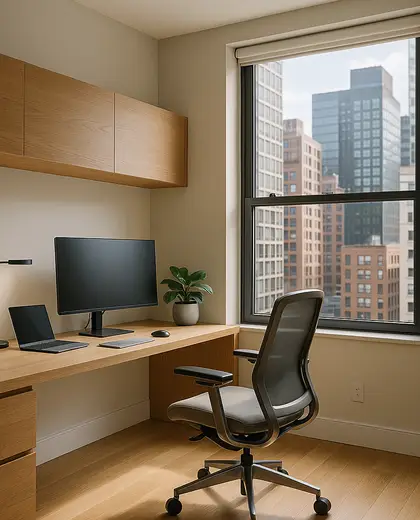
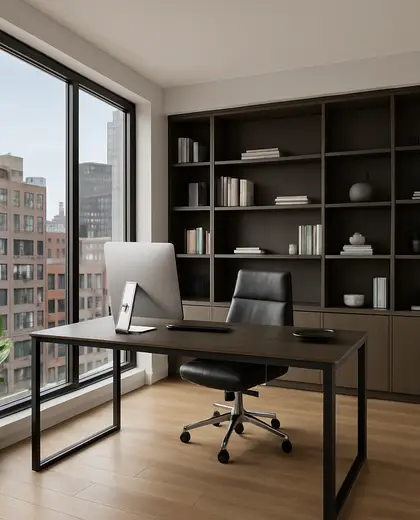
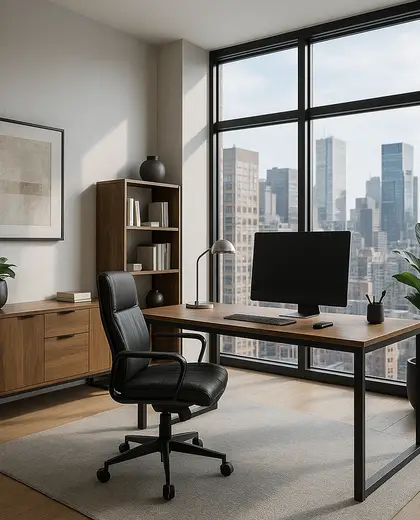
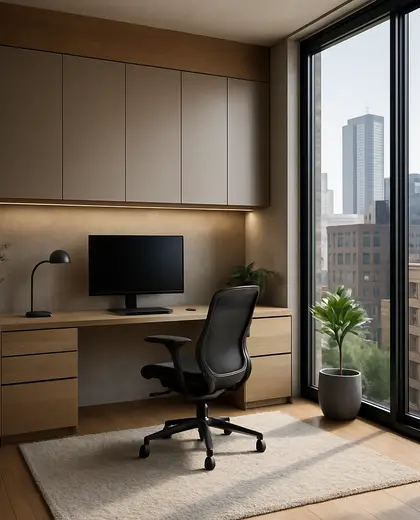
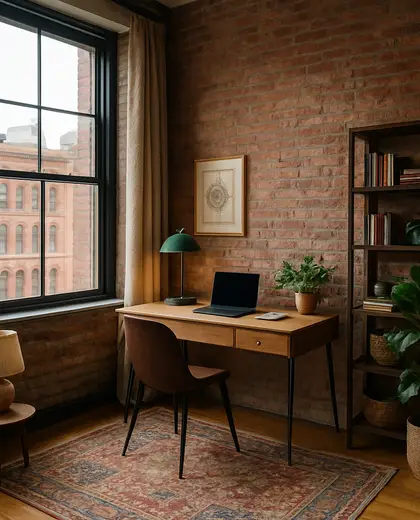
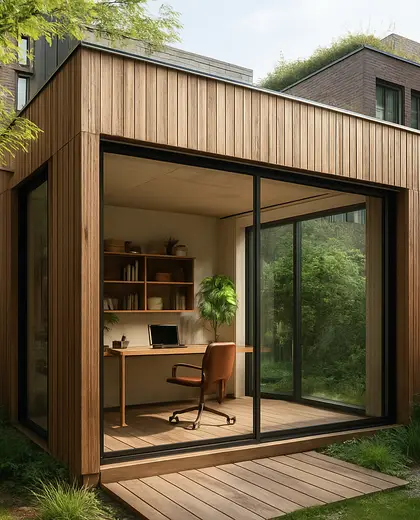
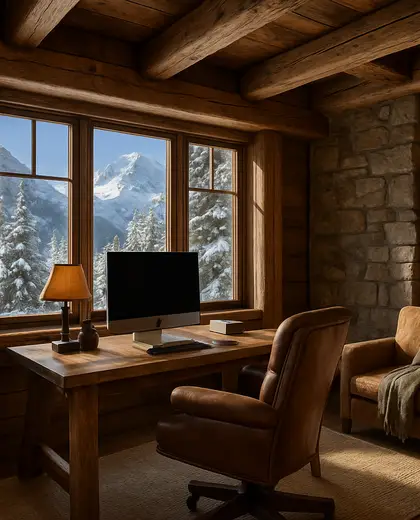
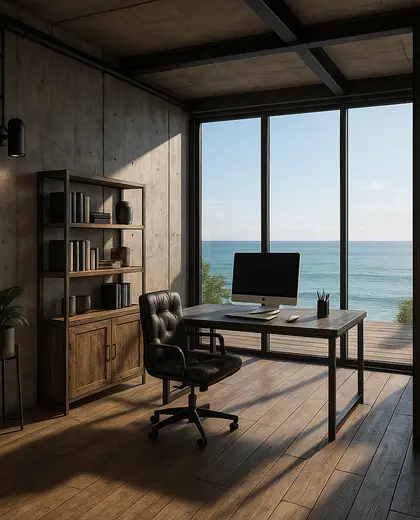
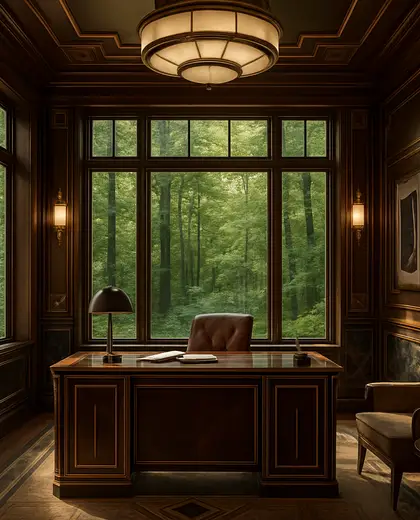
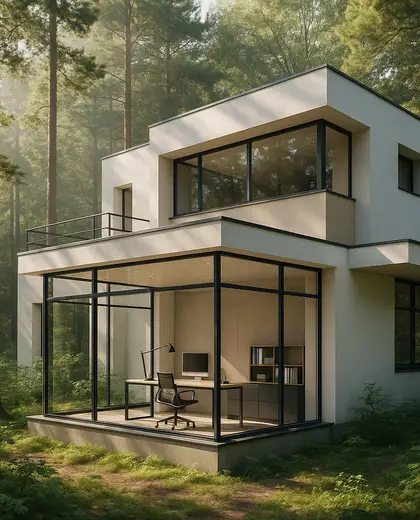
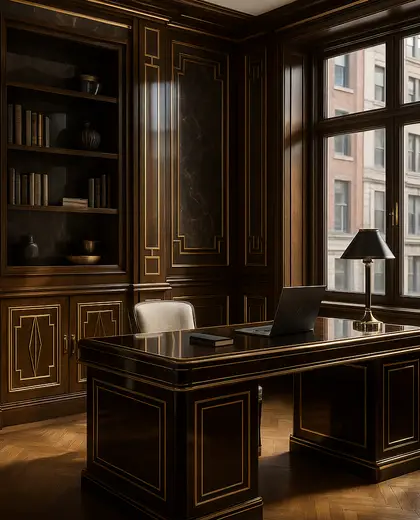
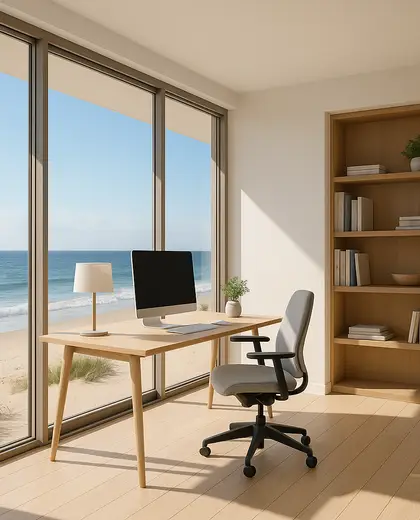
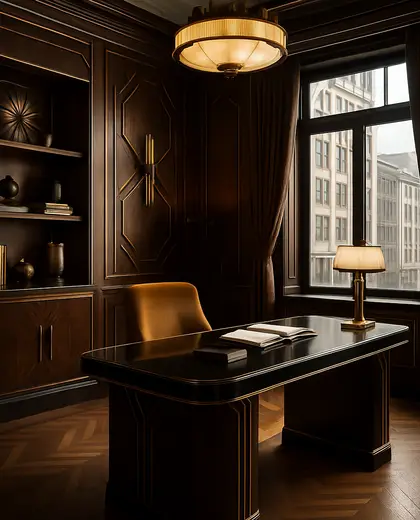
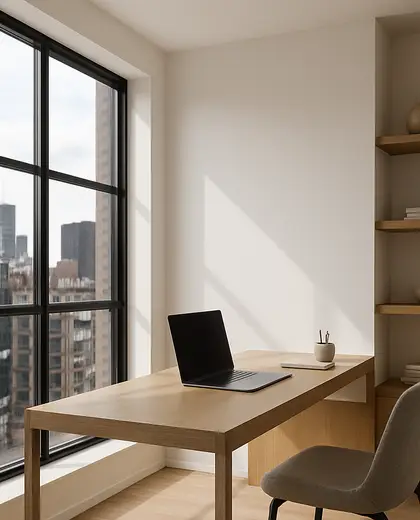
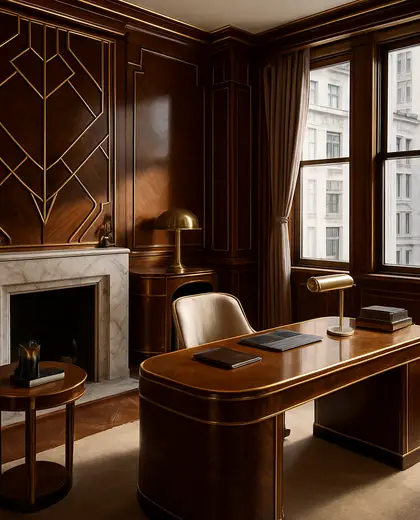
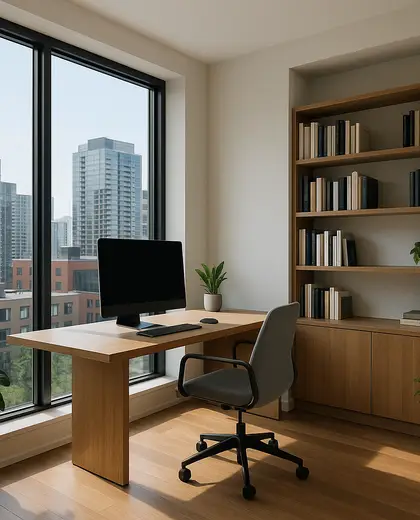
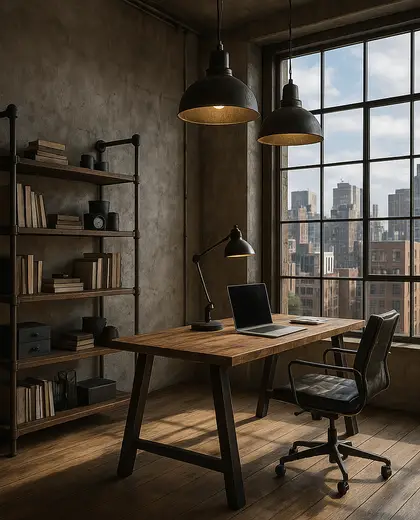
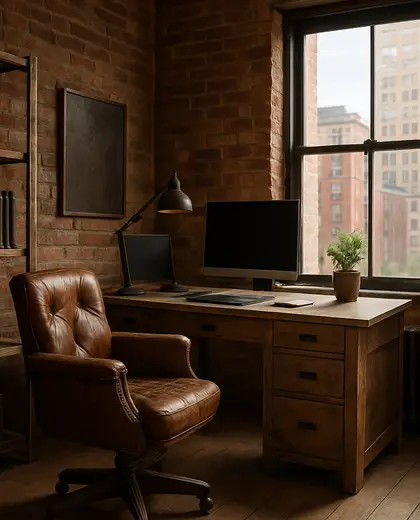
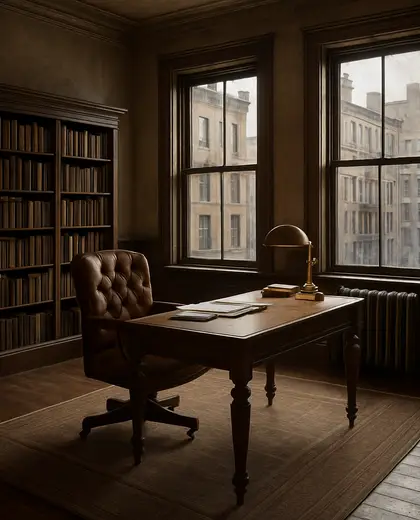
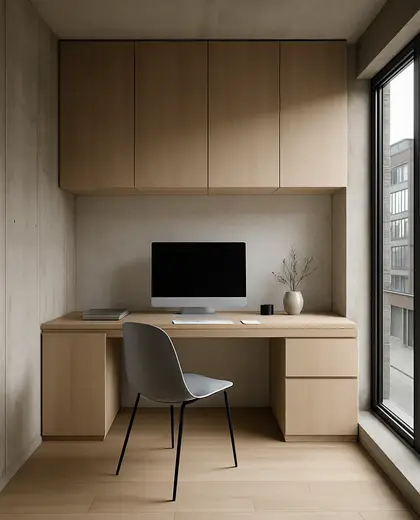
This composition pairs a dedicated workspace with the rhythms of a family home. It usually relies on built-in desks, shelving, natural light, and acoustic separation, with materials such as wood, painted millwork, glass, stone, and textured textiles to keep the room calm and functional. The palette is typically restrained and residential: warm whites, oak tones, soft grays, muted greens, and black or bronze accents.
- home office
- house
— References
References to explore
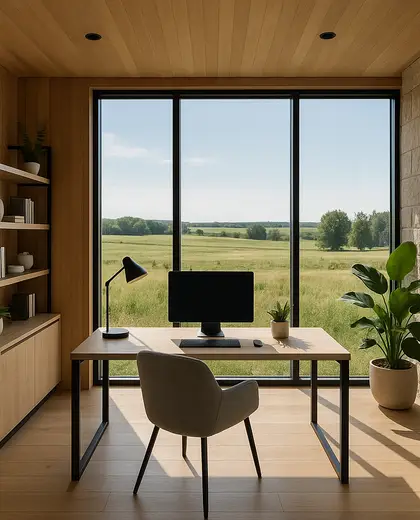
How do I make a home office feel like part of the house instead of an add-on?
Use the same flooring, wall finish, and trim language as the rest of the house, then define the office with built-ins, lighting, or a subtle partition.
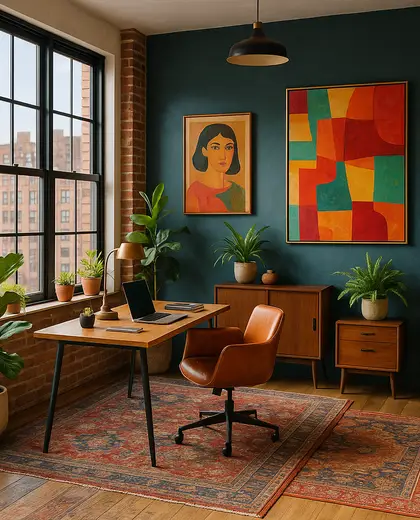
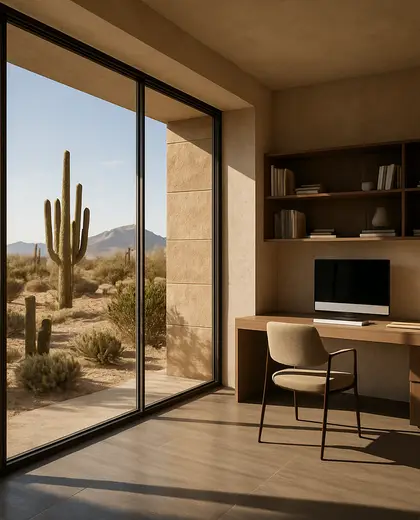
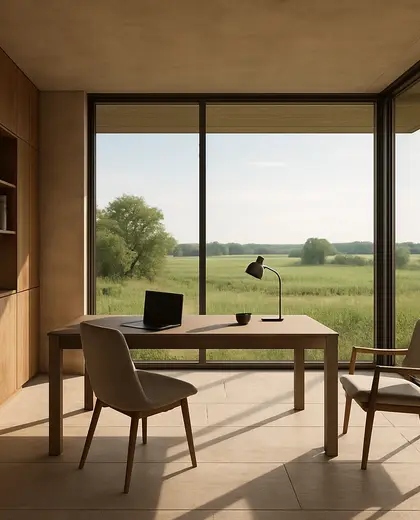
What materials work best for a home office in a house?
Wood joinery, matte painted finishes, acoustic panels, glass dividers, and durable desktop surfaces are common because they balance warmth and practicality.
Can a home office work in a small house?
Yes. It can fit into a niche, hallway alcove, guest room corner, or a compact separate room if storage and circulation are planned carefully.
— The style
What defines it
Built-in wood joinery, painted cabinets, glass partitions, stone or laminate desktops, and soft upholstery help the office feel integrated into the house.
Warm neutrals, natural wood, off-white walls, muted earth tones, and a few darker accents keep the space quiet and focused.
A home office usually combines with a living room, bedroom, attic, landing, or a purpose-built room within the house plan.
— Professionals
Who has already built it
- anurag vermainterior designers · 6 projectsView profile →
- sbv srinivasarchitects · Bengaluru · 6 projectsView profile →
- the achievers archsmart home professionals · Delhi · 1 projectsView profile →
- home interior decoratorscarpenters · Rampur · 3 projectsView profile →
— Explore
Keep exploring
— Questions
Frequently asked questions
How do I make a home office feel like part of the house instead of an add-on?
Use the same flooring, wall finish, and trim language as the rest of the house, then define the office with built-ins, lighting, or a subtle partition.
What materials work best for a home office in a house?
Wood joinery, matte painted finishes, acoustic panels, glass dividers, and durable desktop surfaces are common because they balance warmth and practicality.
Can a home office work in a small house?
Yes. It can fit into a niche, hallway alcove, guest room corner, or a compact separate room if storage and circulation are planned carefully.