— Blog · 5 June 2026 · 6 min read
Cumbum: A Growing Andhra Pradesh Town Where Practical Design Meets Project Potential
A feature on Cumbum, Andhra Pradesh—its estimated population, architectural character, construction costs, and why it is a practical place to plan new homes and projects with local <a href="https://www.archsplace.in/architects/andhra-pradesh/cumbum">architects</a> and <a href="https://www.archsplace.in/builders/andhra-pradesh/cumbum">builders</a>.
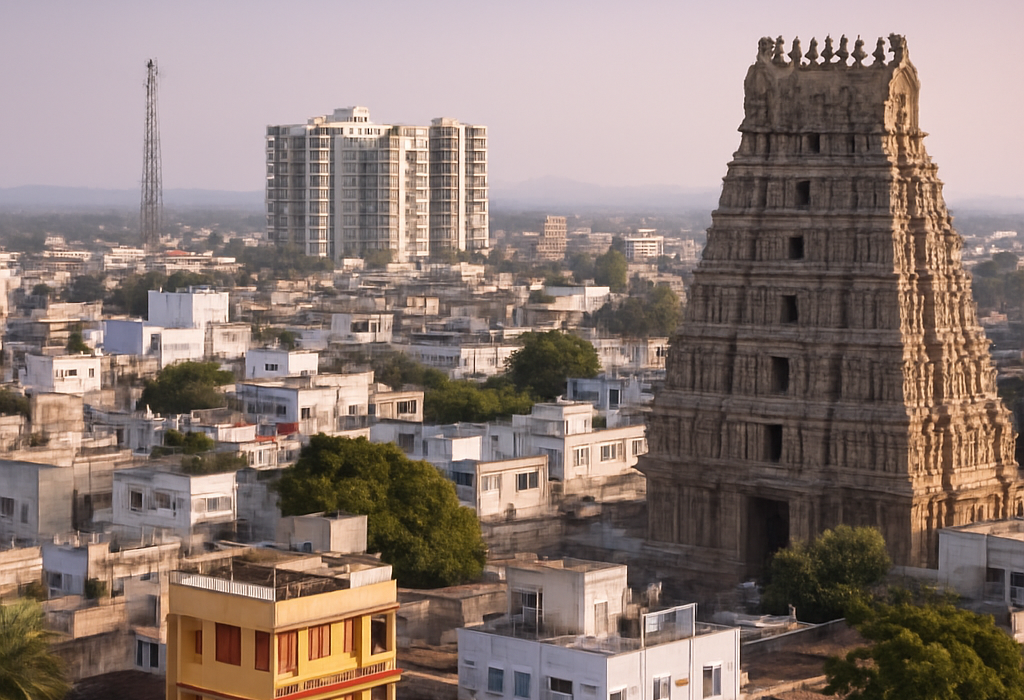
Welcome to Cumbum
Cumbum, in Andhra Pradesh’s Prakasam district, is a small but strategically placed town known for its agricultural surroundings, everyday livability, and the calm, practical pace of a semi-urban centre. Its population is commonly estimated at around 75,000 to 85,000 people, making it large enough to support active housing demand, yet still compact enough for projects to feel personal and locally rooted. For anyone planning a home, renovation, or small commercial build, that balance matters: land values are typically more manageable than in major cities, while local know-how for working with architects and builders can be easier to access and coordinate. Cumbum is also notable for its location in a region shaped by irrigation, trade movement, and steady township growth, which gives it a useful mix of traditional settlement patterns and modern building needs.
Historically, towns in this belt of Andhra Pradesh developed around temple-centred neighbourhoods, market streets, and agricultural support systems, so the urban form tends to be functional rather than ornamental. That is part of Cumbum’s appeal today: people planning projects here are often looking for smart, climate-aware, low-maintenance design rather than overly formal luxury. The result is a town where architecture is less about skylines and more about how well buildings work in daily life.
Architectural Highlights
Cumbum does not have the monumental heritage of a metropolitan centre, but it has a distinctly local architectural identity shaped by Andhra vernacular traditions, modest temple architecture, and practical residential construction. In and around the town, you can expect to see concrete homes with shaded verandahs, flat roofs or gentle slopes, boundary walls designed for privacy, and open areas that help with ventilation in hot seasons. This blend of older settlement logic and newer RCC construction is one of the most visible architectural stories in towns like Cumbum.
Among the most important architectural highlights in the wider area are temple structures, smaller civic buildings, and the changing housing stock along the town’s main roads. Traditional religious buildings often use simple gopuram-inspired forms, painted facades, and durable stone or plaster finishes, while newer homes reflect contemporary South Indian preferences: larger living rooms, attached bathrooms, car parking space, and terrace utility areas. For project planning, this matters because local architecture is already tuned to everyday requirements—shade, airflow, water management, and low upkeep.
A useful historical fact about the area’s urban development is that towns in this part of Andhra Pradesh grew in relation to agricultural productivity and water management rather than heavy industry. That has shaped building patterns over time: plots were often designed for family expansion, storage, and seasonal use, and even today many new projects continue to value flexibility over density. If you are comparing design approaches, a local architect can help translate these older spatial habits into modern layouts that still feel comfortable in the local climate.
Modern additions in Cumbum are typically straightforward and practical: freshly built independent houses, small apartment blocks, commercial shopfronts, and renovated family homes with cleaner facades and better structural planning. The most successful designs here are usually not flashy; they use good proportions, cross-ventilation, sun shading, and sensible material choices that suit Andhra Pradesh weather and local construction practices. In that sense, the town’s architectural character is quietly contemporary—adapted, incremental, and highly liveable.
Construction Costs & Trends
For a typical residential project in Cumbum, an approximate construction cost can be estimated at around ₹18,000 to ₹28,000 per square metre for standard good-quality construction, depending on finish level, structural complexity, soil conditions, and material selection. Basic construction may come in lower, while premium specifications, better tiles, higher-end fixtures, or custom detailing can increase the budget. For planning purposes, it is wise to treat this as a working range rather than a fixed rate, because labour availability, transport of materials, and monsoon-related scheduling can affect the final cost. A reliable builder can help break down this estimate into civil work, electricals, plumbing, waterproofing, and finishing costs.
One notable urban trend in Cumbum is the gradual move toward more organised residential construction, especially on plots that earlier may have been left underutilised or developed in stages. Like many growing Indian towns, there is increasing preference for RCC-framed houses, better setback planning, more formal kitchen and utility spaces, and improved drainage and water storage systems. Another practical trend is the growing importance of low-maintenance finishes—tile cladding, weather-resistant paint, and simpler elevation treatments that look good without requiring frequent repairs.
There is also a broader shift in semi-urban Andhra Pradesh toward projects that are sized sensibly for family budgets rather than oversized for status. This is especially relevant in Cumbum, where the market rewards build quality, usability, and long-term durability. If you are planning a house, rental unit, or mixed-use property, the town’s current direction favours clear planning, value-conscious materials, and efficient use of space.
Why Cumbum is Perfect for Your Project
Cumbum is attractive for building, renovating, or designing because it offers a practical environment where good decisions show quickly. The town is not overcrowded, which usually makes site work, material movement, and construction supervision more manageable than in dense urban centres. At the same time, it has enough local demand to support homes, retail spaces, and small commercial developments. That combination makes it a promising setting for projects that need both affordability and long-term usefulness.
For families, Cumbum offers the kind of everyday convenience that matters most: familiar neighbourhood patterns, access to local services, and a living environment that still leaves room for thoughtful design. For property owners, the town’s steady development means there is room to upgrade older homes, improve façades, reorganise interiors, or create more efficient structures on existing plots. A well-planned project here can benefit from the area’s climate, community scale, and relatively uncomplicated development context.
Design-wise, Cumbum is especially suited to architecture that responds to heat, light, and seasonality. Courtyard ideas, shaded balconies, ventilated rooms, and rain-smart detailing can all make a big difference in comfort. This is where the collaboration between architects and builders becomes valuable for any project, because the best outcomes here are usually the ones that combine local practicality with careful planning.
In short, Cumbum is a town where architecture has to earn its keep. That makes it ideal for people who value sensible budgets, usable spaces, and buildings that fit their surroundings. Whether the goal is a family home, a renovation, or a compact commercial build, Cumbum offers a grounded and promising setting for projects that are meant to last.
Find the best architects and designers in Cumbum for your project
Free, no commitment / Less than 5 minutes
Are you an architect or designer? Sign up for free! »