— Blog · 14 July 2026 · 3 min read
Industrial coworking space: how to get the look right
A practical style guide to create an industrial coworking space with exposed finishes, durable materials, smart lighting and functional work zones that feel productive, urban and professional.
Start with the industrial planning basics
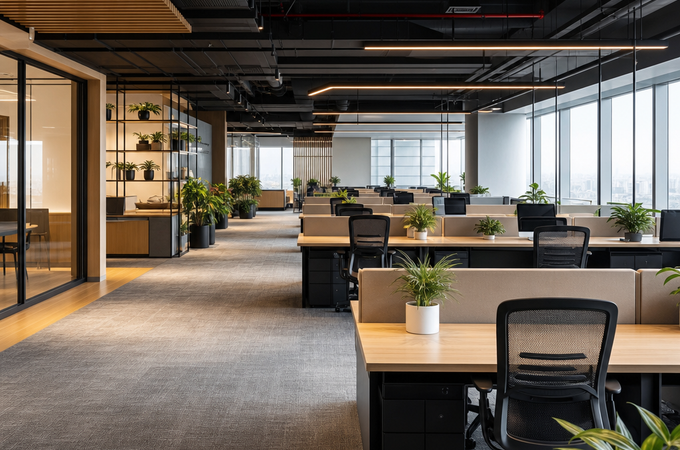
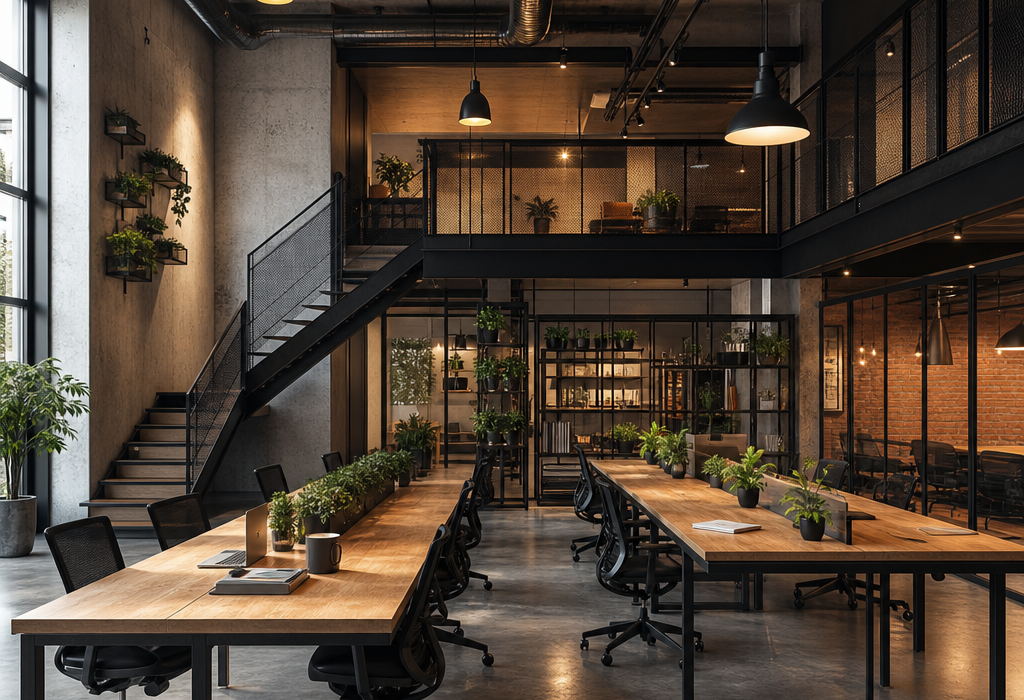
An industrial coworking space works best when the layout feels open, honest and highly functional. Keep the circulation clear, zone the plan with furniture and screens rather than heavy walls, and let the structure do some of the visual work. Exposed ceilings, visible conduits and polished concrete or microtopping floors create that raw warehouse character, while still giving the flexibility needed for hot-desking, focused work, video calls and informal meetings. Aim for a mix of shared tables, quieter edges and a few enclosed cabins so the space feels lively but not chaotic.
Choose a strong, durable palette
The industrial palette should stay grounded and restrained: charcoal, graphite, warm grey, concrete, blackened metal and deep brown timber, with small touches of rust, olive or tobacco for warmth. In India, this look pairs well with Kota stone, microcement, slate, reclaimed wood and matte black hardware. If the space gets strong daylight, balance the darker elements with off-white walls or soft beige acoustic panels so the interior does not feel heavy. Keep finishes matte or low-sheen; anything overly glossy tends to dilute the industrial mood.
Use materials that feel honest and hard-wearing
The core of the look is material truth. Exposed brick, fair-faced concrete, powder-coated steel, mesh, reclaimed sal wood or teak, and leatherette or canvas upholstery all fit naturally. For a more refined Indian version, combine rougher surfaces with cleaner joinery so the office remains welcoming to clients and teams. Table tops in solid wood or compact laminate with a timber grain, black metal legs, and glass partitions with slim steel frames give the right mix of toughness and polish. If you are renovating an older building, preserve existing beams, columns or brickwork wherever possible rather than hiding them.
Pick furniture that looks robust but remains flexible
Industrial coworking furniture should feel substantial, simple and easy to reconfigure. Long communal desks, steel-framed worktables, stackable chairs, mobile pedestal storage and modular sofas are ideal. For a 6 to 8 seater discussion table, choose a generous rectangular form with enough knee clearance and cable access. Add a few lounge chairs in leather or textured fabric for relaxed calls, and use height-adjustable stools only where quick collaboration is likely. Storage should stay discreet, ideally in black metal lockers, open shelving or low credenzas that can also act as room dividers.
Layer lighting and details for a finished industrial feel
Lighting makes or breaks this style. Combine bright, even general lighting with focused task lights over desks and warmer accent lighting in lounges and meeting corners. Pendant lights with metal shades, linear track lights and exposed-bulb fixtures suit the industrial language, but keep glare under control for screen work. Add softening details through acoustic felt, large planters, wire baskets, notice boards in cork or steel, and cables neatly clipped or run through trays. A few art prints, vintage-style clocks, and matte black accessories help sell the look, while rugs in muted tones stop the coworking space from feeling too stark or echoey.
Find the best architects and designers for your coworking space project
Free, no commitment / Less than 5 minutes
Are you an architect or designer? Sign up for free! »